Discover new Singapore-based Fair Trade jewellery brand Atelier Agape

A long time ago I met Vera Mao as part of a Singapore Streetstyle contest; she was elegant, interested and interesting, calm and had a hidden passion for creating her own path. With the recent launch of Atelier Agape, Vera has manifested her potential. 

Atelier Agape Founder Vera Mao-1

Atelier Agape is a fair trade jewellery brand. All the pieces are handcrafted in an ethical manner by marginalised artisans in Jaipur. All the artisans are paid a fair wage and given training in enterprise building skills in conjunction with SETU, a fair trade organisation based in Jaipur. “During the pandemic, SETU has also used a part of its profits from jewellery production to prepare and distribute meals for the poor and destitute,” says Vera.

All of the Atelier Agape jewellery pieces are handcrafted from 925 sterling silver, gilded with white rhodium or 14K gold vermeil and do not contain any lead, cadmium or nickel, making it hypoallergenic and safe for sensitive skin.

Just in time for Mother’s Day, the brand is launching with a collection dedicated to mothers and their children.

Atelier Agape Fair Trade personalized jewelry lowres-5

“I am always moved by the emotional and undeniable connection of the maternal bond between a woman and her child. With several of my friends becoming new mothers, and having attended numerous baby showers, I was tired of the typical gift gifting traditions,” explains Vera. 

“I found myself seeking something different, something that would honour the start of this relationship that is so deeply meaningful. There are several mother-child matching fashion [options] but not in jewellery, which is a highly personal category.”

“Each piece is thoughtfully designed to allow both mother and child to latch meaning unto and cherish with time, through intricate details and free personalisation to tell each mother’s unique story,” explains Vera.

Atelier Agape Fair Trade personalized jewelry lowres-39

Tous Les Jours, which translates to ‘everyday’ in French, is the first Atelier Agape collection and is inspired by “everyday superheroes – real, modern, selfless mothers” says Vera. There are different styles to match different tastes, and the central concept is based on the idea of separating one into two – mother and child pendants that can be worn together, or separated to be worn by both.
Atelier Agape Personalized Jewelry-30

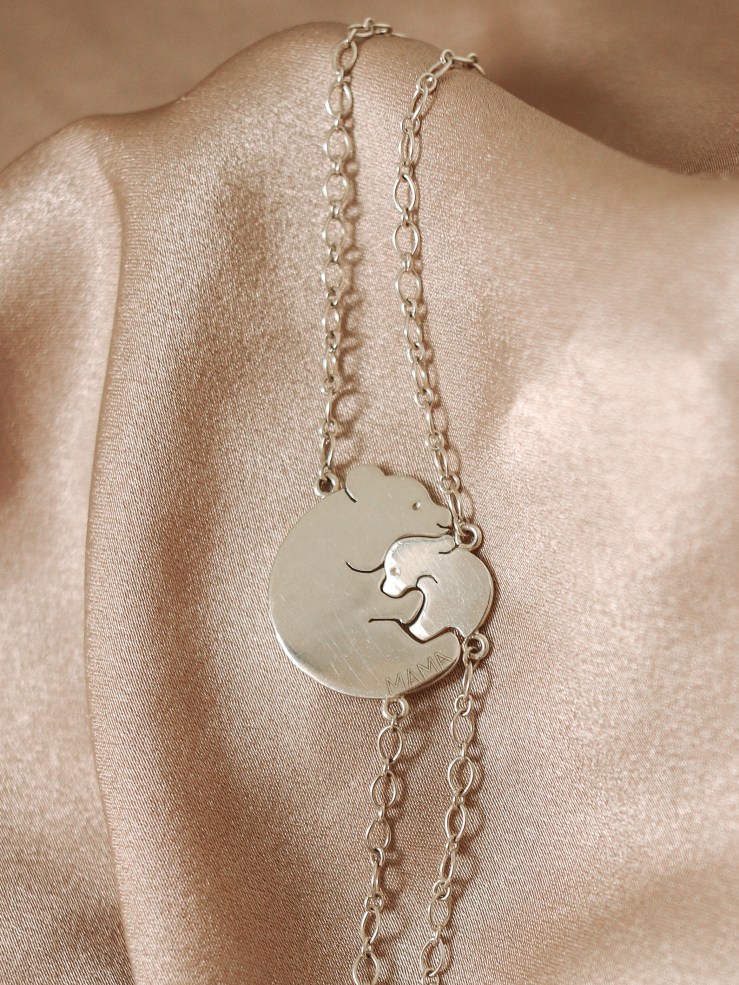
“Drawing inspiration from the idea that mothers always wish to carry their little one with them to keep them safe, the matching bracelet set features a Mama Bear and Baby Bear pendant that fits perfectly into each other in a perpetual hug, while the 2-in-1 Nesting Locket Necklace features a locket that opens to reveal an inner pendant,” says Vera.

Atelier Agape jewelry is available exclusively on www.atelieragape.com. All orders from first-time customers receive 10% off. Prices quoted in SGD. For Mother’s Day only, all orders made before 10 May will receive free gift-wrapping.  
Hemu, a Chinese designer brand, based in China

‘Made in China’ has, rather unfortunately, been considered a symbol with negative connotations, denoting as it did historically that anything made in China was cheap rubbish. Thankfully in the last decade or so, this misconception has been mostly overcome, particularly in the areas around technology. 

However there has continued to be a perception that when it comes to original creativity, the work coming out of China is less refined, more derivative, and not as stylish as that of the rest of the world, indeed, even the rest of Asia. 

Japan has long been considered a bastion of high design, from ceramics and architecture, to fashion and technology; in the last five years South Korea has also been seen as owning a particular type of original design. China, however, has not. 

Which is a shame. After all, the core design traditions of both Japan and Korea are Chinese. The form of writing, building, traditional clothing … All can be traced to China. 

In current times China’s impact on the creative world has been seen mostly through the lens of business and money. Chinese luxury buyers are to be tempted with red and gold versions of existing products … ‘just in time for Chinese New Year’, but the majority of creative brands have not only patronised the Chinese market, they have also appropriate its culture and used blatant racism in its advertising. 

All of this leads one to wonder why more attention hasn’t been given to the current crop of quality creatives now coming out of China. There are a number of highly regarded architects and artists, for example, that do appear to receive accolades, so why not the fashion designers?

There are a number of Chinese designer names who have managed to make enough noise to be noticed, mostly because they are based in Europe. Masha Ma, Angel Chen, Yiqing Yin, Ryan Lo and Yang Li are all based in either Paris or London.

This lack of attention towards Chinese fashion designers is due to the tendency of Western fashion media to ignore anything that isn’t right in front of their noses.

In an attempt to try to remedy this attitude, here is an interesting Chinese fashion brand worth discovering.

HEMU

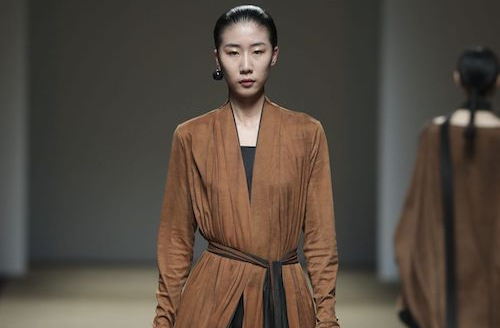
Founded in 2010, by Yang Fengrui, Hemu is a modern take on traditional Chinese clothing without too many of the obvious cliches. 

While there are definite straight nods to tradition – mandarin collars, frog closures, long loose layers, tassels – they are used in a relatively sparing manner to create the impression of histroriosity, rather than a direct knock-off like you find on Hanfu clothing websites. 

What strikes the eye immediately is that Yang is moved mostly by fabric; every piece of the Spring 2020 collection depended on the fluidity of the silk used to impart the meaning and even structure of the garments. 

The focus on the texture of the fabric, in plain swathes of white and black showed a very modern take on a traditional qipao. Muted shades of gold and umber, plus a single shot of red, held the collection together. 

Less clever are the menswear pieces (see the video) that take a more obvious leaf from the traditional garment book; however in the current age of non-gendered dressing the sheer fact that most of the menswear garments could be interpreted as long gowns is an interesting perspective. The traditional Chinese dress style, after all, offered long, flowing garments for both sexes. 

VIDEO: Hemu at Shanghai Fashion Week