Founder of Love, Bonito, Rachel Lim, on thriving, not just surviving, in the fashion retail world

The Singapore brand, Love, Bonito, might have begun in 2010 as a ‘blogshop’ but it has now expanded into a multi-outlet bricks ‘n’ mortar lifestyle brand with the opening of its second Singapore store in Jem. This is on top of its flagship store in 313@Somerset, and its two retail stores in Kuala Lumpur. Love, Bonito is obviously thriving, not just surviving the current troubled retail market.

LOOK2-HALF
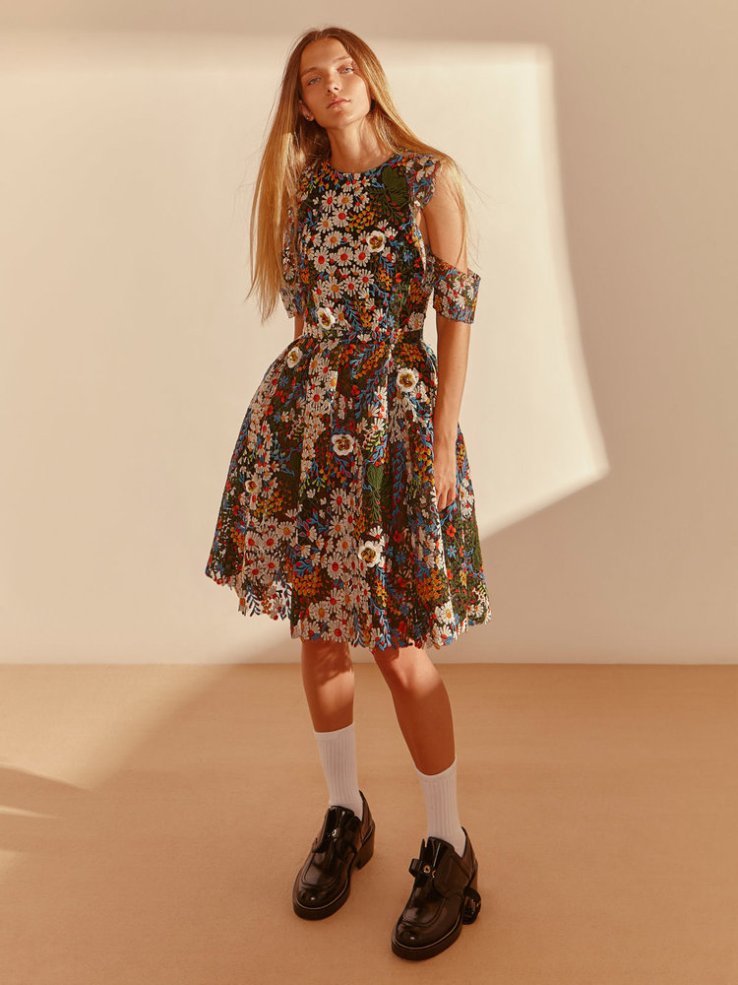
The latest collection from Love, Bonito. Image: Love, Bonito

Continuing its focus on being a ‘retail friend’ to its customers, the Love, Bonito brand has stepped easily into the new retail world of experiences and technology, its founders becoming social media influencers in their own rights, and their fans becoming loyal customers. Despite the so-called woes of retail, this disruptor fashion brand is powering ahead.

LOOK9-TWINHALF

To discover more about how the brand has grown, developed and succeeded, I got in touch with Rachel Lim, the co-founder of Love, Bonito, and the current face of the brand’s marketing, to answer a few questions. With 106K followers on Instagram alone, Lim is not only a successful business woman, she’s an inspiration to hundreds of entrepreneurial Singaporeans.

LOOK10-MOOD
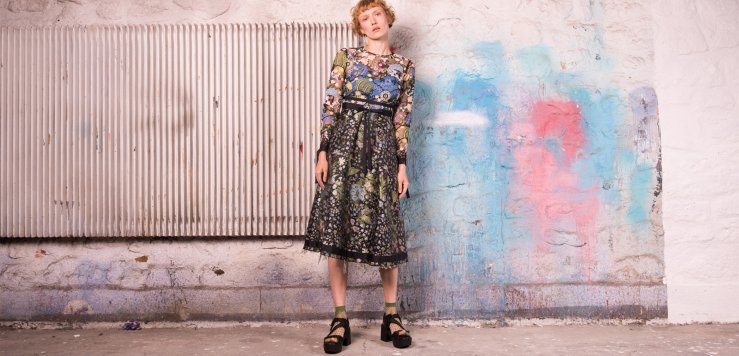
The latest collection from Love, Bonito. Image: Love, Bonito

Did you have any female business role models when growing up?
Rachel Lim: No particular ones but there are strong females I had as role models growing up – my mom. She was a strong inspiration because even though we went through so much hardship as a family she showed a lot of grit and tenacity, all while keeping her joy and positivity, which was the key in us getting through the difficulties.

When did you know you wanted to run your own business?
RL: When I decided to drop out of my final year in university to start Love, Bonito with my Co-Founders. I knew that I wanted to create something that didn’t exist for women.

Do you think being a female entrepreneur has made a difference to how you have built your business?
RL: Not so sure if it’s because I’m a female but being a real woman creating for other real women has definitely helped shape who Love, Bonito is.

What were the factors that led you to start Love, Bonito?
RL: The clear gap in the market. There weren’t any pieces out there that really suited and fitted Asian women in a flattering way. That was how we started – by understanding the needs of other women, what they were looking for, and creating for them.

What sort of resources (besides financial) did you have when you started Love, Bonito?
RL: We had guts (haha). Because we were pioneers in the business of e-commerce back then, we had to pave the way ourselves. For example, there weren’t even any courier services who were well-versed in this format of business.

What kind of market research did you do before starting Love, Bonito?
RL: Honestly, we didn’t do much research initially. We learnt via a lot of trial and error and from making mistakes. Most of our learning was done on the go.

Did you feel prepared to start the business when you did?
RL: Back then I felt more excited than prepared. And in some way that drove me to push forward regardless of the problems that surfaced.

Have your goals and values changed since starting Love, Bonito?
RL: I have really evolved as a person. Since starting the brand I have found myself, and I continue to discover myself everyday. I have learnt to accept my strengths and weaknesses and embrace them. More importantly, I have learned how to grow and use my talents to contribute while surrounding myself with others who compliment my weaknesses.

What were some of the key lessons learned?
RL: That one can’t do it all. And one shouldn’t do it all. I wish I had known earlier to discover my areas of strength and to develop and hone them so that I could contribute strongly in those aspects.

What are your plans for the future of Love, Bonito?
RL: Right now we are empowering women and reaching out to women through fashion. The dream is to reach out to even more women through other different vehicles.

What advice, based on your own experience, do you have for women starting a business today?
RL: Don’t just start a business because it’s the sexy, in thing. I truly believe that there is no age limit to being an entrepreneur. Find and know your why and more importantly, surround yourself with people who will love you enough to be honest with you. If and when you have decided to start a business, the right team at the right stage of your business is absolutely essential.

The Love, Bonito Jem store opens on 8 December 2018, in Singapore. The Love, Bonito flagship store is located at 313@Somerset. To shop the brand online go to: www.lovebonito.com.
Why Love Bonito isn’t a fashion brand, and why that’s not a bad thing … also something about the Singapore fashion plagiarism controversy

For a long time I’ve had an issue with Singapore media describing certain companies that make clothes as ‘fashion brands’ but which are actually ‘retail’ labels. These brands – Love, Bonito is one of them – are not really ‘fashion brands’; they are companies that make nice clothes, at reasonable prices, with a bit of personal style, for people to wear on a daily basis. These brands are more similar to Topshop and Uniqlo than they are to Dior or Chanel, or even Vetements.

In Singapore there are number of quite successful retail brands that have been making their way into popular shopping memories, but which are not fashion brands per se. Brands like Love, Bonito, By Invite Only, Beyond the Vines and Benjamin Barker, were recently featured at the Singapore Fashion Awards 2017, as part of the ‘marketing’ section, not as part of the design awards. And having been a founding judge for the awards, I know that the reason these brands are featured is because they are popular and much more retail-friendly than many less wearable or conceptual designer brands. Designer brands that are more appropriate to be considered as ‘fashion’ labels.

Now, don’t get me wrong. I’m not saying that more retail-friendly brands are worse than the more fashion-forward labels. What I’m trying to highlight is that these types of clothing companies are not ‘oranges and apples’, they’re more ‘oranges and coffee-smoked buffalo tongue’. The first is something that doesn’t scare the shopper, the second is only for the very adventurous.

I have a great deal of respect for Love, Bonito’s founders. They have created a very lucrative business in a fashion retail environment that’s been under a great deal of pressure for the last 2-3 years. The brand knows exactly who their customer is; they know what she wants; and they know how to give it to her in a seamless online-to-offline experience. The brand has a variety of price points, but retains its core directive from its launch, expanding only as much, and as directionally, as is needed to grow the business. Love, Bonito is not a fashion brand swinging on the weird wind of trends and concepts; it’s sailing along smoothly along in a clear direction. And this is not a bad thing.

_l7a8767-2_5
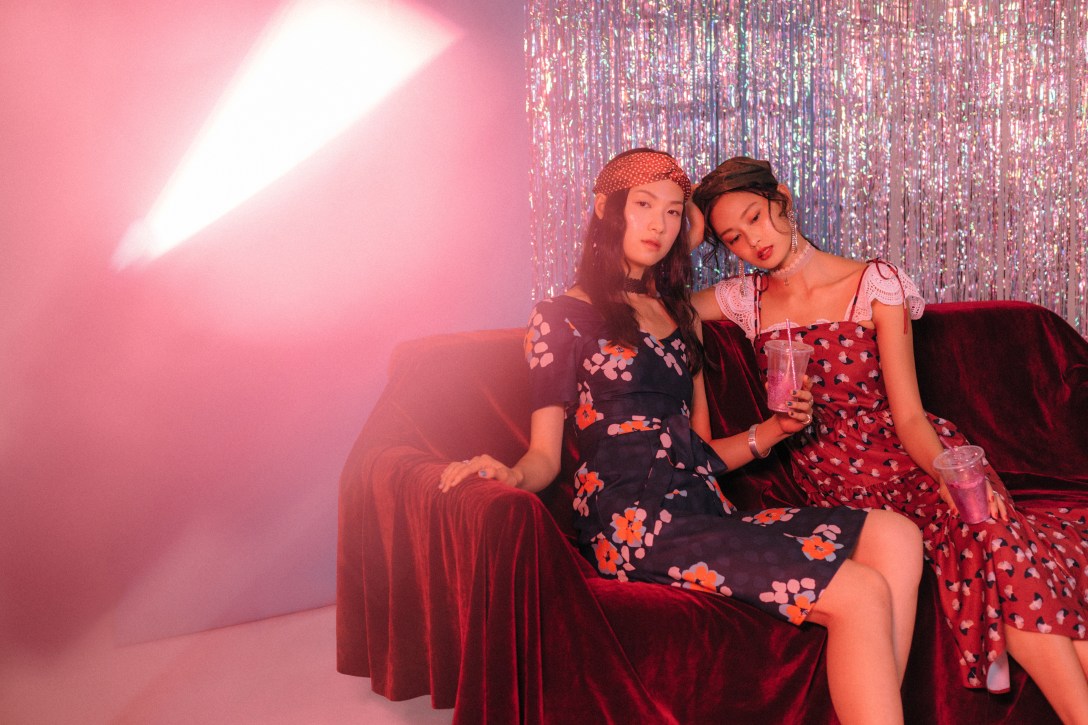
Image from Love, Bonito Chinese New Year 2018 capsule collection. Model: Jasmine Sim

While I may not consider Love, Bonito to be a hardcore fashion brand – you can read about the Singapore brands I do consider more ‘fashion’ – the founders have never claimed it is one. They are purposefully creating a business that has long term prospects in the retail market.

Unfortunately, there are a number of so-called fashion brands based in Singapore that claim to be something they’re not. The most obvious is the ‘celebrity’ brand Exhibit by Yoyo Cao. It showed at Singapore Fashion Week 2017, and had some obvious problems. There were distinct issues about plagiarism, so bad in fact that cult fashion Instagram account Diet Prada dedicated an entire post to Yoyo Cao’s label’s knock-offs. Considering that Yoyo is a certified fashionista, it really was remarkably naive to think that no one would notice.

There are a few other Singapore brands that are also not exactly pristine when it comes to plagiarism. Whole9Yards has been cited for knocking off first, Self Portrait – the classic coloured lace dresses of its earliest collections – and now Malaysian designer, Jonathan Liang. Pleatation is obviously a copy of Issey Miyake’s Pleats Please label.

For Pleatation, the concept arose at the same time as micro pleated skirts started flooding Zara and Topshop; the brand cleverly linked up with this trend.

JLSS17-24
Image from Jonathan Liang SS17

When Whole9Yards first launched there was not a whole lot to talk about. The design concept was very ‘office lady’. However, after Self Portrait’s iconic lace dresses took off in 2013, Whole9Yards began to specialise in lace dresses the average OL could afford. The lace dress became a staple of its output. And very successful it was too. Although I’ve noticed that the brand has massively increased their prices now that they’re doing items that look like those of Jonathan Liang.

front_3_22
Image from Whole9Yards AW17

Again, I’m not saying that affordable retail options are an entirely bad thing. What I am saying is that making items that so closely echo the creative work of other designers is not fashion; it is copying. It is the lack of original design coupled with riding a wave of commercial popularity that makes it ‘retail’ and NOT fashion. At least as far as I’m concerned.

As I was quoted in this very flattering story by Adele Chan, the Editor-in-Chief of Nylon Singapore … As always, I want to remind readers that this is my personal opinion, and as with anything, you can always have your own.”