Elegant, seasonless, and ageless, the work of Melbourne based designer Dominique Healy has a built up a dedicated fan base of customers since she launched her eponymous brand in 2017.
With 10 years as a fabric wholesaler in both Australia and New Zealand, if there’s one thing the designer is known for, it is high quality, beautiful fabrics. It was this background that was the impetus for the launch of the brand as the designer began stashing and storing the materials she came across.
Alongside her love for fabric, Healy was also committed to creating clothing that support and promoted local and ethical clothing production, as she writes on her website. The brand’s mission statement clearly shows the designer’s focus: “Trans-seasonal pieces. Released slowly. Made in-house in our Melbourne studio.”
“Each garment is carefully considered and constructed locally from high-quality fabrics, all made to stand the test of time,” states the website.
Elegant, seasonless, ageless
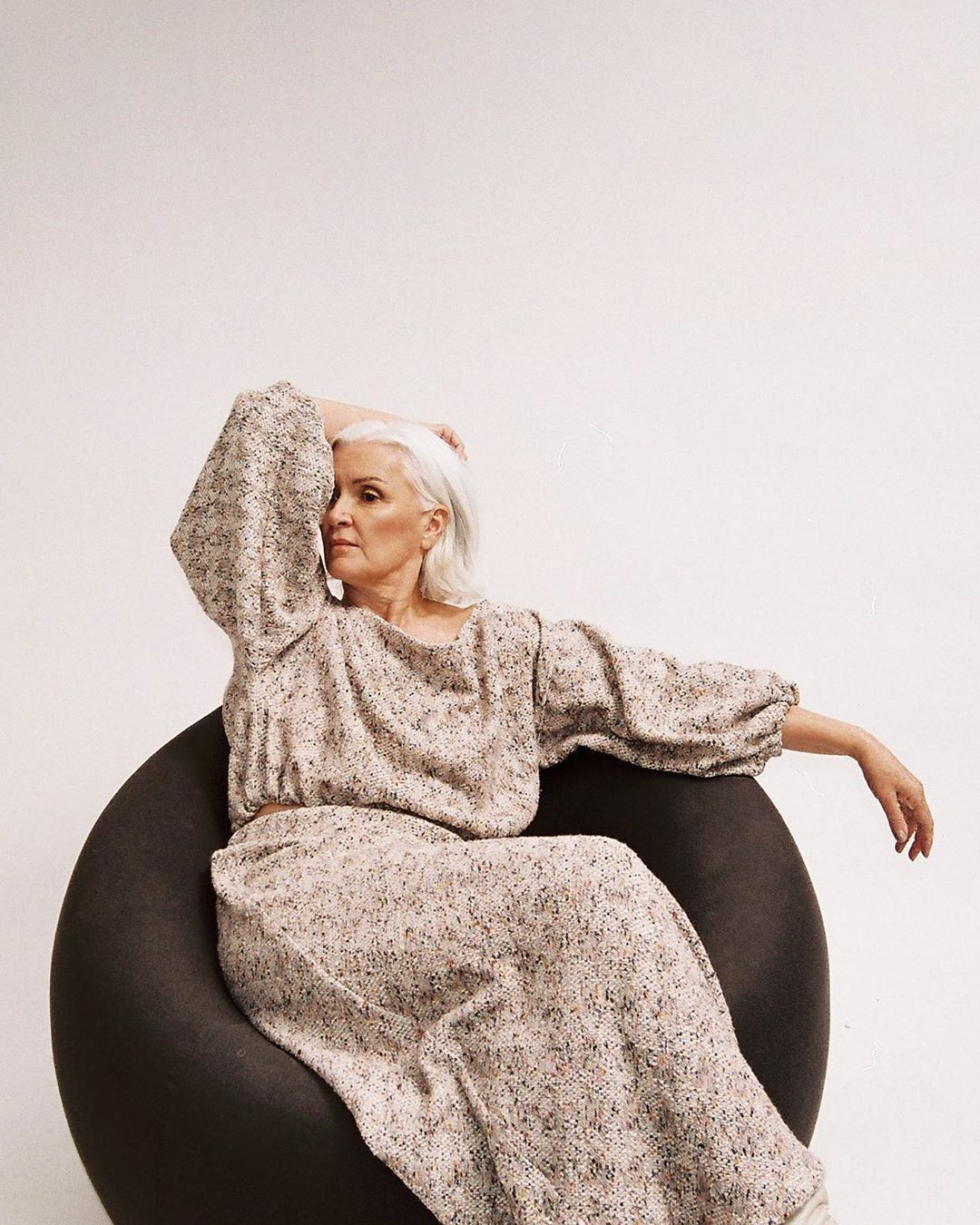
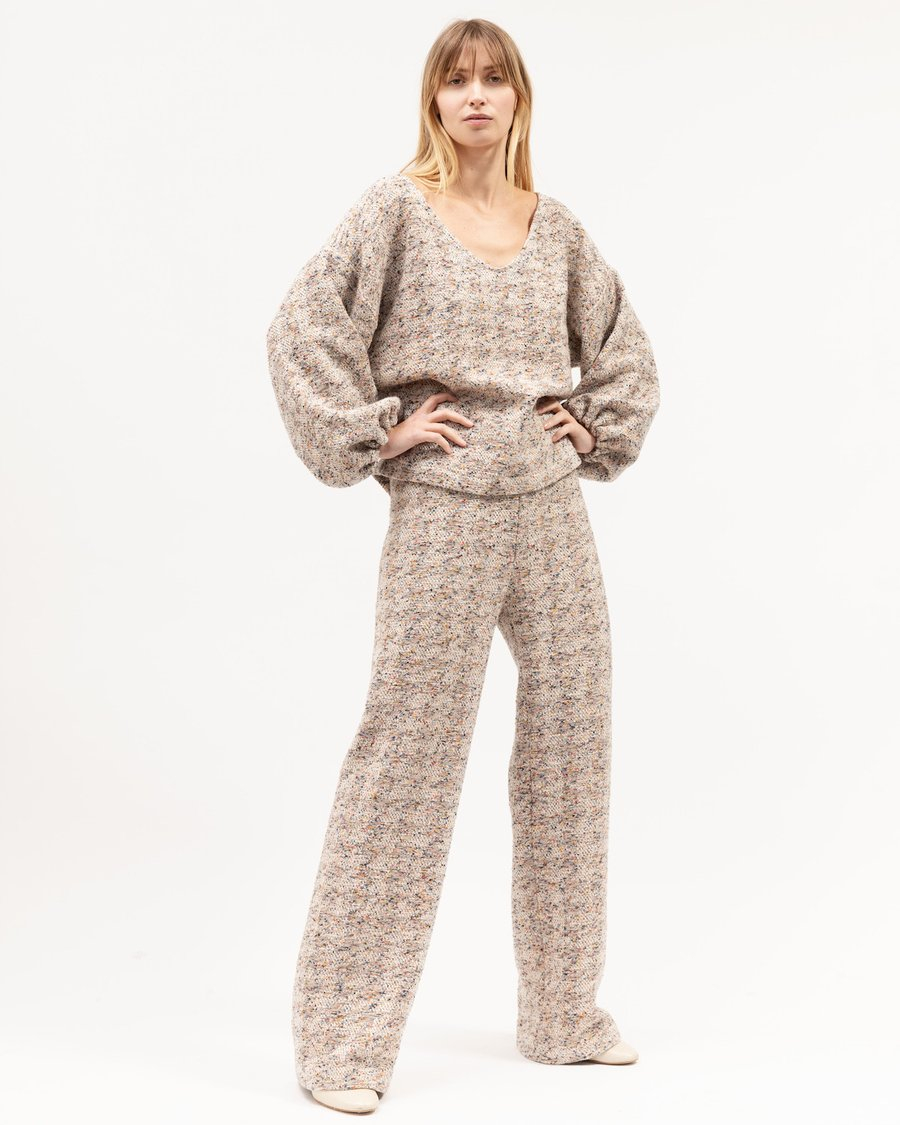
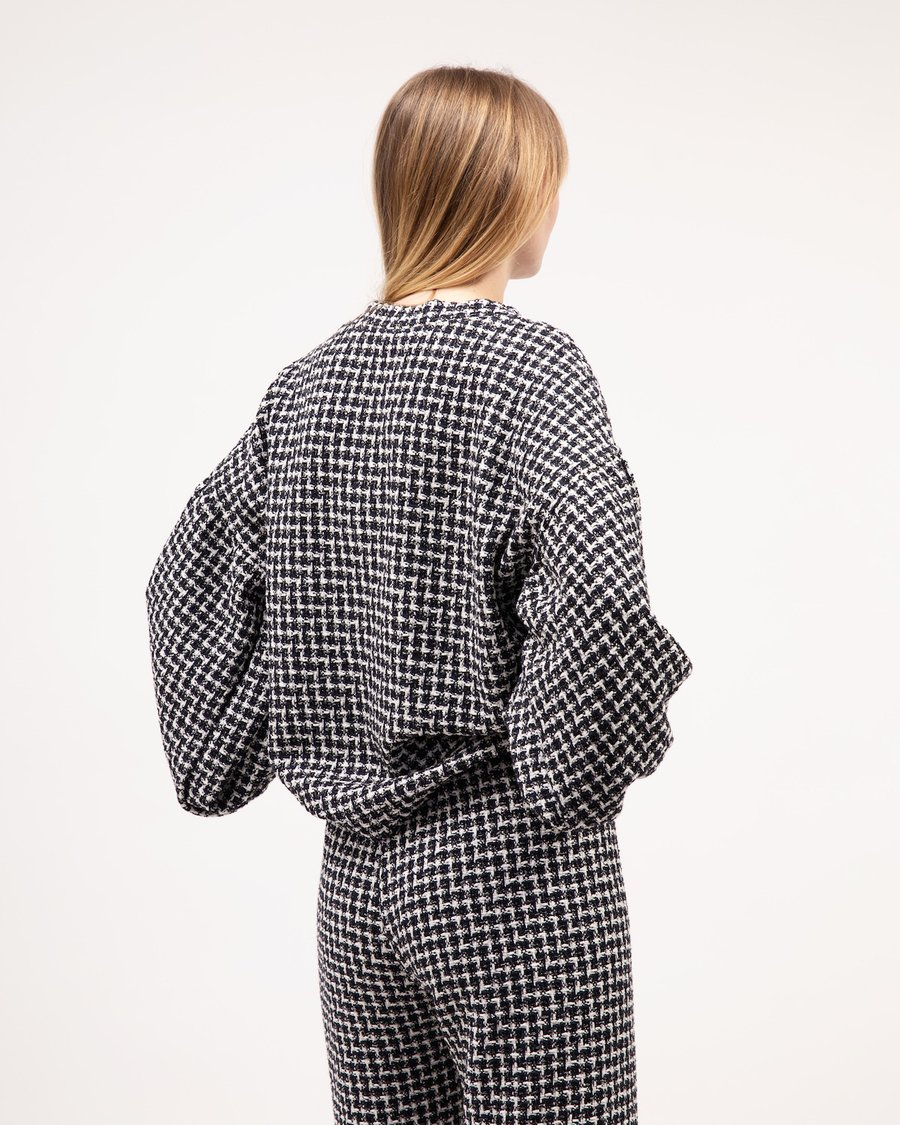
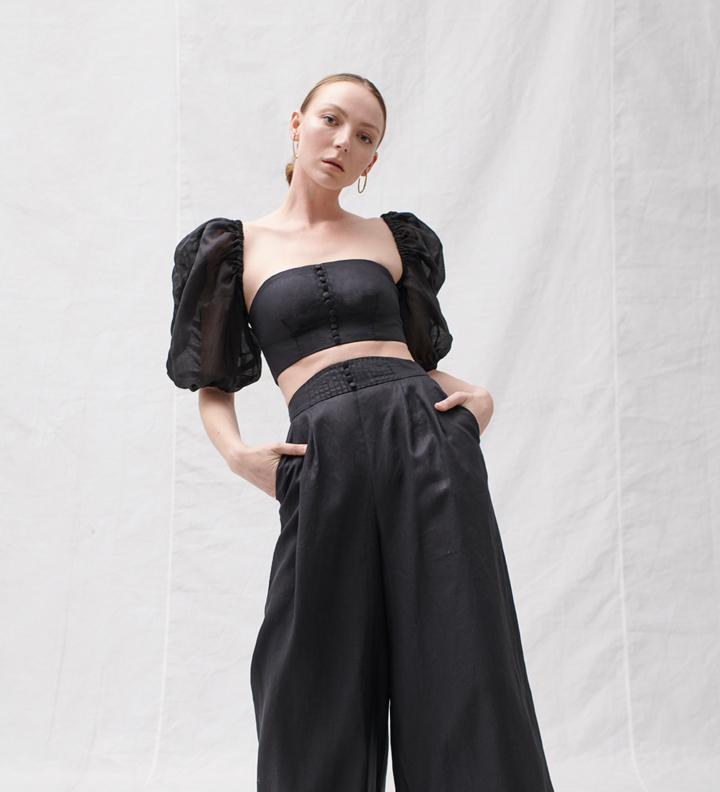
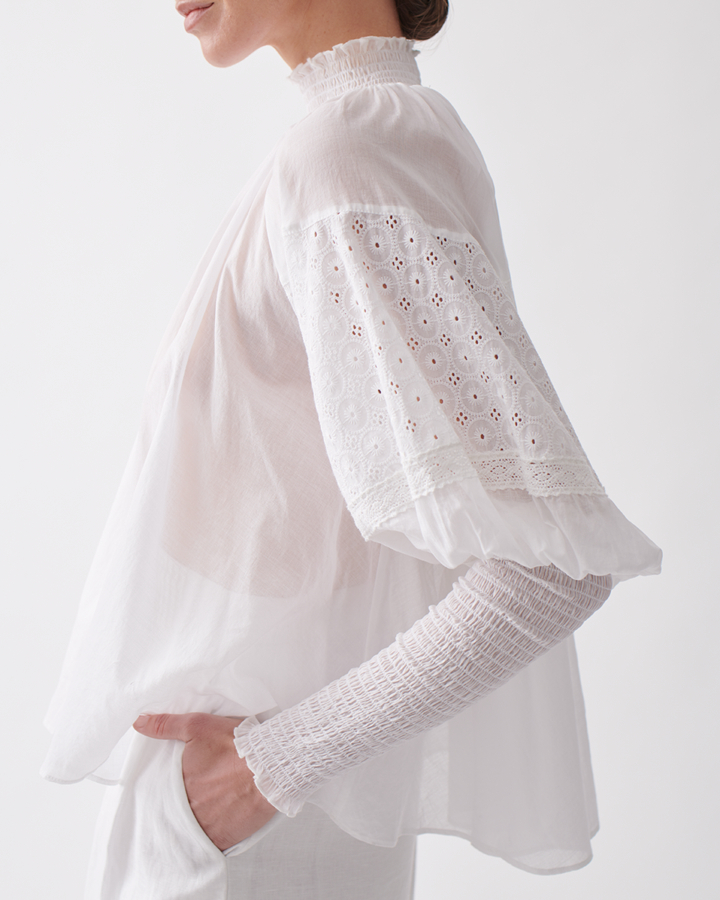
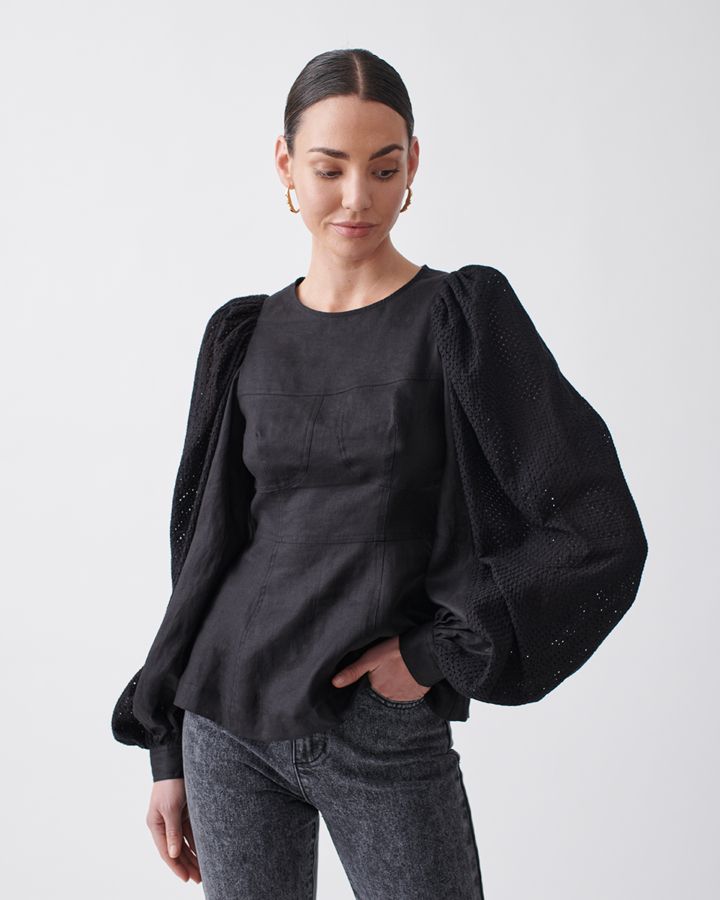
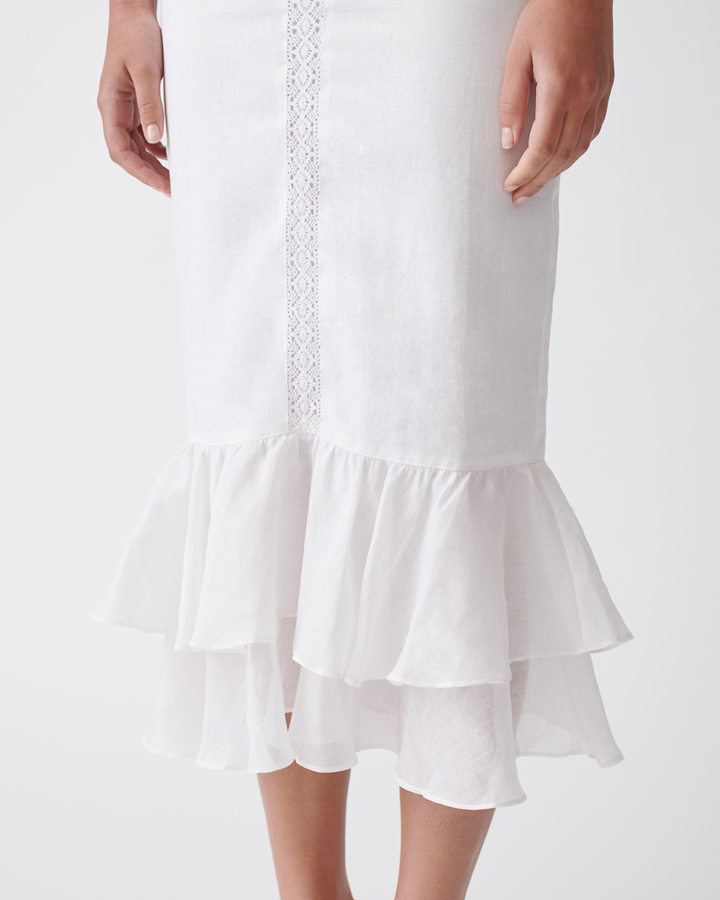
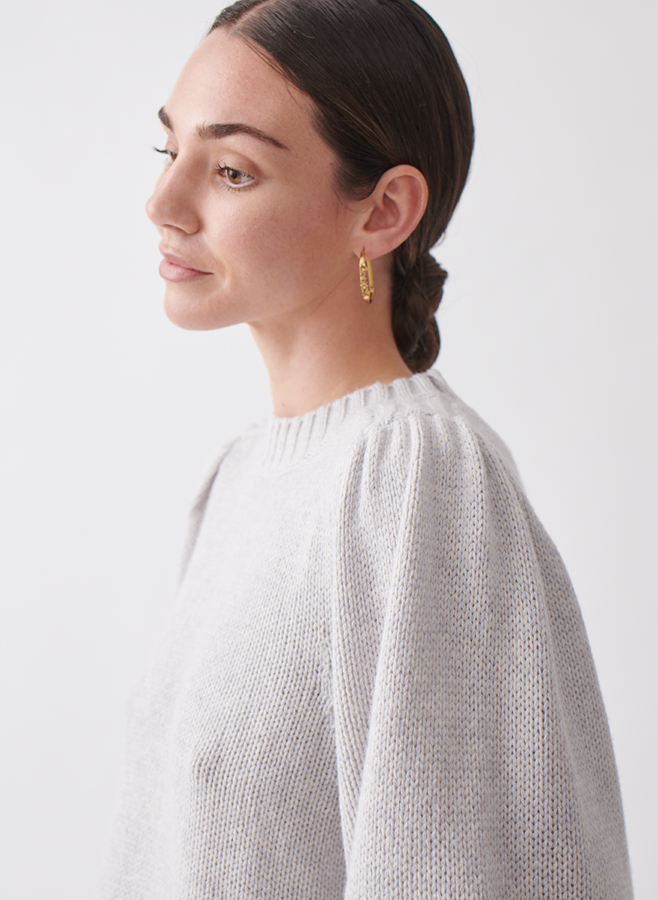
The Dominique Healy aesthetic is a mix of classic shapes like wide-leg pants, pencil skirts, and blouses with textured fabrics and more fashion-forward proportions. She does a spectacular poet-style sleeve.
It’s also interesting that the designer uses an older fit model front and center in her shoots and lookbooks, clearly welcoming the dollar of the more mature buyer. Equally interesting is that the exact same pieces are shown on both the older, and younger models; again showing a more inclusive attitude.
While the natural tones of the fabrics – think white, cream, black – give off a somewhat Scandianivan furniture vibe, the slightly bulky fabrics create a rounded, soft texture to the brand’s pieces.
Healy’s most recent collection was all about matching sets that have the comfortable feel of a sweatsuit but the elegance of a traditional suit due to the use of thick cotton fabrics and classic cuts.
Ethical and Sustainable Production
The majority of the Dominique Healy garments are made in her Melbourne studio, while the rest is produced at an Melbourne factory that is ethically accredited.
Healy strongly believes that production needs to be kept local in order to not only support the Australian fashion industry, but she also feels that otherwise, “a part of the magic of the fashion industry could be lost altogether”.
An added benefit of keeping production local is the ability to produce short runs per style, reducing waste, and to also move to a ‘made to order’ model after the initial garments are sold, again ensure there is little to no wasted stock.
The garment patterns are also designed in such a way as to reduce fabric wastage. The brand’s popular Bella Blouse uses 95% of the fabric allowance to make, and Healy continues to work on ways to decrease fabric wastage with all her patterns.
Another way the designer works to be more sustainable, is to use a majority of deadstock fabrics sourced from Japan, Hong Kong, France, Italy, Australia and New Zealand, where her previous life as a fabric wholesales comes in handy.
Linen used for the brand’s classics range is produced by mills that are OEKO-TEX certified, meaning they meet a set of international regulations for the responsible use of chemicals.
While Healy has obviously created a fashion business that already follows a number of ethical and sustainable processes, the designer states that she will continue to incorporate “more sustainable and earth friendly materials into her collections”.
As the world continues to feel less and less safe, there has been an increase in searches for, and sales of, fashion items that bring a sense of comfort. Nostalgia for the times ‘before’, the golden ages of previous centuries when anything seemed possible, is popping up all over the place.
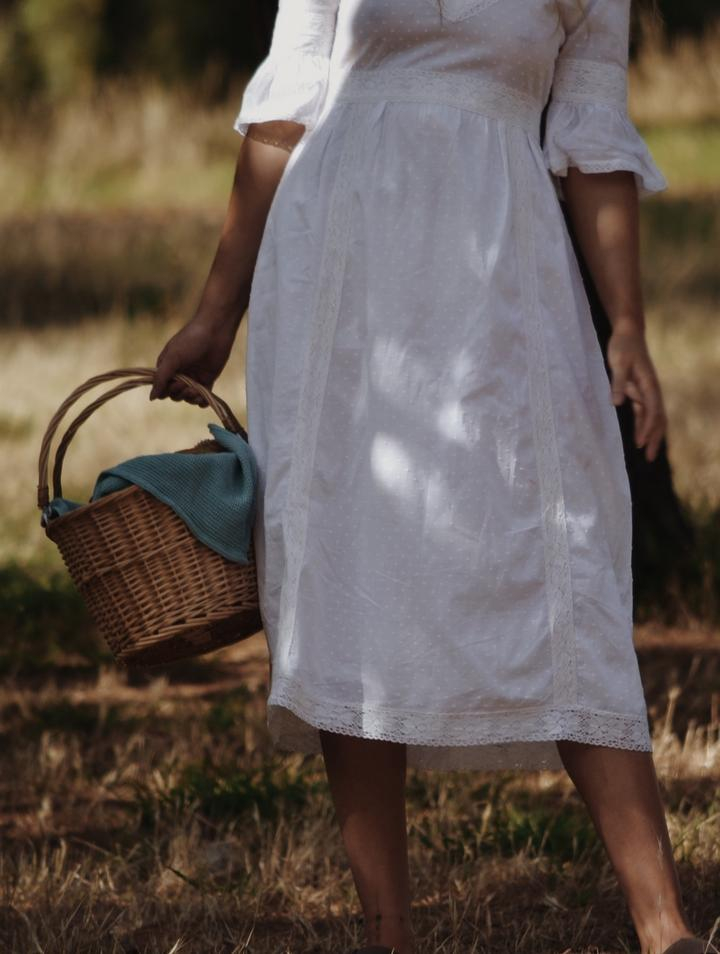
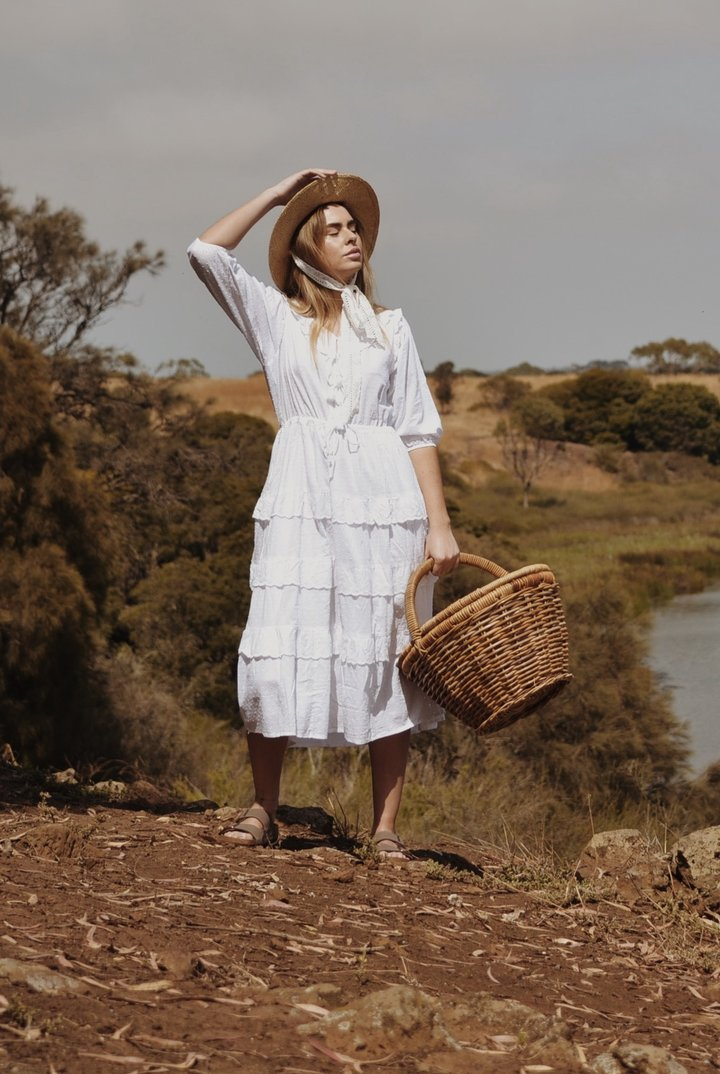
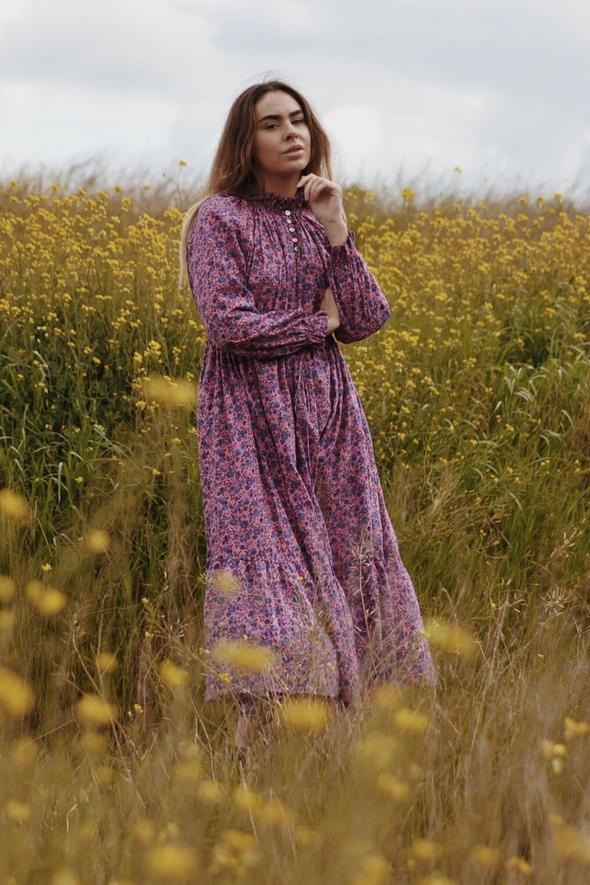
Whether it was the 1910s, or the 1970s, the desire for a light, pretty dress made of fine fabrics with lace and floral details is a trend that has come full circle in 2020. Concepts like #cottagecore, handcrafts, handmade, natural materials, floral prints, delicate detailing and classical, forgiving silhouettes can be seen in many designers’ work.
The Strawberry Midi Dress by Lirika Matoshi is perhaps the most famous dress of the year; so famous that popular social media influencers are making their own. The search for ‘prairie dress’ gets you 55,200,000 results on Google.
What’s really interesting is that the bulk of these results are not for major fashion brands, but from small independent designers, or even home sewists, who are looking to create clothes that are not only pretty, but comforting and designed for real women to wear. Clothing that is a bulwark against the stresses of a world pandemic and all that it brings.
All of this means that designers who have always created seasonless, trendless, slow fashion clothing are coming into their own. One of these is Australian designer Lucy Blair with her brand Ankoa.
Based in rural Australia, Lucy studied fashion at RMIT TAFE and worked in the commercial side of the fashion industry for a number of years, learning what she needed to know about how the market and industry operates in Australia. She also ran her own small, independent brand at the same time “making plenty of mistakes in what was a very different landscape, online shopping was only just starting out at that point”.
Lucy admits that while she loved what she was doing, she also started to see the cracks in the industry’s walls. “This was a time where I was very much captivated by the glamour of the industry and at this point ethical fashion wasn’t something that was really spoken about and was not something that was ever part of my curriculum studying,” explains Lucy.
Eventually she moved back to the country, drawn to a slower pace of life and a more considered way of producing fashion.
“Ankoa was something that I gradually started, around six years ago working part time and then once I had children found a whole new drive and passion to create,” says Lucy.
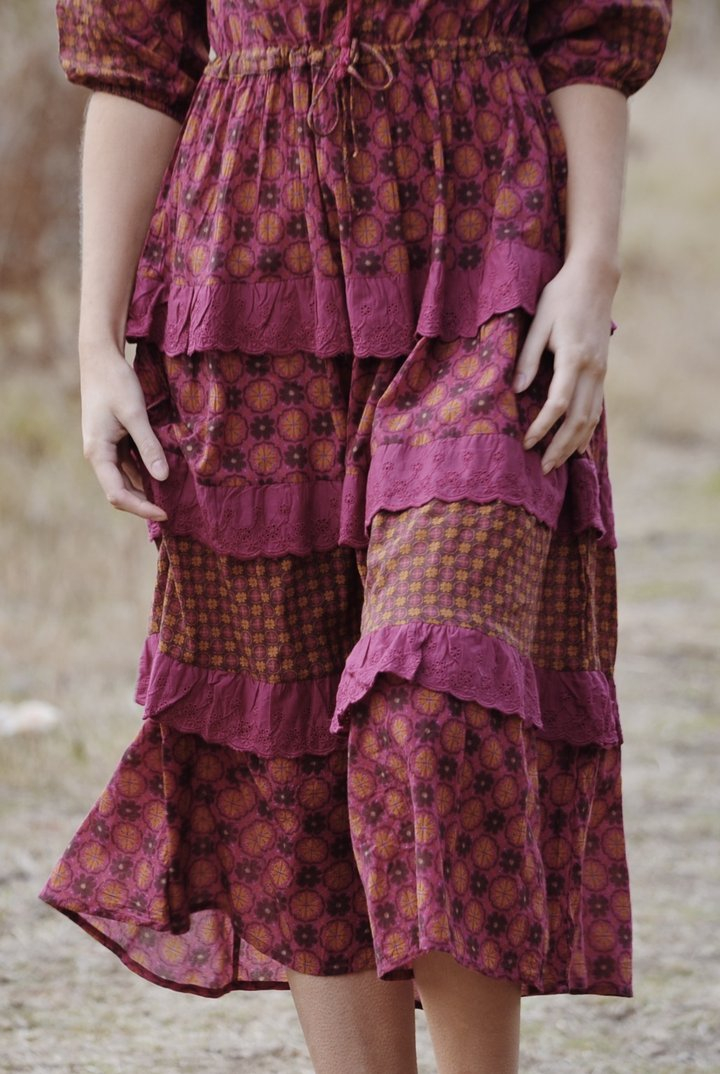
“The initial concept for Ankoa came from a love for hand blocked Indian cotton fabric. The fabric is created by carving wooden blocks and then dipping them in dye to create a unique print by hand.”
“I fell in love with the beauty of this ancient art and wanted to find a way to support and celebrate it. Initially I was going to make men’s shirts but ended up crossing over to women’s wear as that was my real passion.
“Once that happened it became about ‘celebrating life and all it has to offer’, making pieces that pull you further into moments so in terms of slow I guess that was always an underlying component but has developed further, as has the aesthetic.”
Lucy’s style is a mix of romanticism, traditional femininity, and a sense of womanhood. Motherhood made a major impact not only on Lucy’s thoughts about creating slower, more sustainable fashion, but also on her designs. Many of her dresses and tops are designed to make breastfeeding easier, for example.
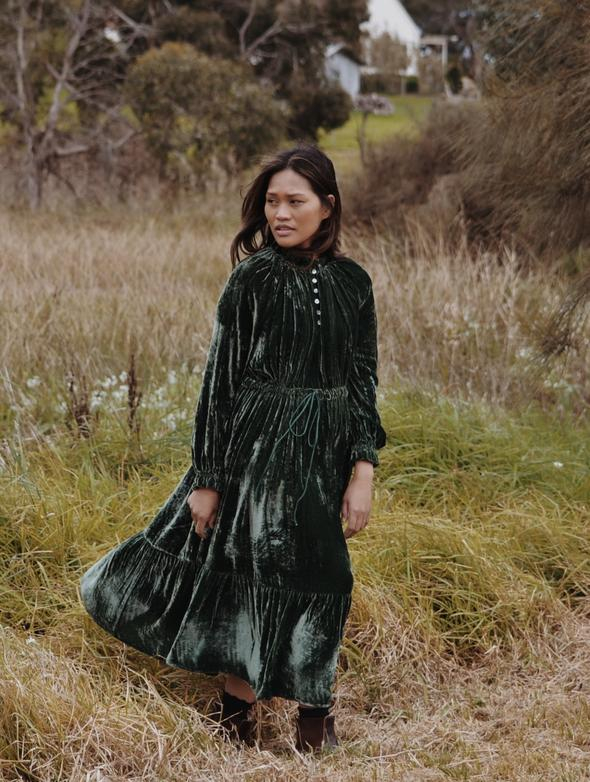
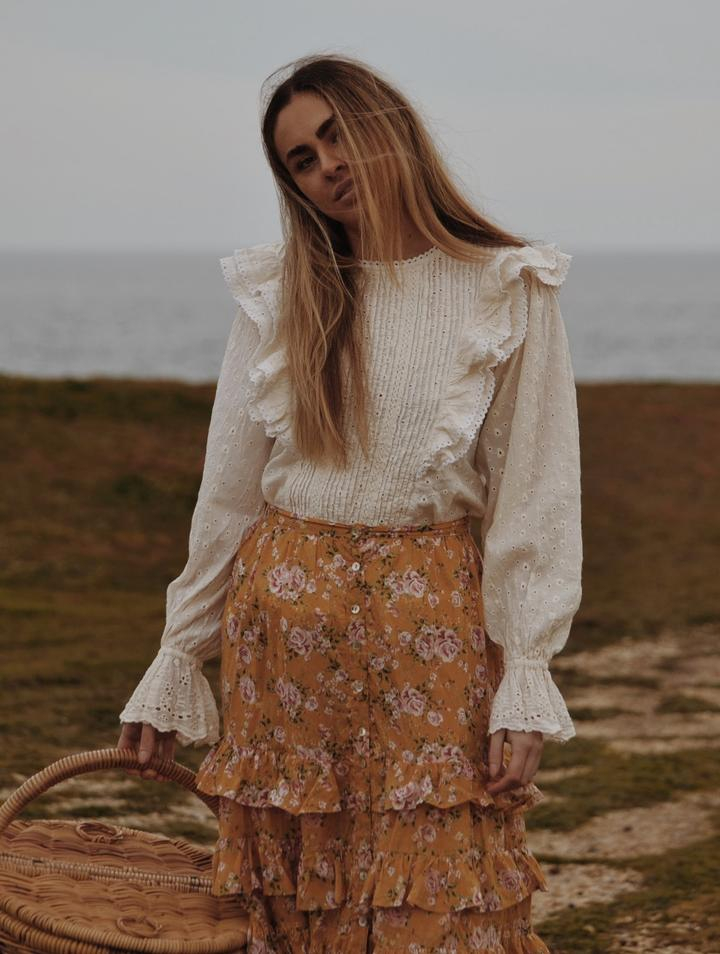
Rich colours and delicate prints on cotton mix with soft fabrics like velvet in her Winter collection; shapes are flattering with added volume for easy movement. These are very pretty clothes, with details like ruffles and lace that hark back to either the 70s hippie dresses or the floaty shirtwaists of the Edwardian era.
Each garment is a little bit different due to the use of hand printing using blocks in the traditional Indian style. The production runs are also small ensuring there is little to no waste, creating garments that are meant to last, and be handed down like heirlooms.
The battle for Sustainability
These days words like ‘sustainability’, ‘ethical consumerism’, ‘slow fashion’ etc are thrown around with abandon, and in many cases with little understanding. ‘Everyone knows’ that the fashion industry has to become more ‘sustainable’, but few brands understand what this actually means, let alone know how to implement the required changes.
For a small, independent brand like Ankoa, the issue of sustainability is multilayered; a battle to continuously improve.
“In terms of sustainability, so much has changed in the last six years and it is something to celebrate but has also been a battle,” explains Lucy. “When I say battle, I grew up believing that we could do anything, be anything but suddenly what I wanted to do seemed so damaging and for a long time I felt really lost and unsure of what to do.
“So yes, [sustainability] has always been a focus because I made the decision to do it, but do it in a way that I felt comfortable, so that the people who I work with are paid properly, making very small quantities of pieces with a focus on quality and natural fibres, and hoping that the Ankoa woman chooses one dress over 20 cheap throw away dresses to last.
“The focus on sustainability is something that continues to change, I am not perfect and there are still so many improvements to be made but it is something that I feel strongly about as the brand grows.”
While admitting that being a sustainable and ethical fashion brand is always a work in progress, Lucy does feel positive about the future of the industry.
“Given that even ten/fifteen years ago, sustainability was not really something that was much of a consideration, I am excited and hopeful for the future. I think that there have been lots of positive changes in the last five years in particular, so I can only imagine how many great things might happen in the next five to come,” says Lucy.
“I also hope that people’s thinking is slowly changing and people want to know what the story is behind the clothes and also making conscious choices opting for pieces to wear for years rather than once or twice and throw away. I am also really excited about the future of recycled fashion/fabric and feel this is an area that has huge potential for growth.”
Positivity in the Pandemic
It has to be said that the retail industry, particularly the fashion retail space, has been massively impacted by the Coronavirus pandemic. While a few items like sweatpants and masks might be doing huge sales online, for creative fashion brands things have been less rosy. After all, who needs a ballgown right now?
However, smaller, more nimble brands like Ankoa have been able to react quickly to market changes, and have also seen customers’ behaviour change as well.
“I believe the pandemic has highlighted a few different things. It has caused many of us to slow down and focus on what’s important and how little we need, I hope this also fuels the desire to choose quality over quantity,” says Lucy.
“I would also love to see some more manufacturing options here in Australia, I love supporting and working with my team in India who I hope to continue to work with but I would also very much love to do some more work here too.”
Ankoa was naturally impacted by the arrival of Covid19, says Lucy: “When things first started I went from being consistent to absolute crickets.” However she also saw a slow return to sales with fluctuations based on newly released items. She says that she remains nervous – Lucy had thought she might have to close the brand earlier on – but now hopes that things will continue to get better.
Onwards and upwards …
While Lucy remains passionate about continuing Ankoa, particularly in relation to supporting her current team and continuing her love of traditional Indian hand block printing, she would also like to be able to produce her garments in Australia too.
“… Before children I was making a lot myself but for now it is near impossible having little people around. Once my littlies are off to school then I hope I am able to get back to making in some way and to potentially find a way to produce within my local community, in a way that has a positive impact,” says Lucy.
“I would like to keep the brand relatively small, it’s a business of heart and not something that I want to become huge and unmanageable, I would like to find a way to just live a relatively quiet life with family and enjoy creating in a way that is helpful and sustainable.”
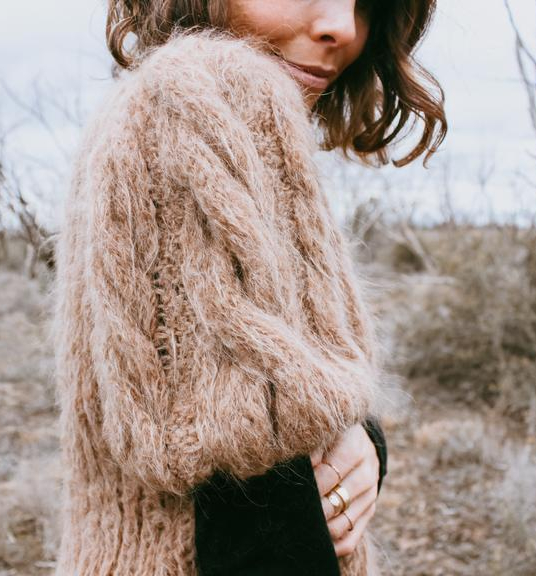
Lorena Laing is a Melbourne ‘fashion artist’ who launched Amano by Lorena Laing as a way to share her handcrafted artisan-style knitwear with the public. The brand is all about ethical and sustainable knitwear, and works with one of the last knitting mills still operating in Australia.
Every product is handcrafted in Australia, and the whole company is dedicated to working with local producers, artisans, craftspeople and artists. The brand also locally sources its materials, manufacturing and packaging locally, stating it feels a “responsibility to preserve and pass on [ageing artisanal skills] to future generations”.
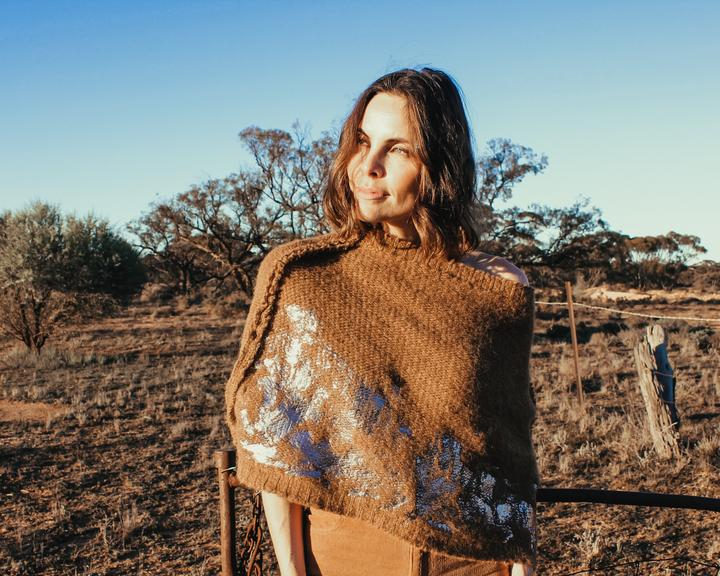
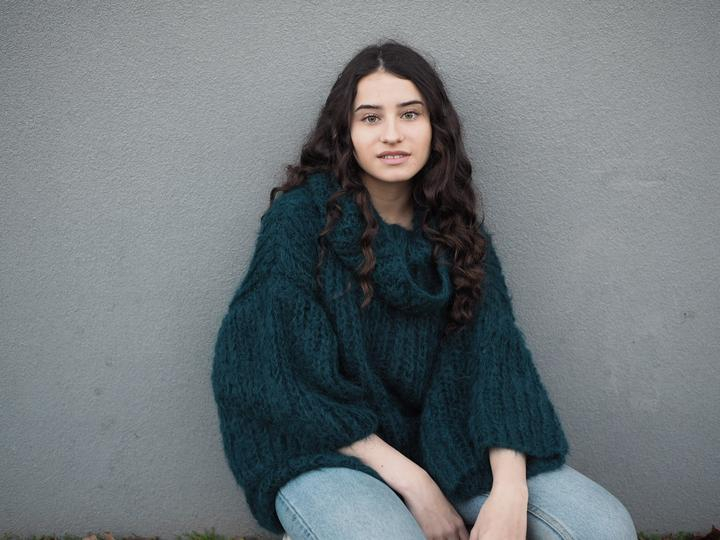
Due to its artisanal nature, Amano creates clothing items that are more like bespoke, one-off artworks. The design concept is based around the individuality of handmade production, and the core concept is that no two pieces are exactly the same. The overall style will be the same, but the colours, details and specifics will be different.
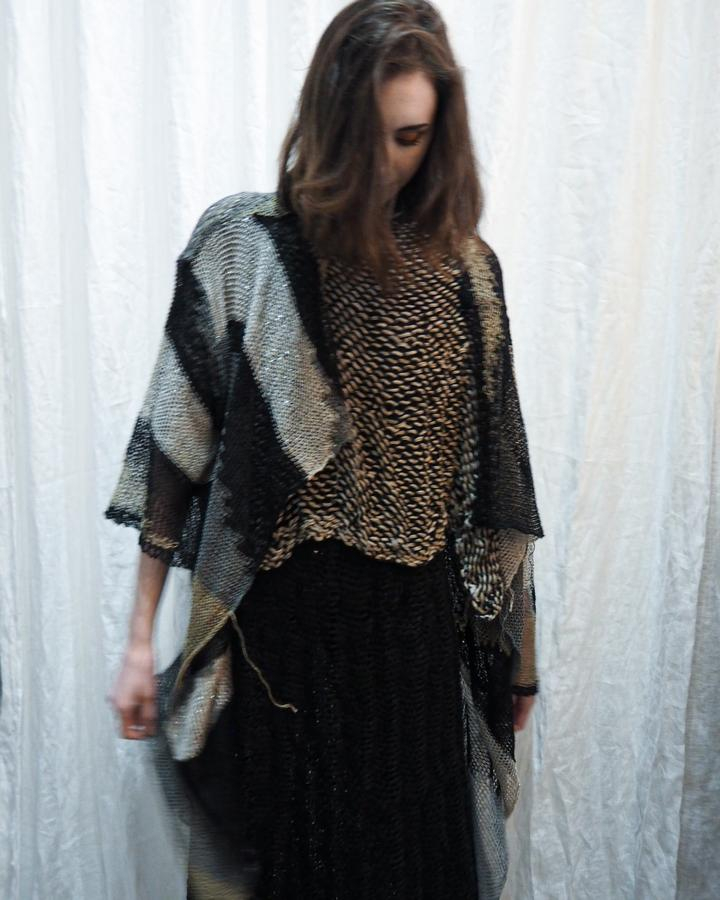
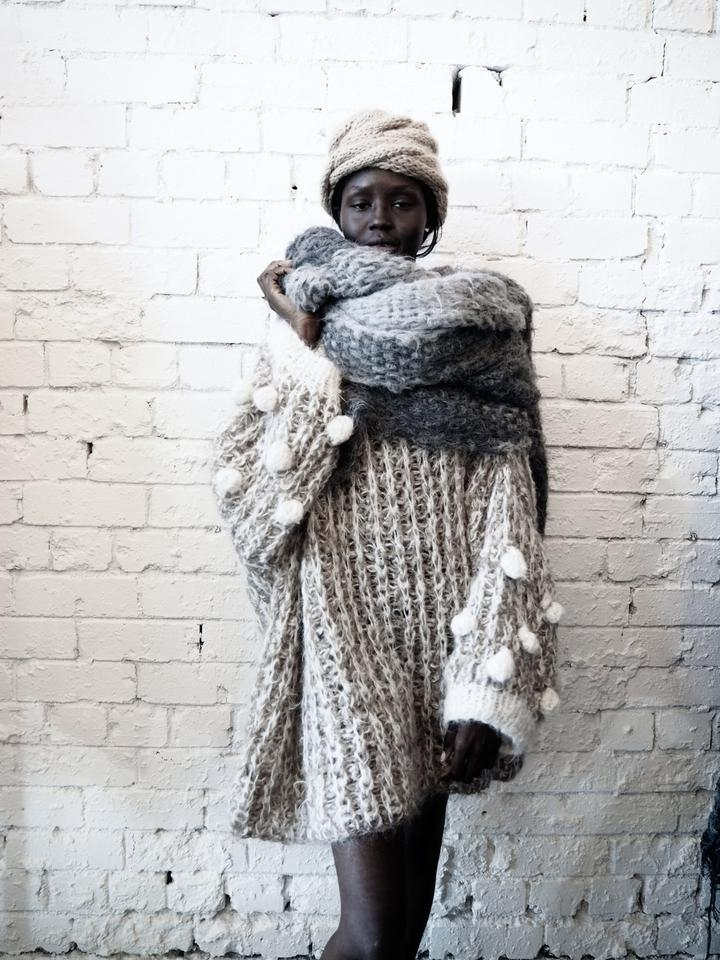
Traditional production techniques like loom weaving, crochet and needle knitting are combined with the small run manufacturing of the traditional knitting mill to create the various garments. Natural materials like alpaca and high quality wool are used to ensure that the pieces last.
“The Alpaca fibre I work with is local and ethically sourced from Peru. The skilled artisans who weave and knit my designs are locals and it is important to me to focus on keeping my collections local and one hundred percent natural,” writes Laing.
Amano is very much about ‘slow fashion’. The brand wants the garments to be used, worn, and handed down, ideally to become family heirlooms.
“Amano takes great pride in hand-crafting its pieces with locally sourced materials, have zero waste and are crafted and packaged locally. We are aware of our carbon footprint, of our struggling manufacturing industry and our aging artisanal skills. We feel a responsibility to preserve these and ensure they exist for future generations.”
To help with controlling waste, for the brand’s ready-to-wear capsule collection Laing uses CAD (Computer-Aided Design) software to map out the garments in minute detail to reduce wastage.
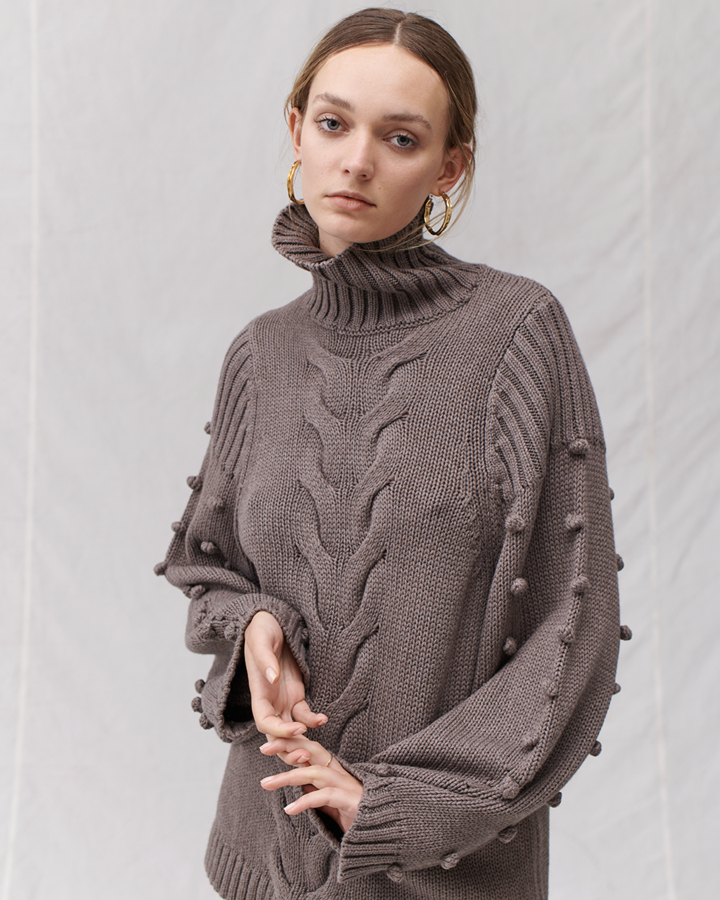
While there is definitely a handmade ‘craftiness’ to the Amano aesthetic, you also see the influence of Japanese knitwear designers like Yuko Shimizu and Reiko Kuwamura in the voluminous shapes, as well as early Rick Owens open-work knits, and even the delicacy of the work by textile artists like Chris Motley and Gjertrud Hals.
The use of muted colours – neutrals, blacks, greys and warm browns – ensures that these garments are not trend focused. The oversized shapes also mean that Amano knitwear suits all body types and sizes.
Amano by Lorena Laing garments are not cheap, they are handmade after all, but they are not as expensive as you would imagine. One of these knits will last you for years, so the cost per wear is definitely worth the investment.
You can shop Amano by Lorena Laing online at lorenalaing.com, and once the coronavirus restrictions are over you can visit the atelier located at 631 Rathdowne Street Carlton North, Victoria, Australia. The designer also holds one-on-one styling sessions where you get a personal introduction to the garments from Laing, and you can also commission bespoke garments.
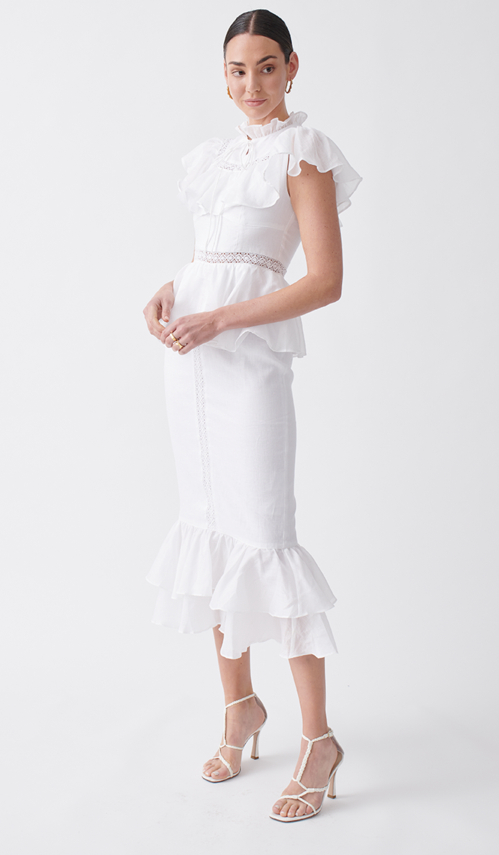
Emerging Australian brand Joslin was founded by designer Elinor Joslin in only 2018, but since then has become one of the country’s most popular sustainable fashion labels, famous for pretty, linen dresses.
The brand’s aesthetic is based on the designer’s artist parents and features feminine details like smocking, ruffles, pintucks and buttons in Joslin’s signature linen. But what the brand is really known for is its comprehensive dedication to producing sustainable and ethical fashion.
The brand’s site lists in detail anything and everything you want to know about how the clothes are produced. Elinor is aware that the label has only begun its journey towards being a completely sustainable brand, so prefers to describe Joslin as a “conscious” brand, and being “committed to the improvement of sustainable processes with every collection, and to provide further transparency and accreditation as her business grows from an emerging designer brand into an established sustainable designer brand”, as her website states.
Elinor “believes that much of the Fashion Industry as it currently stands, is a cycle of planned obsolescence and synthetic landfill. Fashion itself is a business model of creating and selling new products that are made from the earth’s resources, only to be worn once or a few times before becoming obsolete.”
Joslin then is part of the Slow Fashion movement. “Being conscious, being considered, making responsible choices, encouraging positive change, pushing for transparency and always evolving in ways to lighten one’s ecological footprint is both a brand and consumer’s best foot forward to a sustainable fashion industry,” says Elinor.
This translates into using textiles and yarns that are “planet friendly and traceable to the source wherever possible”. These fabrics are ramie, silk, wool, cashmere, cotton, and of course, linen. Getting hold of these fabrics, however, isn’t as easy as you may think.
“Fabric minimums are a major challenge for small-business designers. Due to the fashion industry’s lower demand for sustainable fabrics, pricing and minimum order quantities are in so many cases unattainable,” explains Elinor. “Joslin faces many barriers in price, quality and scalability for many bio-based, certified and innovative alternative textiles. Instead, for now, the business focuses on natural fibres and naturally occurring sustainable fibres.”
About 70% of Joslin’s pieces are made of linen, the brand gets its linen-flax from the Normandy region of France; then the combed flax is imported to Jiangsu, China, where it is spun. According to Joslin, “linen uses approximately 90% less embodied energy in its manufacture than polyester -‘fast fashion’s’ most common fabric – and is long lasting and durable in the wardrobe.”
Elinor believes “the world urgently needs to lower the usage of fossil fuelled textiles and move towards textile-to-textile recycling if fossil fuelled textiles are to be of continued use.” Despite this, the brand does use some synthetics and plastics, but only when there is “no natural alternative, or when it benefits the natural composition”.
Still, this is not for lack of desire. “In garment production, it is not always possible to avoid synthetics and plastics – buttons, zips and fusing’s are the benchmark of standard manufacturing and garment construction. There is currently no natural alternative that is commercially viable for fusing,” says the brand’s website.
However, the Joslin knitwear collection makes use of pre-consumer recycled nylon, because it helps the knits to be stronger, so that it will last even longer. The brand also uses manufacturers and dyers that meet the OEKO-TEX® 100 STANDARD which is 100% free from over 100 harmful chemicals that are recognised as being harmful for humans.
The brand’s packaging is eco-friendly with 100% compostable bags, 100% recycled tissue paper, card and paper, plus all of the international e-commerce orders are carbon offset through the DHL GoGreen Climate Neutral shipping service. Even the garments exported from China come in 100% compostable plant-based satchels.
You can read all about the full complement of actions that the brand takes to ensure that it is as ethical and sustainable as it can be on the website.
The Slow part of the brand’s production is the reduction of overproduction and ensuring the garments are seasonless, with a sense of longevity – no piece is ever designed to only be worn once according to Elinor. This is why she focuses on traditional detailing combined with ways to wear the garments in more than one way, and sticks to a minimal palette of neutral shades.
There is a touch of the #cottagecore movement to Joslin’s style with the use of natural fabrics, ruffles and loose-fit cuts, but it is elevated by the traditional detailing and the sexiness of deep-v necklines and transparent inserts.

























 niki bruce