Elegant, seasonless, and ageless, the work of Melbourne based designer Dominique Healy has a built up a dedicated fan base of customers since she launched her eponymous brand in 2017.
With 10 years as a fabric wholesaler in both Australia and New Zealand, if there’s one thing the designer is known for, it is high quality, beautiful fabrics. It was this background that was the impetus for the launch of the brand as the designer began stashing and storing the materials she came across.
Alongside her love for fabric, Healy was also committed to creating clothing that support and promoted local and ethical clothing production, as she writes on her website. The brand’s mission statement clearly shows the designer’s focus: “Trans-seasonal pieces. Released slowly. Made in-house in our Melbourne studio.”
“Each garment is carefully considered and constructed locally from high-quality fabrics, all made to stand the test of time,” states the website.
Elegant, seasonless, ageless
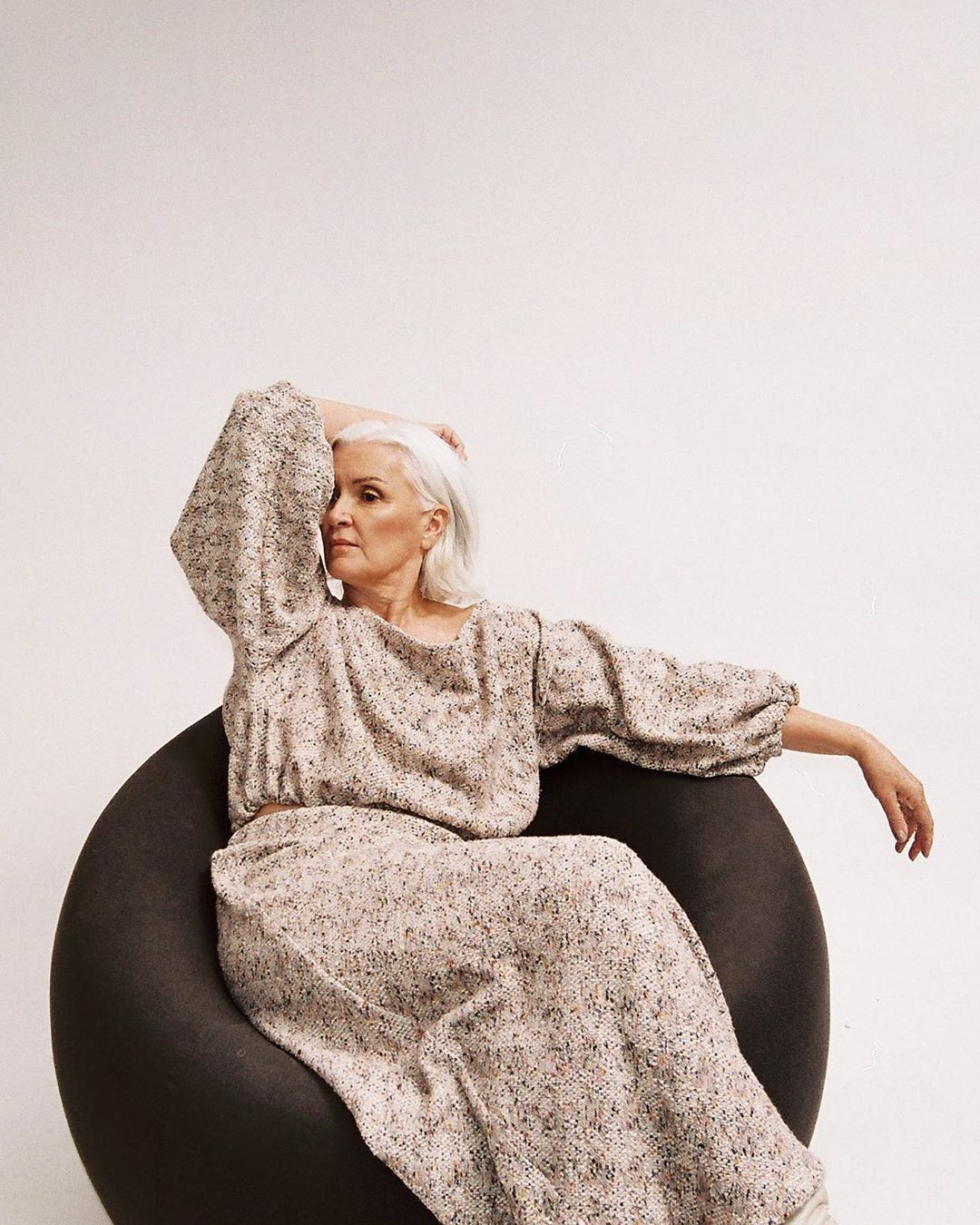
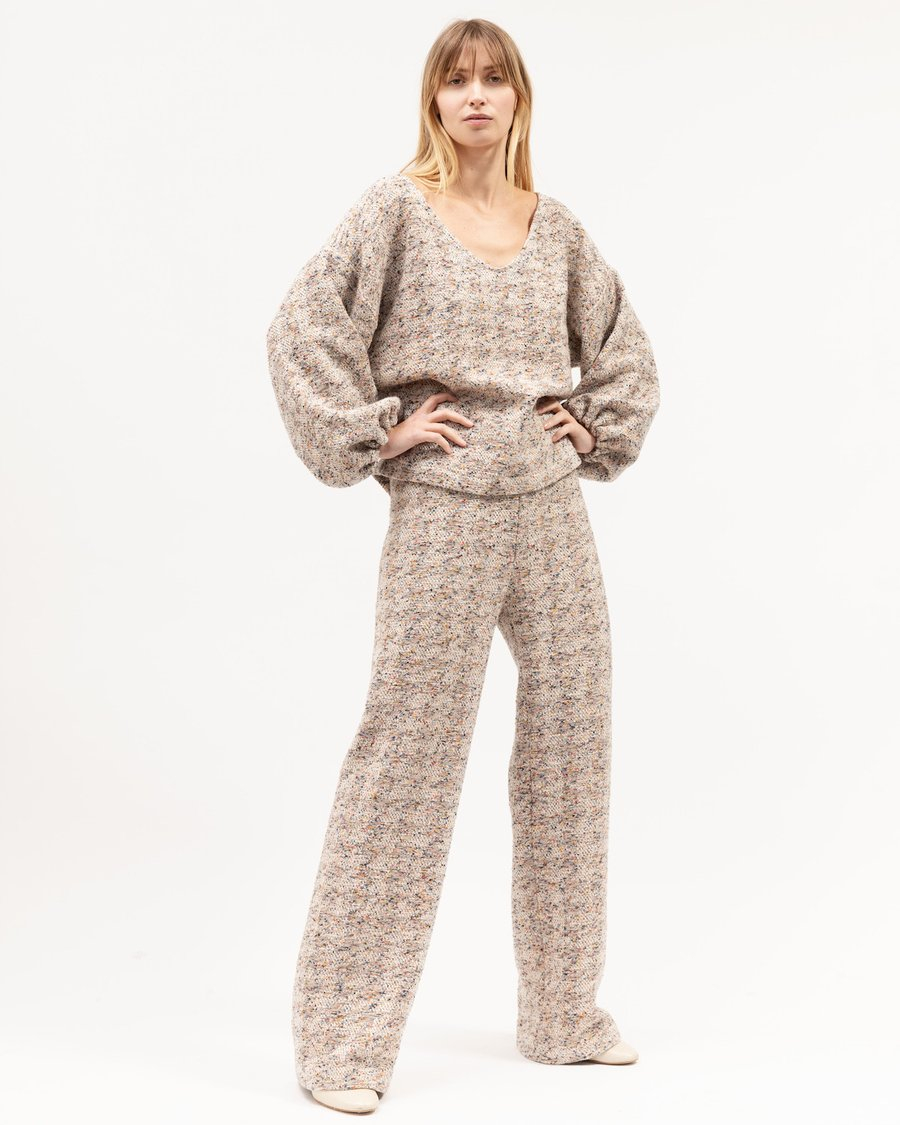
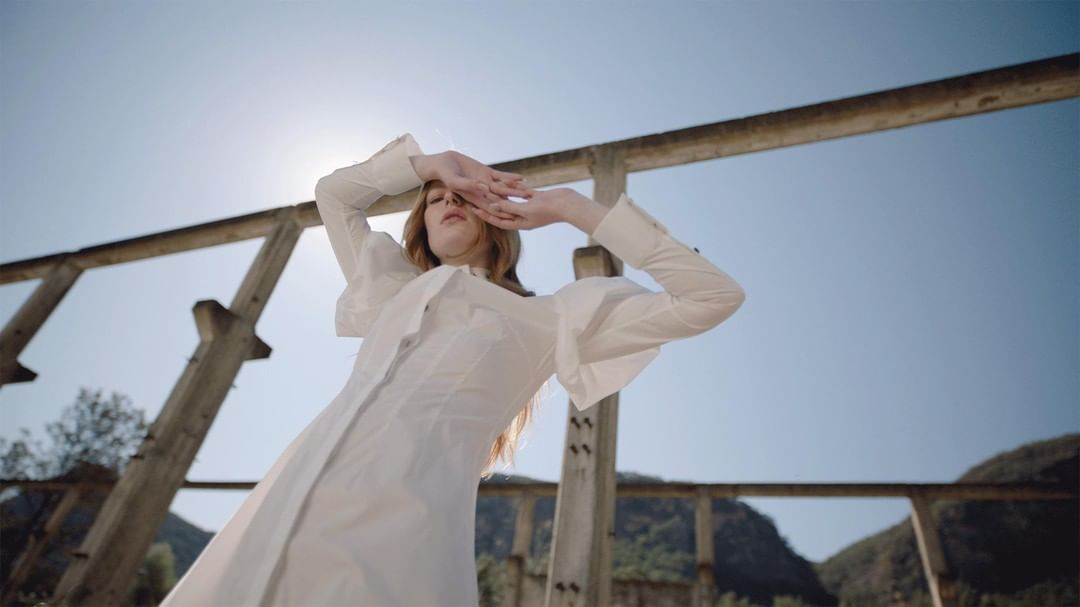
The Dominique Healy aesthetic is a mix of classic shapes like wide-leg pants, pencil skirts, and blouses with textured fabrics and more fashion-forward proportions. She does a spectacular poet-style sleeve.
It’s also interesting that the designer uses an older fit model front and center in her shoots and lookbooks, clearly welcoming the dollar of the more mature buyer. Equally interesting is that the exact same pieces are shown on both the older, and younger models; again showing a more inclusive attitude.
While the natural tones of the fabrics – think white, cream, black – give off a somewhat Scandianivan furniture vibe, the slightly bulky fabrics create a rounded, soft texture to the brand’s pieces.
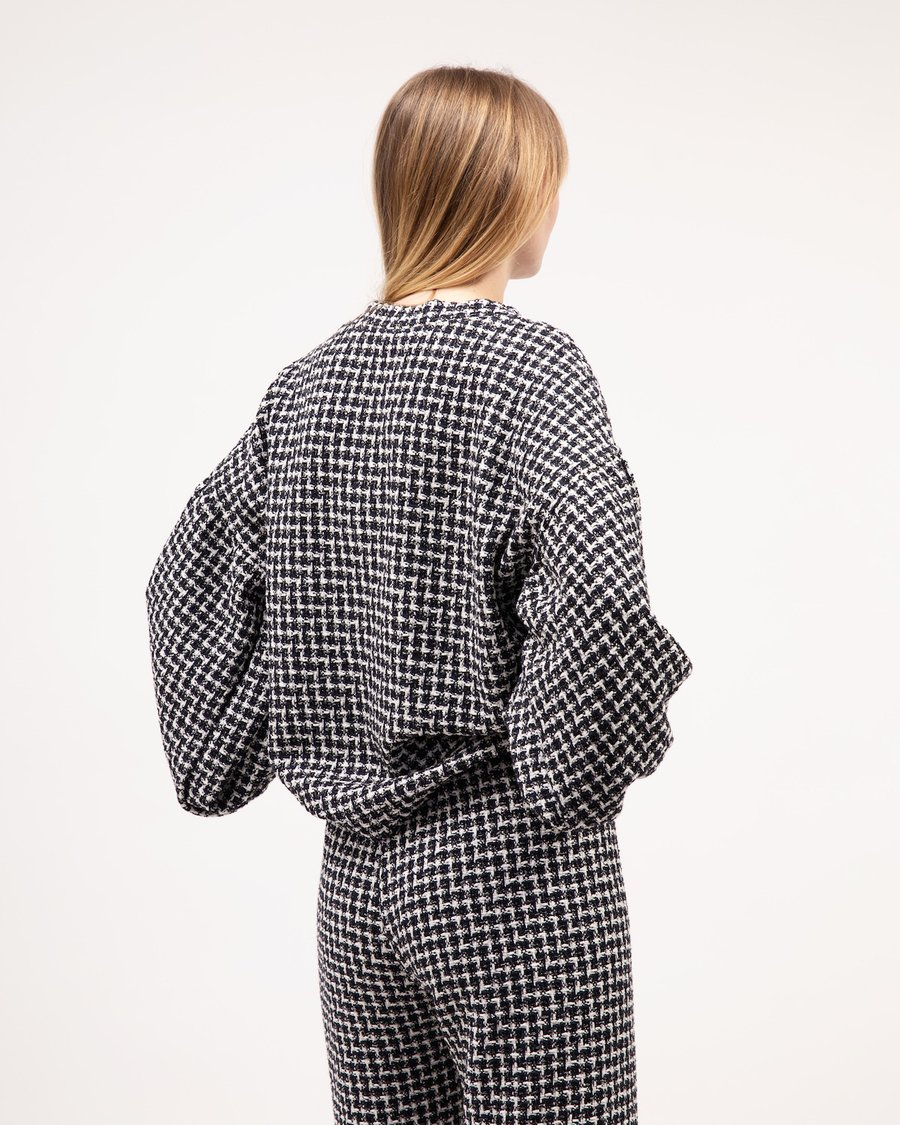
Healy’s most recent collection was all about matching sets that have the comfortable feel of a sweatsuit but the elegance of a traditional suit due to the use of thick cotton fabrics and classic cuts.
Ethical and Sustainable Production
The majority of the Dominique Healy garments are made in her Melbourne studio, while the rest is produced at an Melbourne factory that is ethically accredited.
Healy strongly believes that production needs to be kept local in order to not only support the Australian fashion industry, but she also feels that otherwise, “a part of the magic of the fashion industry could be lost altogether”.
An added benefit of keeping production local is the ability to produce short runs per style, reducing waste, and to also move to a ‘made to order’ model after the initial garments are sold, again ensure there is little to no wasted stock.
The garment patterns are also designed in such a way as to reduce fabric wastage. The brand’s popular Bella Blouse uses 95% of the fabric allowance to make, and Healy continues to work on ways to decrease fabric wastage with all her patterns.
Another way the designer works to be more sustainable, is to use a majority of deadstock fabrics sourced from Japan, Hong Kong, France, Italy, Australia and New Zealand, where her previous life as a fabric wholesales comes in handy.
Linen used for the brand’s classics range is produced by mills that are OEKO-TEX certified, meaning they meet a set of international regulations for the responsible use of chemicals.
While Healy has obviously created a fashion business that already follows a number of ethical and sustainable processes, the designer states that she will continue to incorporate “more sustainable and earth friendly materials into her collections”.
As the world continues to feel less and less safe, there has been an increase in searches for, and sales of, fashion items that bring a sense of comfort. Nostalgia for the times ‘before’, the golden ages of previous centuries when anything seemed possible, is popping up all over the place.
Whether it was the 1910s, or the 1970s, the desire for a light, pretty dress made of fine fabrics with lace and floral details is a trend that has come full circle in 2020. Concepts like #cottagecore, handcrafts, handmade, natural materials, floral prints, delicate detailing and classical, forgiving silhouettes can be seen in many designers’ work.
The Strawberry Midi Dress by Lirika Matoshi is perhaps the most famous dress of the year; so famous that popular social media influencers are making their own. The search for ‘prairie dress’ gets you 55,200,000 results on Google.
What’s really interesting is that the bulk of these results are not for major fashion brands, but from small independent designers, or even home sewists, who are looking to create clothes that are not only pretty, but comforting and designed for real women to wear. Clothing that is a bulwark against the stresses of a world pandemic and all that it brings.
All of this means that designers who have always created seasonless, trendless, slow fashion clothing are coming into their own. One of these is Australian designer Lucy Blair with her brand Ankoa.
Based in rural Australia, Lucy studied fashion at RMIT TAFE and worked in the commercial side of the fashion industry for a number of years, learning what she needed to know about how the market and industry operates in Australia. She also ran her own small, independent brand at the same time “making plenty of mistakes in what was a very different landscape, online shopping was only just starting out at that point”.
Lucy admits that while she loved what she was doing, she also started to see the cracks in the industry’s walls. “This was a time where I was very much captivated by the glamour of the industry and at this point ethical fashion wasn’t something that was really spoken about and was not something that was ever part of my curriculum studying,” explains Lucy.
Eventually she moved back to the country, drawn to a slower pace of life and a more considered way of producing fashion.
“Ankoa was something that I gradually started, around six years ago working part time and then once I had children found a whole new drive and passion to create,” says Lucy.
“The initial concept for Ankoa came from a love for hand blocked Indian cotton fabric. The fabric is created by carving wooden blocks and then dipping them in dye to create a unique print by hand.”
“I fell in love with the beauty of this ancient art and wanted to find a way to support and celebrate it. Initially I was going to make men’s shirts but ended up crossing over to women’s wear as that was my real passion.
“Once that happened it became about ‘celebrating life and all it has to offer’, making pieces that pull you further into moments so in terms of slow I guess that was always an underlying component but has developed further, as has the aesthetic.”
Lucy’s style is a mix of romanticism, traditional femininity, and a sense of womanhood. Motherhood made a major impact not only on Lucy’s thoughts about creating slower, more sustainable fashion, but also on her designs. Many of her dresses and tops are designed to make breastfeeding easier, for example.
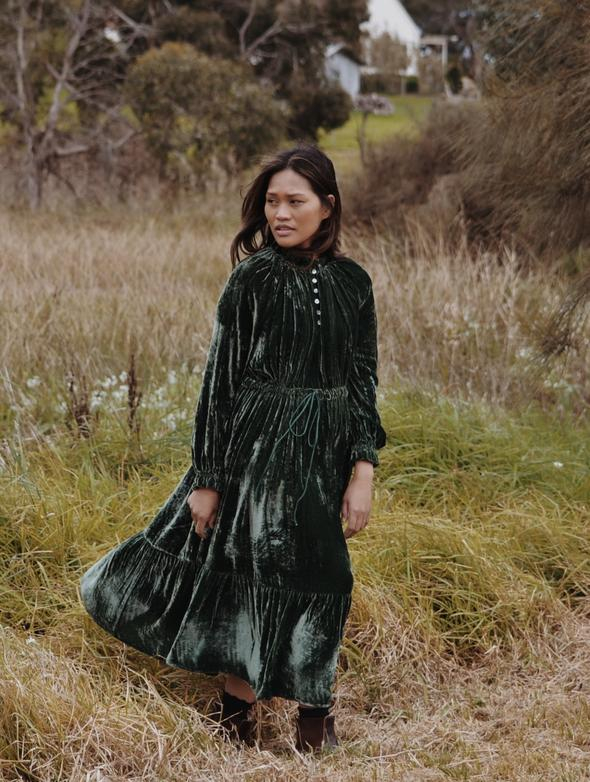
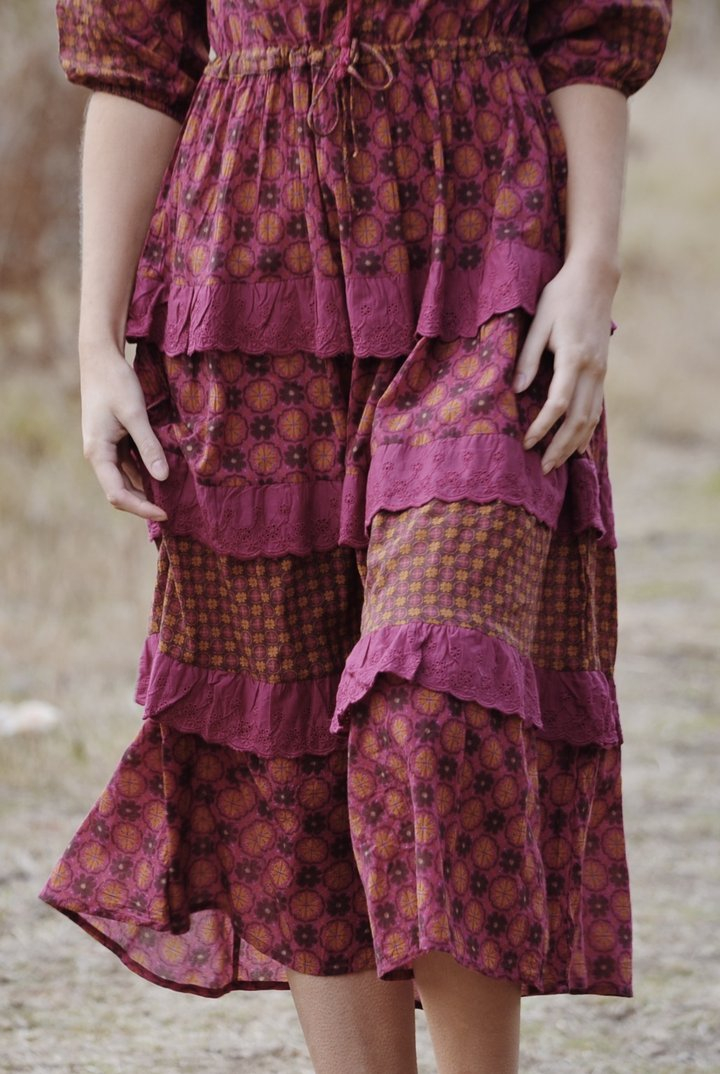
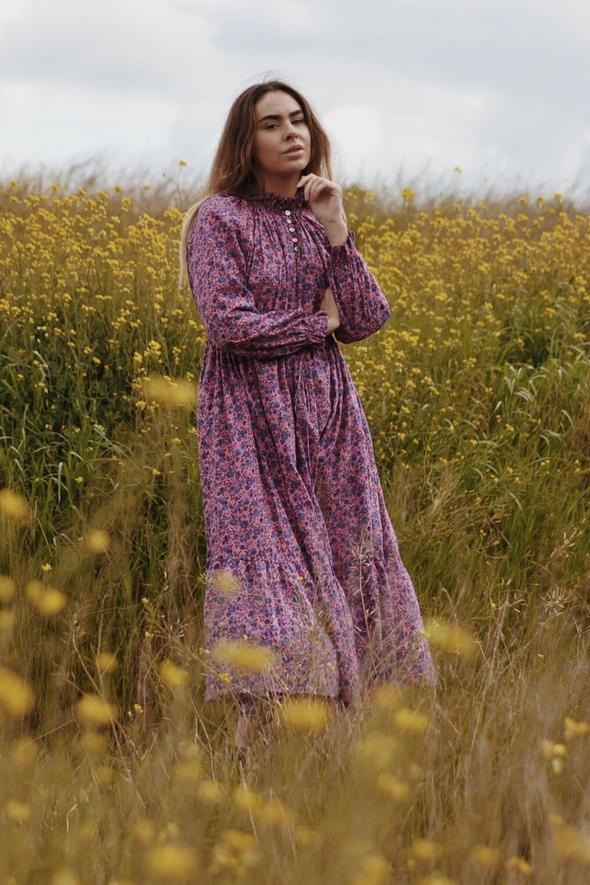
Rich colours and delicate prints on cotton mix with soft fabrics like velvet in her Winter collection; shapes are flattering with added volume for easy movement. These are very pretty clothes, with details like ruffles and lace that hark back to either the 70s hippie dresses or the floaty shirtwaists of the Edwardian era.
Each garment is a little bit different due to the use of hand printing using blocks in the traditional Indian style. The production runs are also small ensuring there is little to no waste, creating garments that are meant to last, and be handed down like heirlooms.
The battle for Sustainability
These days words like ‘sustainability’, ‘ethical consumerism’, ‘slow fashion’ etc are thrown around with abandon, and in many cases with little understanding. ‘Everyone knows’ that the fashion industry has to become more ‘sustainable’, but few brands understand what this actually means, let alone know how to implement the required changes.
For a small, independent brand like Ankoa, the issue of sustainability is multilayered; a battle to continuously improve.
“In terms of sustainability, so much has changed in the last six years and it is something to celebrate but has also been a battle,” explains Lucy. “When I say battle, I grew up believing that we could do anything, be anything but suddenly what I wanted to do seemed so damaging and for a long time I felt really lost and unsure of what to do.
“So yes, [sustainability] has always been a focus because I made the decision to do it, but do it in a way that I felt comfortable, so that the people who I work with are paid properly, making very small quantities of pieces with a focus on quality and natural fibres, and hoping that the Ankoa woman chooses one dress over 20 cheap throw away dresses to last.
“The focus on sustainability is something that continues to change, I am not perfect and there are still so many improvements to be made but it is something that I feel strongly about as the brand grows.”
While admitting that being a sustainable and ethical fashion brand is always a work in progress, Lucy does feel positive about the future of the industry.
“Given that even ten/fifteen years ago, sustainability was not really something that was much of a consideration, I am excited and hopeful for the future. I think that there have been lots of positive changes in the last five years in particular, so I can only imagine how many great things might happen in the next five to come,” says Lucy.
“I also hope that people’s thinking is slowly changing and people want to know what the story is behind the clothes and also making conscious choices opting for pieces to wear for years rather than once or twice and throw away. I am also really excited about the future of recycled fashion/fabric and feel this is an area that has huge potential for growth.”
Positivity in the Pandemic
It has to be said that the retail industry, particularly the fashion retail space, has been massively impacted by the Coronavirus pandemic. While a few items like sweatpants and masks might be doing huge sales online, for creative fashion brands things have been less rosy. After all, who needs a ballgown right now?
However, smaller, more nimble brands like Ankoa have been able to react quickly to market changes, and have also seen customers’ behaviour change as well.
“I believe the pandemic has highlighted a few different things. It has caused many of us to slow down and focus on what’s important and how little we need, I hope this also fuels the desire to choose quality over quantity,” says Lucy.
“I would also love to see some more manufacturing options here in Australia, I love supporting and working with my team in India who I hope to continue to work with but I would also very much love to do some more work here too.”
Ankoa was naturally impacted by the arrival of Covid19, says Lucy: “When things first started I went from being consistent to absolute crickets.” However she also saw a slow return to sales with fluctuations based on newly released items. She says that she remains nervous – Lucy had thought she might have to close the brand earlier on – but now hopes that things will continue to get better.
Onwards and upwards …
While Lucy remains passionate about continuing Ankoa, particularly in relation to supporting her current team and continuing her love of traditional Indian hand block printing, she would also like to be able to produce her garments in Australia too.
“… Before children I was making a lot myself but for now it is near impossible having little people around. Once my littlies are off to school then I hope I am able to get back to making in some way and to potentially find a way to produce within my local community, in a way that has a positive impact,” says Lucy.
“I would like to keep the brand relatively small, it’s a business of heart and not something that I want to become huge and unmanageable, I would like to find a way to just live a relatively quiet life with family and enjoy creating in a way that is helpful and sustainable.”
Designer Jonathan Liang launched his eponymous label in 2014 with the goal of creating clothes for women that were “adaptable, provocative yet combatively feminine”, he wished to juxtapose his “world of dreams” with clothes that women could actually wear in their daily lives.
Although he launched his Paris-based label long before the current disruption to the fashion industry that is 2020, Liang didn’t have it easy. For decades there has been too much fashion circulating the globe. With new brands popping up on social media almost daily, being able to stand out, with a distinct creative voice, and actually making enough money to stay in business is not easy.
Originally from Malaysia, Liang has worked for a number of major fashion brands, including Givenchy and Surface to Air, and presumably this background enabled him to have a better understanding of the vagaries of setting up an independent fashion label.
Still, to have survived for over six years is not bad in an industry as rife with fashion failures as it is with successes.
While you can describe the brand as international, it is its connections to Australia and Asia which has assisted Liang in growing a following outside of the traditional European and American markets. Which is doubly helpful now that the rest of the world is slowly eating itself alive due to the economic and social impact of the Coronavirus, Covid19.
On top of this most unexpected of disasters, the entire fashion world has been slowly awakening to the issues of sustainability, ethical production, waste and customers’ desires to buy less and practice conscious consumerism more broadly.
Sustainability and Covid19
So how does a relatively young, contemporary womenswear label navigate these additional issues while hard up against global competitors? Liang says the impact of Covid19 has changed the way he designs, and even touched some of the concepts of the brand’s aesthetic while keeping its underlying values intact.
“In terms of design, we’ve moved to prioritise comfort above all else. Ever since the pandemic, we believe people are looking for something more comforting not only physically but mentally as well,” explains Liang.
“It hasn’t changed the way we create, it was a lot of asking ourselves, does this feel good on our skin but in [the] context of the new world we [are moving into]? The business of fashion has definitely changed as a whole, and we’re constantly adapting whilst maintaining our core design principles.”
As for the growing movement towards more sustainable and ethical clothing production, Liang says he has always taken this into consideration when designing and producing the brand.
“We are always thinking about sustainability, not just [for] the environment but sustainability in the business as a whole alongside governance too,” says Liang.
“We do what we can to ensure as small an [environmental] impact as possible, like controlling production quantity, types of fabric, and designs that require very low, to almost no wastage.”
Liang also says that the company has always practiced ethical employment but ensuring that its makers and staff had a “strong standard of living from day one”.
A Wild Garden
Liang’s latest collections have all been influenced by nature, with the concept of a “romantically carefree landscape filled with dramatic creatures” visible throughout.
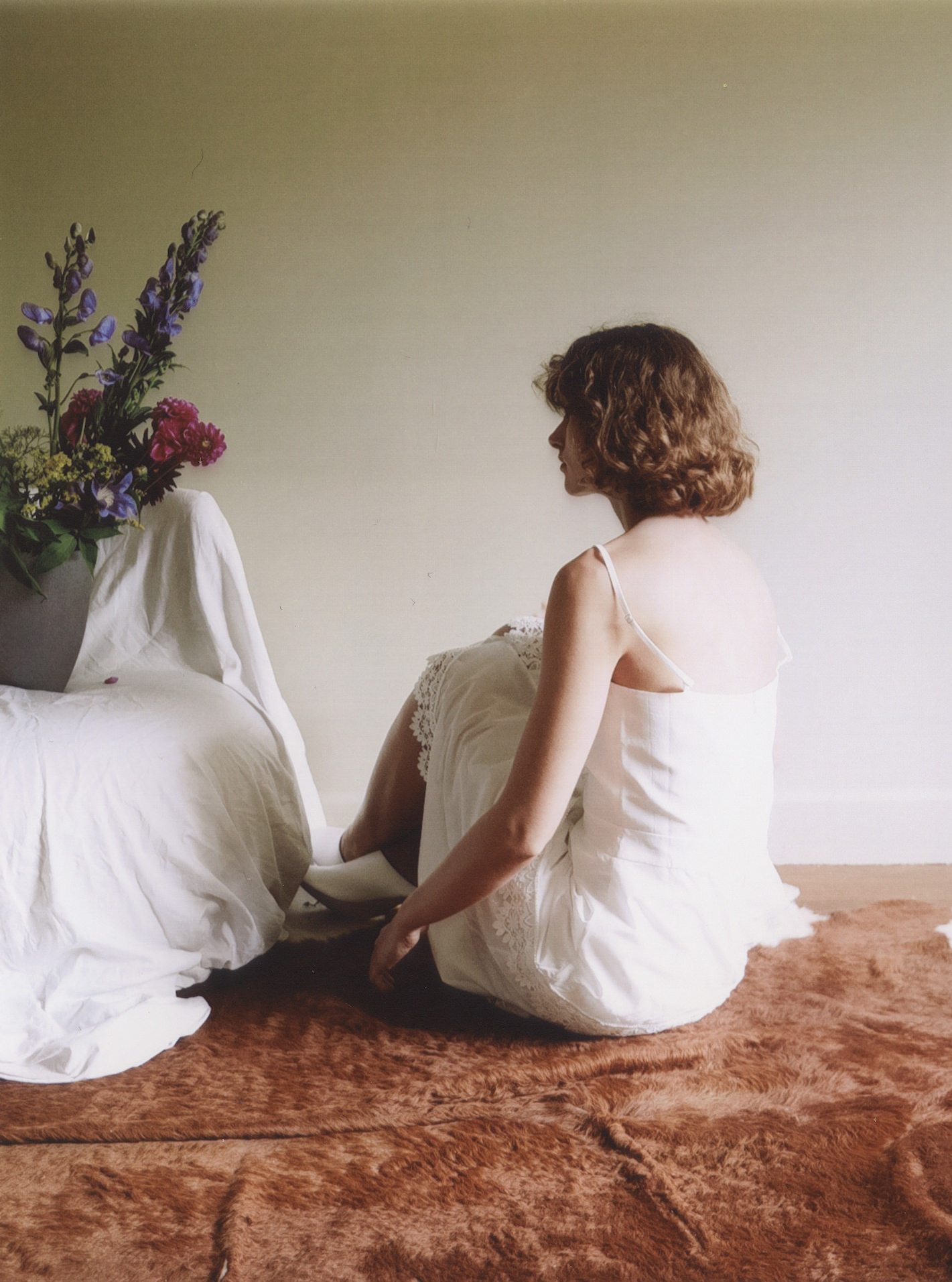
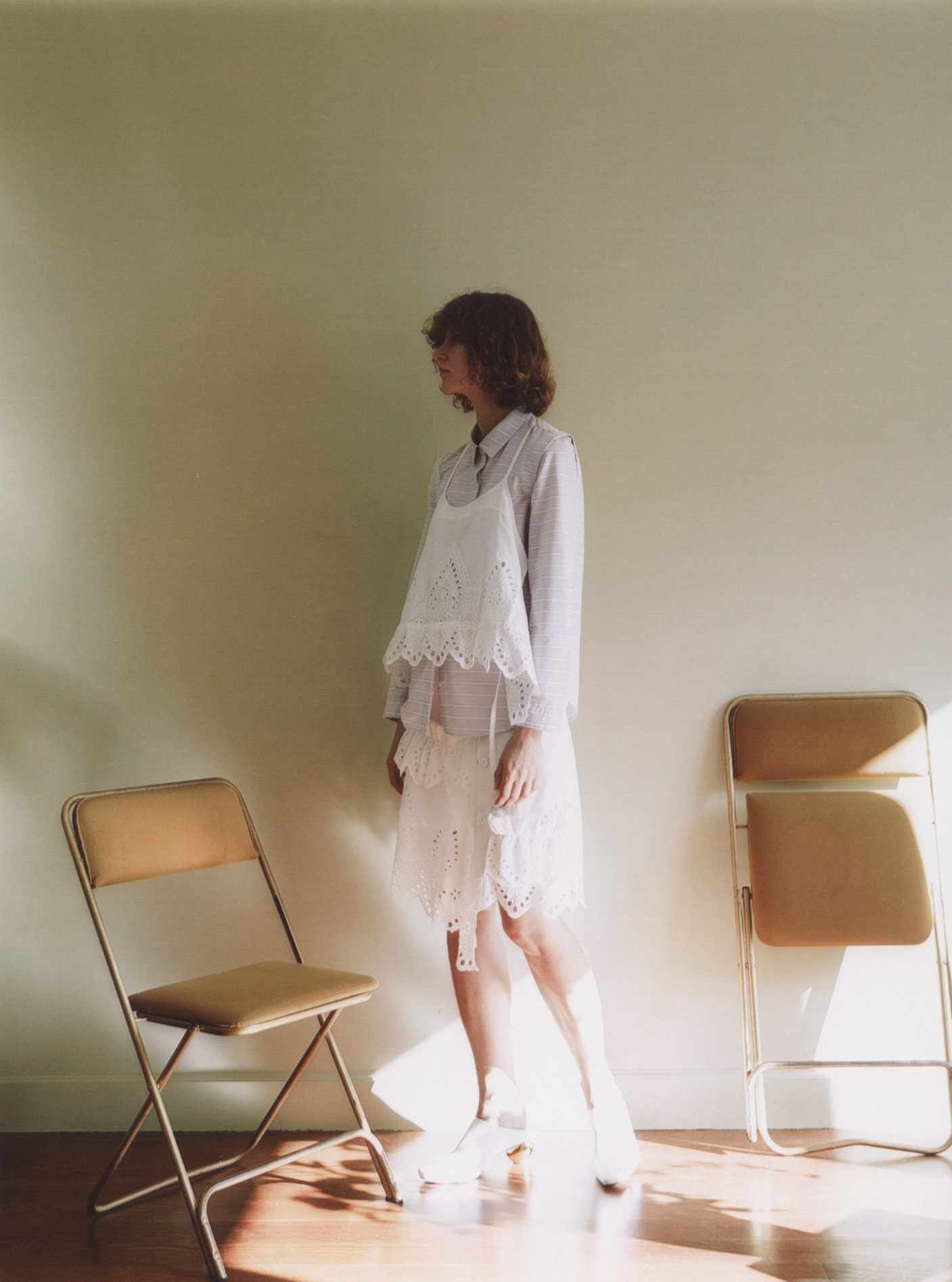
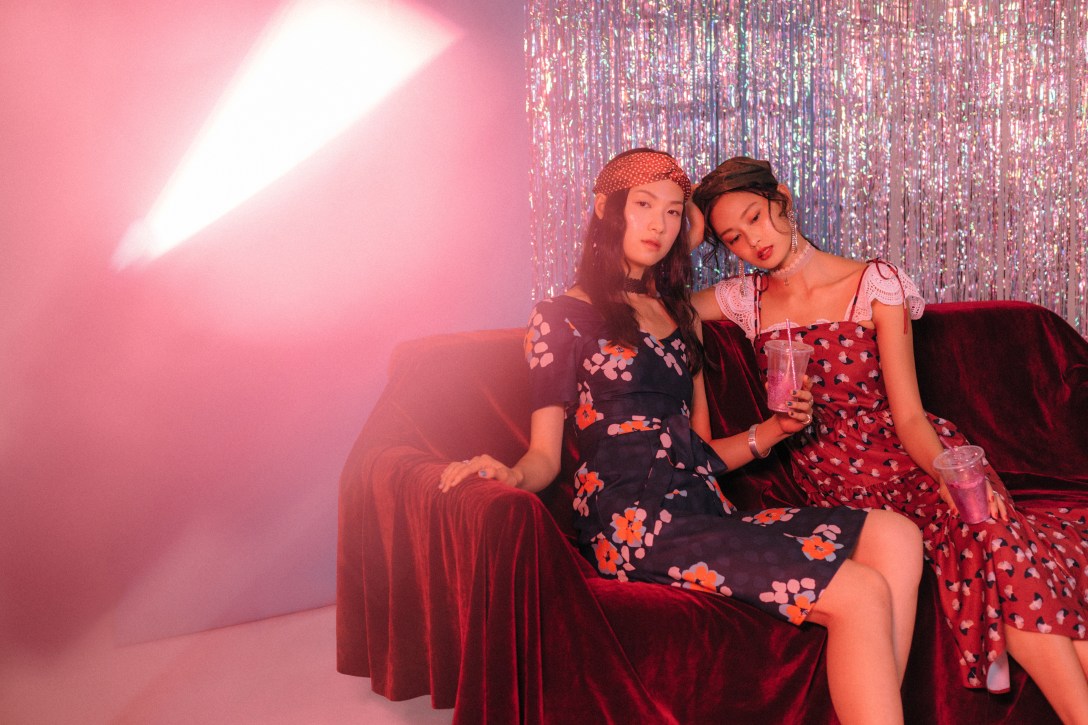
Flowers feature heavily, not as garish patterns and prints, but more as an aesthetic backdrop to the clothes which are soft, voluminous and romantic. Lace details combined with girlish/boyish cuts create a modern Edwardian vibe.
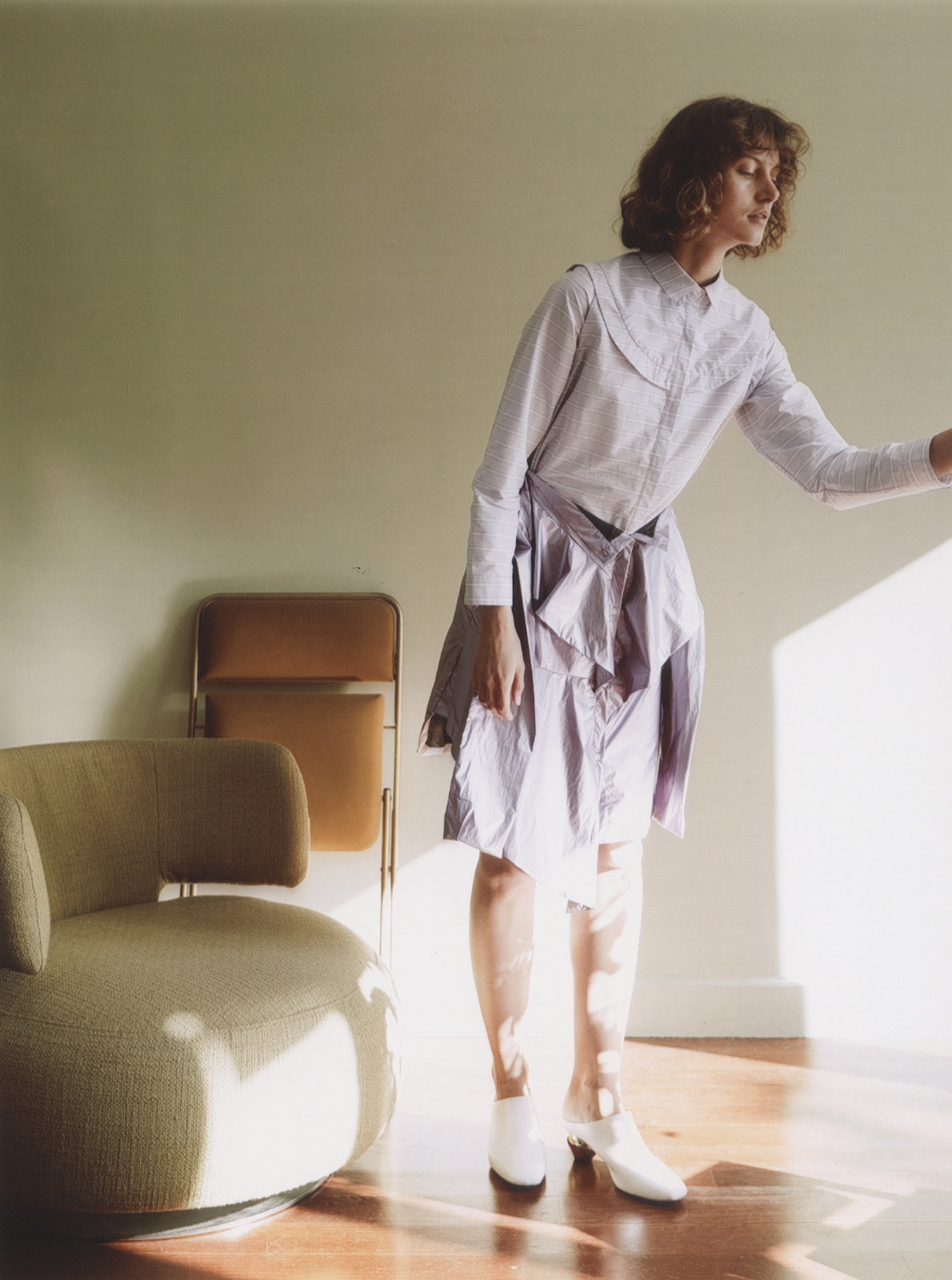
While pretty and rather #cottagecore in concept, Liang’s current collection includes pieces perfect for the workplace; should we ever return. Clever use of more masculine fabrics cut into shirt-dress shapes with asymmetric detailing neatly blends the boy-girl aesthetic.
Liang’s original inspiration for Fall Winter 2020 – “floral installations on the streets of New York and JeanLuc Godard’s 1966 Masculin Féminin” – can clearly be seen in the various pieces from the collection with silk joggers worn under slips and topped with manish blazers.
The brand’s fabrics are a glorious explosion of all things delicate and beautiful – organza, tulle, lace, silk, silk-jersey, and Broderie Anglaise. Peachy pinks, white, soft lilacs and greys are offset with black and white in the current season’s colour palette for Spring Summer 2020. Quality detailing and manufacturing ensure the clothes are beautifully made with a sense of timeless handcraft about them.
The SS20 collection was inspired by the work of artist Jim Hodges who is known for his mix of hard and soft in conceptual works. This inspiration “becomes obvious in the Slinger jacket series, tailored jackets with detachable Broderie Anglaise aprons”, says Liang. More multi-functional mixes can be seen in the Stiker dress, it comes as five separate pieces that can be worn alone, or together for a range of looks and occasions.
Liang also highlights the delicate printed sheer garments that were inspired by Hodges’ 1997 ‘With the Wind’, suggesting they be worn over t-shirts to “perfectly embody the spirit of the everyday Jonathan Liang woman”.
Fashion’s Future
The pretty, wearable clothes of the Jonathan Liang label manifest a nostalgic wish for the time before Covid19, when having picnics – or brunch at a hip cafe – was an everyday occasion.
Where will we be wearing these delicate, feminine pieces in the future? Will we be willing to spend our dwindling cash on them? I’m guessing that yes, women with a sense of romance, softness, and wishful thinking will gladly take Liang’s offerings to heart, if only for the nostalgic comfort they bring.
As for the brand, Liang agrees that the fashion industry has undergone somewhat of an upheaval, but is unsure yet where the future will land.
“… It is very much dependent on each brand’s customer mindset and where they’re at too … thus we’re prioritising slower fashion that stands the test of time.”
Sydney-based luxury womenswear brand Leo & Lin has a very sexy-boho-feminine aesthetic with an emphasis on creating original prints. Founder and creative director, Leo Lin, makes the most of his love for his new home, Australia, by delving into a variety of artistic and cultural concepts.
Lin describes his brand as “Modernistic Nostalgia” explaining that it is a style that “perfectly resonates through time, mixing modern and the past era design elements”. What this means exactly is unclear, but it is interpreted via a combination of tailoring, leisurewear shapes, and bits of floof – ruffles and draping, handkerchief skirts and a touch of Victoriana in the use of lace details.
The Leo & Lin look can kind of be described as something a boho princess would wear. Fabrics range from silk-linen mixes, lace, linens, and spandex, and the pricing is firmly in the contemporary range with dresses costing from around AU$400 up to AU$700 or more depending on the materials used.
What is most interesting about the pieces is the use of original prints. Lin creates a series of new prints for each seasonal collection, based on his source of inspiration. For the Spring Summer 2020 collection entitled Rebellious, Lin was inspired by a nighttime stroll.
“Creative Director Leo Lin looked up and saw wondrous stars blinking ‘I’ve always been mesmerised by the beauty of Australian night sky, it is just pure magic and serenity’. It is this Aussie magic that led him to the world of tarot cards, and the creation of the Spring Summer 20 REBELLIOUS collection,” states the collection description on the brand’s website.
This concept was further translated as creating “a unique world that fills the wearer with this sensational, celestial space”, as well as the addition of another theme, that of the “conflicting concepts of Astronomy and Christianity”.
That’s a lot of ideas going on in one collection. What it translated to in the prints was placing a star chart print on top of an image of cathedral glass to create the central print, called The Baroque. Additional prints like The World features a lion’s head; The Lover is a mix of snakes, a woman, and a cross; Starry Night is a print that mixes all the others up with a celestial map.
The colours range from monochrome black and white, to dark browns, and a pale yellow, and they are all printed on silk, linen and cotton. An additional pattern and texture is added via the use of a checked shiny vinyl fabric – described as adding a sense of juxtaposition.
Does it all work? Yes, for the most part. The Leo & Lin brand could be described as being an acquired taste for some, it is more nostalgic than neutral, more maximalist than minimalist, and very definitely shows some links to the rising Victorian aesthetics showing up on social media thanks to movements like #cottagecore.
Is this a sustainable fashion brand? Hmmm … hard to say. There is not a lot of information available about where the products are made, or by whom. Nor is there any information about sustainable practices in-house or packaging or delivery. It could perhaps be described as being ‘slow fashion’, but again, this is unknown since it is not clear on how many products are produced per collection.
Still, Leo & Lin is an interesting outlier in the Australian fashion market. Less organic and girly, more sexy and womanly; dare I say even glamorous.
Ethical and sustainable fashion, like all trends and styles, has begun to settle into a series of expected norms; organic cotton, neutral and natural shades, prairie dresses, cable knits and a somewhat ‘earth mother’ vibe.
But it doesn’t have to be that way. The work of Melbourne-based designer Erik Yvon is a fabulous example of design overcoming the expected norms. Yvon uses bright colours, strong prints and unique textures inspired by his Mauritian origins, to create clothes that are joyful, inspired by art and culture, and dedicated to sustainable and ethical production.
“As an independent label we firmly believe in making a change and strengthening our local industry by keeping our production, onshore, transparent and ethical,” writes Yvon. “We are mindful of the footprint we have on our surroundings and try to have a positive impact on the community within our supply chain.”
The brand stocks limited runs of different pieces, and produced made-to-order so as to reduce waste. Yvon also produces all of his products in Melbourne, supporting local industry businesses and working with various communities.
“We pride ourselves on being made in Melbourne and work closely with local suppliers,” writes Yvon on the brand’s website, listing the local businesses they work with.
The Erik Yvon look is an interesting mix of streetwear comfort, and over the top avant garde use of colour, texture and pattern. There is a strong gender neutral thread running through the brand, particularly in its use of separates – tops and pants that can be worn by guys, girls, anyone. The style is also relatively size inclusive, with generous cuts and the use of volume creating flattering shapes for most body types.
There is a touch of the 90s in the brand’s designs too – particularly the use of legging type trousers, tights and black and white geometric patterns. Strong colours like neon yellow and hot pink are softened by the use of more natural shades, but the feel is one of sunny days and parties on the beach.
Indonesian fashion brand Happa is a fun and fabulous brand with an underlying mission to support traditional Indonesia textile workers, the majority of whom are struggling, and to also create a female-positive space for women of all sizes, shapes and ages.
Founded by Mel Ahyar and Andien Aisyah, Happa is part of the slow fashion movement; garments are made-to-order and require about five working days to be handmade in Happa’s ethically run factories.
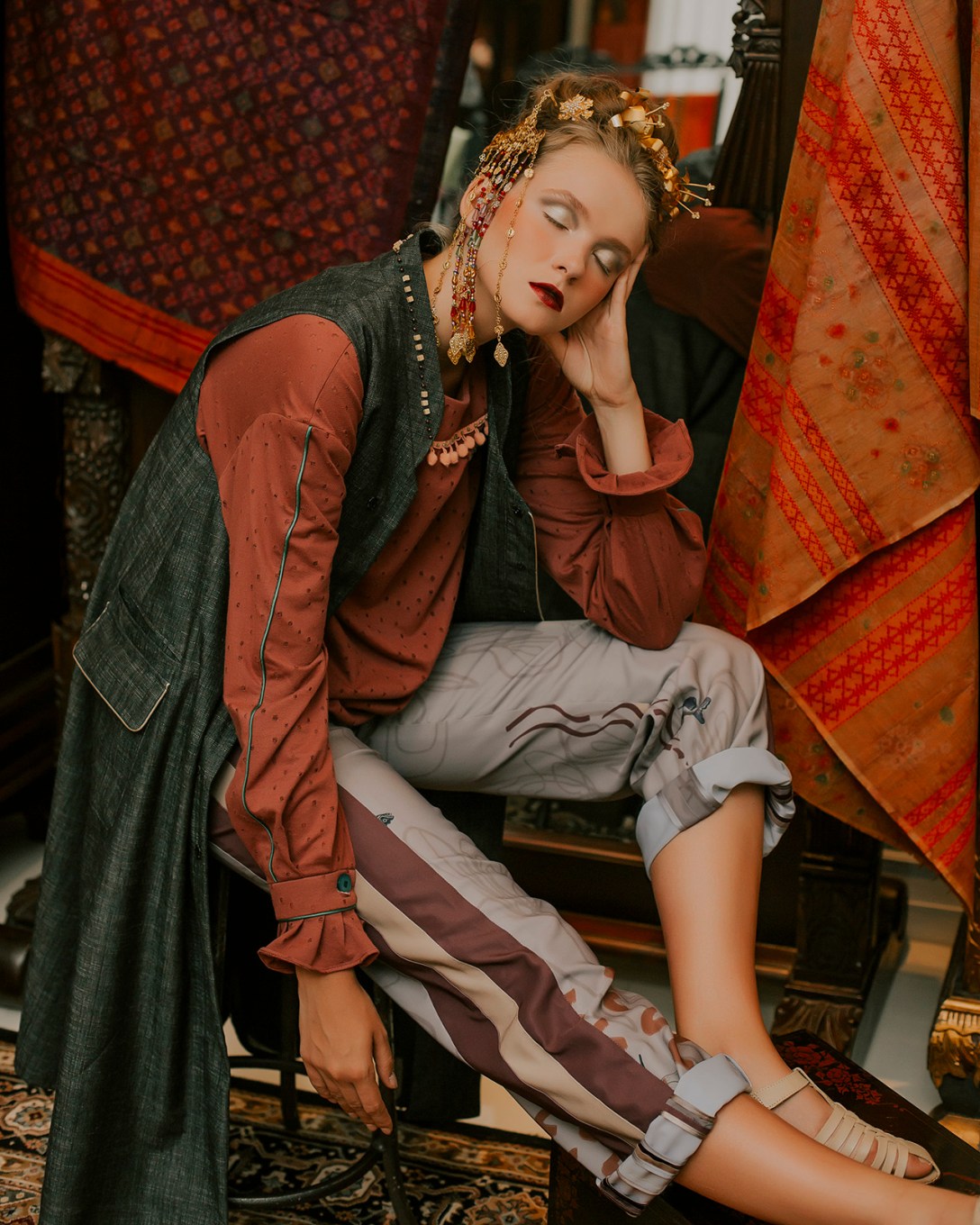
While there is somewhat of an ethnic vibe, particularly in the brand’s lookbook shoots, the designs are comfortably modern, rendered in vibrant shades with artistic details created by using various traditional handicrafts and techniques.
It is the richness of these traditional techniques and details, alongside the sumptuous materials that creates the luxe global vibe of Happa. Saturated colours, create pieces that easily fit into anyone’s wardrobe; wear the look head-to-toe or throw them together with a pair of jeans.
Part of the brand’s mission, ‘Happa Lyfe’ is both a loyalty programme and a social media hashtag that connects the label’s widespread community both in Indonesia, and overseas.
Being based in Indonesia – a majority Muslim country – there is a certain level of modesty about the garments making them appropriate to be worn by hijabi women, while also offering pieces that can be worn in a less modest way.
Happa’s inclusive mission fits into the space of creating clothing for all women, which includes prayer appropriate cultural pieces like the ‘mukena’ redone in bright colours and prints.
Overall the cuts are forgiving, but also free in nature. It is the colours, patterns and additional decorative details that not only give the brand its own style, but also creates the signature ‘Happa’ style.
Thai designer label Takara Wong was founded in 2015 by designer Thakorn Wannawong around the concept of ‘trial and error’, and influenced by subcultures and musicians across the world and history.
According to Wannawong, iconic tropes from the 70s or 60s for example, are mixed with an “aerodynamic sporty silhouette” which makes the garments timeless. The latest collection for 2020 is all about streamlined 70s leather and glam for the menswear pieces, and sexy leather and suiting for the womenswear.
“Imperfections are what make things truly interesting, that is why the brand focuses on the underdogs of society and rebellious spirits,” states Wannawong on the website.
Wannawong is a graduate from Japanese design school Bunka’s Bangkok school, and he has always been interested in fashion, starting with designing pieces for family, and then moving onto creating costumes and outfits for his musician friends.
There is a very new YSL feel to the latest Takara Wong collection – lots of leather, lots of skinny guys and girls with shaved heads, tight and narrow cuts combined with slinky velvet. This is a very sexy collection; but there are also a number of sharp suits that can take you from day to night.
These pieces aren’t exactly cheap, but there is a level of quality and detail that is worth the cost – many of the pieces are ‘demi couture’ and need to be pre-ordered.
For a long time Australian fashion has been known only for its swimwear, beach wear, resort wear, flip flops, shorts, jeans, casual tees and Ugg boots. Now, with the world made smaller via the internet, some Australian designers are beginning to branch out into areas that are more fashion, than retail. In fact, some of the more interesting Australian brands have been around for decades … You just didn’t know about them.
Here are three of my current favourite Australian fashion brands …
Et Al
Et Al is a Melbourne brand that has been around since 1987 when it was founded by Christine and Les Doughty, who still own and run it. This is one of my personal favourite Australian independent labels; it’s very Japanese-art-gallery-worker crossed with 90s goth and bits of Vivienne Westwood.
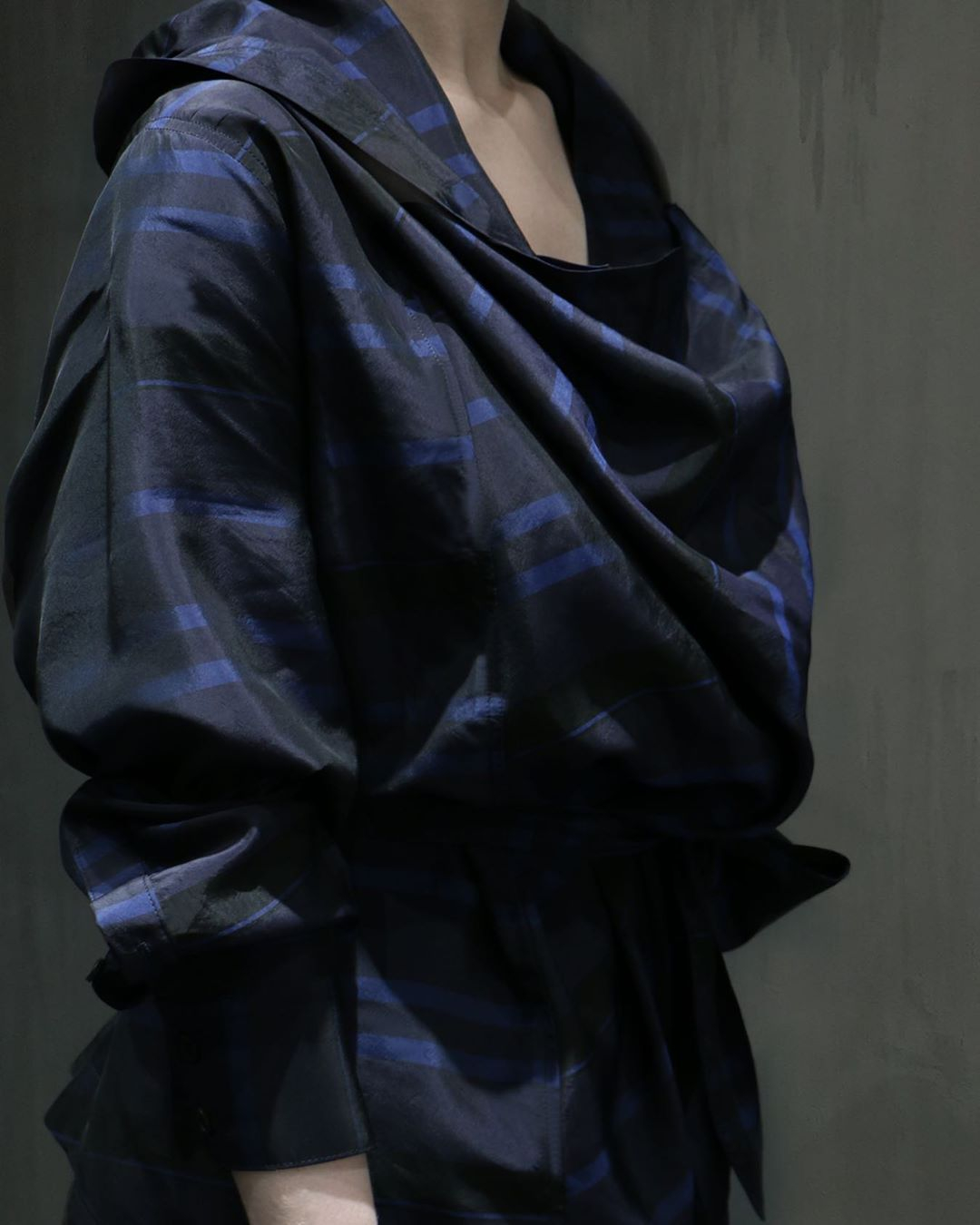
This is a brand that is strongly influenced by the Japanese designers of the 80s – think relaxed tailoring, lots of black, few patterns, multi-use garments and gender neutral designs. The current brand designer is Anthony Capon who won Project Runway Australia season two.
Et Al is known for its quality of fabrics and finishings; there is a type of timelessness to the designs that make the pieces trans-seasonal. Et Al also supports other young and emerging Australian designers via its accessories stocks that feature artistic jewellery, as well as shoes and hats. The brand offers womenswear and menswear, but many of the styles are unisex. The use of muted colours and some prints adds depth to its more basic black core collection.
The brand produces limited runs of only 8 to 24 pieces of each style, and 70% of their garments are made in Australia. It is also size inclusive running from Australian size 8 to 18. Et Al is even age inclusive, featuring models of all ages in its social media and campaigns.
Another one of my favourite Australian fashion brands, Alpha60 is Melbourne born and bred, founded in 2005 by brother and sister duo Alex and Georgie Cleary. The brand’s name comes from the sci-fi classic movie Alphaville by Jean-Luc Godard.
Alpha60 is another brand where you can clearly see the influence of the Japanese designers of the 1980s.
While there is not so much black, there are lots of cocoon shapes, volume, asymmetric cuts, simple patterns, little glitter or gloss, natural fabrics and size inclusivity ie. nothing’s too tight or too structured.
Alpha60 is a brand that sticks to small production runs, using local sewers, and although it has around 10 boutiques in Australia and New Zealand, is still affordably priced in the lower contemporary range. I’ve bought a fair few pieces.
This menswear brand is an interesting mix of JW Anderson menswear with touches of Off White and Korean brand Junn J. Based in Melbourne, this brand is probably the most experimental of the local menswear brands. Lin is inspired by “architecture, structure, and texture” which can be seen in the cuts, volume and use of wool fabrics.
Lin is also known for his quality, but still interesting, knitwear. The use of various techniques to create lacey sweaters or bodycon tops, gives the brand the JW Anderson feel. Recent collections have shown a brighter and sharper use of colour, particularly the Uniform collection; note the ‘logo’ and use of red. It rather reminds one of something, does it not?
Although primarily a menswear brand, Lin has recently branched out to create a few womenswear pieces, and items that are distinctly non-gendered as well.
These appear to be more like luxe basics with a more elevated feel, rather than Lin’s more artistic runway garments. The newer items look to be more wearable for a wider range of body types as well. A good move in these uncertain times.
The Singapore brand, Love, Bonito, might have begun in 2010 as a ‘blogshop’ but it has now expanded into a multi-outlet bricks ‘n’ mortar lifestyle brand with the opening of its second Singapore store in Jem. This is on top of its flagship store in 313@Somerset, and its two retail stores in Kuala Lumpur. Love, Bonito is obviously thriving, not just surviving the current troubled retail market.
The latest collection from Love, Bonito. Image: Love, Bonito
Continuing its focus on being a ‘retail friend’ to its customers, the Love, Bonito brand has stepped easily into the new retail world of experiences and technology, its founders becoming social media influencers in their own rights, and their fans becoming loyal customers. Despite the so-called woes of retail, this disruptor fashion brand is powering ahead.
To discover more about how the brand has grown, developed and succeeded, I got in touch with Rachel Lim, the co-founder of Love, Bonito, and the current face of the brand’s marketing, to answer a few questions. With 106K followers on Instagram alone, Lim is not only a successful business woman, she’s an inspiration to hundreds of entrepreneurial Singaporeans.
The latest collection from Love, Bonito. Image: Love, Bonito
Did you have any female business role models when growing up? Rachel Lim: No particular ones but there are strong females I had as role models growing up – my mom. She was a strong inspiration because even though we went through so much hardship as a family she showed a lot of grit and tenacity, all while keeping her joy and positivity, which was the key in us getting through the difficulties.
When did you know you wanted to run your own business? RL: When I decided to drop out of my final year in university to start Love, Bonito with my Co-Founders. I knew that I wanted to create something that didn’t exist for women.
Do you think being a female entrepreneur has made a difference to how you have built your business? RL: Not so sure if it’s because I’m a female but being a real woman creating for other real women has definitely helped shape who Love, Bonito is.
What were the factors that led you to start Love, Bonito? RL: The clear gap in the market. There weren’t any pieces out there that really suited and fitted Asian women in a flattering way. That was how we started – by understanding the needs of other women, what they were looking for, and creating for them.
What sort of resources (besides financial) did you have when you started Love, Bonito? RL: We had guts (haha). Because we were pioneers in the business of e-commerce back then, we had to pave the way ourselves. For example, there weren’t even any courier services who were well-versed in this format of business.
What kind of market research did you do before starting Love, Bonito? RL: Honestly, we didn’t do much research initially. We learnt via a lot of trial and error and from making mistakes. Most of our learning was done on the go.
Did you feel prepared to start the business when you did? RL: Back then I felt more excited than prepared. And in some way that drove me to push forward regardless of the problems that surfaced.
Have your goals and values changed since starting Love, Bonito? RL: I have really evolved as a person. Since starting the brand I have found myself, and I continue to discover myself everyday. I have learnt to accept my strengths and weaknesses and embrace them. More importantly, I have learned how to grow and use my talents to contribute while surrounding myself with others who compliment my weaknesses.
What were some of the key lessons learned? RL: That one can’t do it all. And one shouldn’t do it all. I wish I had known earlier to discover my areas of strength and to develop and hone them so that I could contribute strongly in those aspects.
What are your plans for the future of Love, Bonito? RL: Right now we are empowering women and reaching out to women through fashion. The dream is to reach out to even more women through other different vehicles.
What advice, based on your own experience, do you have for women starting a business today? RL: Don’t just start a business because it’s the sexy, in thing. I truly believe that there is no age limit to being an entrepreneur. Find and know your why and more importantly, surround yourself with people who will love you enough to be honest with you. If and when you have decided to start a business, the right team at the right stage of your business is absolutely essential.
The Love, Bonito Jem store opens on 8 December 2018, in Singapore. The Love, Bonito flagship store is located at 313@Somerset. To shop the brand online go to: www.lovebonito.com.
For a long time I’ve had an issue with Singapore media describing certain companies that make clothes as ‘fashion brands’ but which are actually ‘retail’ labels. These brands – Love, Bonito is one of them – are not really ‘fashion brands’; they are companies that make nice clothes, at reasonable prices, with a bit of personal style, for people to wear on a daily basis. These brands are more similar to Topshop and Uniqlo than they are to Dior or Chanel, or even Vetements.
In Singapore there are number of quite successful retail brands that have been making their way into popular shopping memories, but which are not fashion brands per se. Brands like Love, Bonito, By Invite Only, Beyond the Vines and Benjamin Barker, were recently featured at the Singapore Fashion Awards 2017, as part of the ‘marketing’ section, not as part of the design awards. And having been a founding judge for the awards, I know that the reason these brands are featured is because they are popular and much more retail-friendly than many less wearable or conceptual designer brands. Designer brands that are more appropriate to be considered as ‘fashion’ labels.
Now, don’t get me wrong. I’m not saying that more retail-friendly brands are worse than the more fashion-forward labels. What I’m trying to highlight is that these types of clothing companies are not ‘oranges and apples’, they’re more ‘oranges and coffee-smoked buffalo tongue’. The first is something that doesn’t scare the shopper, the second is only for the very adventurous.
I have a great deal of respect for Love, Bonito’s founders. They have created a very lucrative business in a fashion retail environment that’s been under a great deal of pressure for the last 2-3 years. The brand knows exactly who their customer is; they know what she wants; and they know how to give it to her in a seamless online-to-offline experience. The brand has a variety of price points, but retains its core directive from its launch, expanding only as much, and as directionally, as is needed to grow the business. Love, Bonito is not a fashion brand swinging on the weird wind of trends and concepts; it’s sailing along smoothly along in a clear direction. And this is not a bad thing.
Image from Love, Bonito Chinese New Year 2018 capsule collection. Model: Jasmine Sim
While I may not consider Love, Bonito to be a hardcore fashion brand – you can read about the Singapore brands I do consider more ‘fashion’ – the founders have never claimed it is one. They are purposefully creating a business that has long term prospects in the retail market.
There are a few other Singapore brands that are also not exactly pristine when it comes to plagiarism. Whole9Yards has been cited for knocking off first, Self Portrait – the classic coloured lace dresses of its earliest collections – and now Malaysian designer, Jonathan Liang. Pleatation is obviously a copy of Issey Miyake’s Pleats Please label.
For Pleatation, the concept arose at the same time as micro pleated skirts started flooding Zara and Topshop; the brand cleverly linked up with this trend.
Image from Jonathan Liang SS17
When Whole9Yards first launched there was not a whole lot to talk about. The design concept was very ‘office lady’. However, after Self Portrait’s iconic lace dresses took off in 2013, Whole9Yards began to specialise in lace dresses the average OL could afford. The lace dress became a staple of its output. And very successful it was too. Although I’ve noticed that the brand has massively increased their prices now that they’re doing items that look like those of Jonathan Liang.
Image from Whole9Yards AW17
Again, I’m not saying that affordable retail options are an entirely bad thing. What I am saying is that making items that so closely echo the creative work of other designers is not fashion; it is copying. It is the lack of original design coupled with riding a wave of commercial popularity that makes it ‘retail’ and NOT fashion. At least as far as I’m concerned.
As I was quoted in this very flattering story by Adele Chan, the Editor-in-Chief of Nylon Singapore … “As always, I want to remind readers that this is my personal opinion, and as with anything, you can always have your own.”























 niki bruce