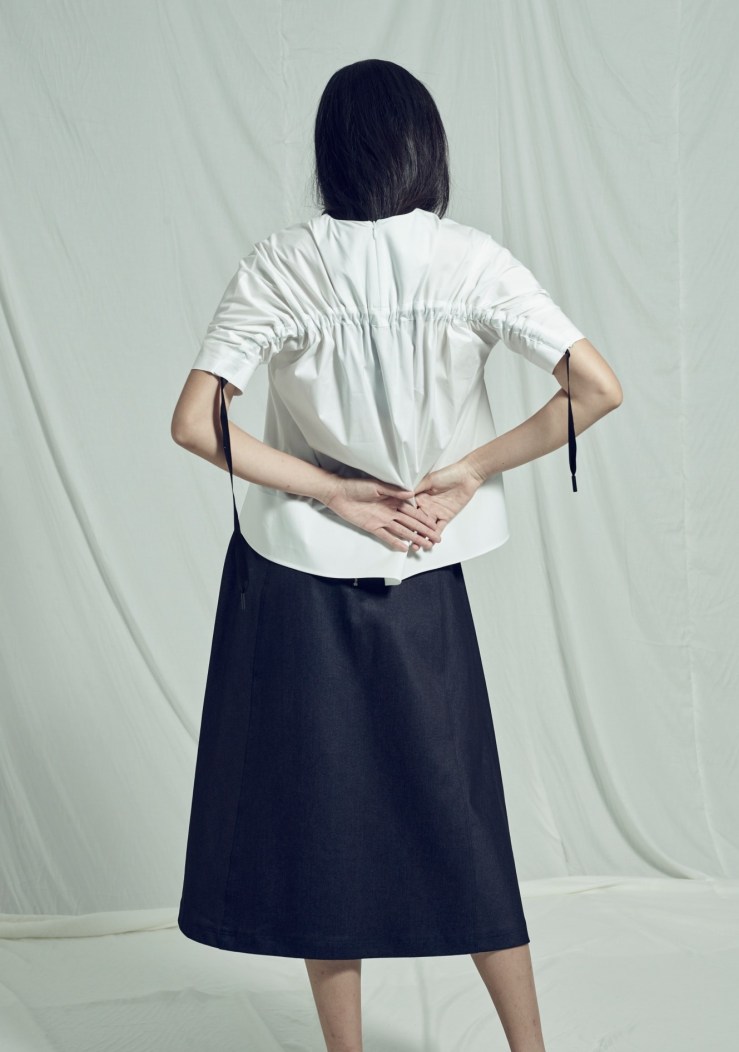
Launched in May 2019, Vetyver is a relatively new addition to the round up of Singapore designed fashion brands. Founded by designer Firdaus Aris, better known as Pit, the label offers both womenswear and menswear in a monochrome palette of black and white with a distinctive cut that echoes some of Singapore’s more creative fashion brands.
When you look at these pieces you will see echoes of Pit’s foundation and training at two of Singapore’s more creative and successful fashion brands – alldressedup and In Good Company – where he trained. Vetyver was conceived while Pit was working as a fashion lecturer at Lasalle College of the Arts – the source of a number of Singapore’s best designers.
“I had the chance to work with friends and colleagues across different design disciplines and hoped to bring a new perspective forward through the label,” explains Pit.
“At the same time I was also liaising with a uniform factory that was going to close down and they were letting go of a lot of these ‘uniform’ fabrics. I started to develop a fascination in the idea of a uniform system.
“Uniforms have played a vital role in my memories of growing up where I had attended public school, to seeing my father who was an engineer leave for work wearing overalls.
Pit felt that uniforms were often overlooked as a design object; they are items that combine function and quality, and something that also “served as a visual representation of the identity of an organisation.”
These thoughts and ideas led him to look into creating a fashion brand based on the original uniform materials he discovered, creating a mini project, which turned into Vetyver. The brand launched with the capsule collection ‘Un-form’ at Grafunkt’s design district in Funan Mall in December 2019.
Sustainability in longevity
When asked about the brand’s position on sustainability, Pit noted that being sustainable and operating an ethical business “is a natural part of our process, which should already be for any existing fashion brands”.
“I love using durable materials that will last, that will wear and improve or give more character after each wash,” Pit explains, pointing out that longevity is as much a part of the sustainable movement as recycling.
“Upcycling of materials is in the plans for a future project. I believe that good design and good quality will last in the wardrobe, and I work very closely with our manufacturers. I am also opposed to the wear-and-throw culture.”
What’s the future for fashion?
Considering the current state of the retail sector with the coronavirus phenomenon, starting a new fashion brand could be considered a risk. Pit was asked about this prior to the current situation, and his answer appears almost prescient.
“I think more consumers are becoming much more aware of sustainability now as compared to 5 years ago. Curated designer thrift stores and resale garments are gaining more popularity. It can be seen as both over-saturated or also an exciting time for change. I remain optimistic.”
Pit is also optimistic about the future of Vetyver: “I love collaborative efforts within the creative industry. I’m planning for more exciting cross-disciplinary projects ahead.”
This is good news for fashion lovers, particular those who want to not only invest in well-made, well designed, long-lasting clothes, but also those who are looking to #supportlocal during this time of economic upheaval.
Shop local, support local designers
Vetyver is available online at www.studiovetyver.com. There are two collections available for men and women – one is currently available, the second is available for pre-order (another great way to reduce waste).
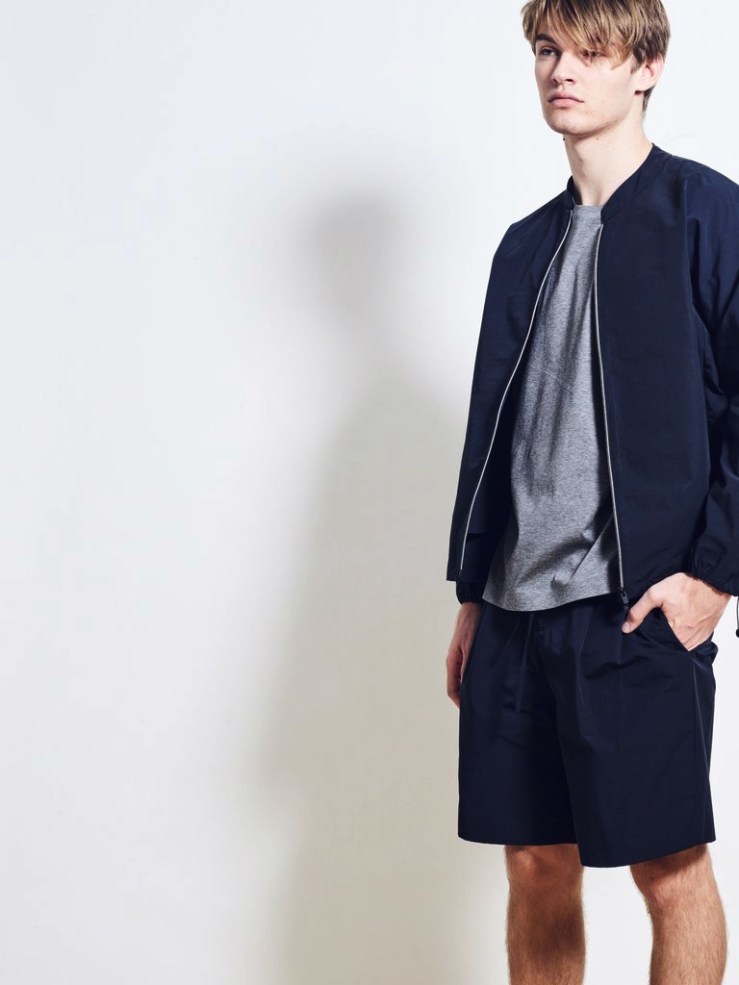
The looks are a mix of simple lines, and functional cuts with details like adaptable necklines – you use a drawstring to choose the size – and everything is designed to work together.
The menswear is particularly interesting with touches of Yohji Yamamoto in the uber-normcore cuts of jackets, pants and overalls. However there are plenty of interesting, more gender neutral shapes in shirts and tops. The womenswear pieces are equally a mix of simple and interesting – with looser cuts and luxe finishes like silk binding.
Vetyver pieces are also somewhat interchangeable for guys and girls; not unisex exactly, but definitely more flexible than traditional brands.
“The brand does have a lot of unisex styles. While I love the idea of unisex, I am not worried if the brand is seen as unisex or not,” says Pit. “I am more excited to see how people play with our garments, regardless of gender.”
As part of my current Masters of Fashion [Entrepreneurship] course I had to produce a blog – yes, I know, it’s basically my job :).
But there were some issues and think pieces that I think are worth sharing … this is the first one:
Quality or sustainability … which is more important?
Those of us working in the fashion industry system are supposed to be aware that ours is not currently a sustainable enterprise.
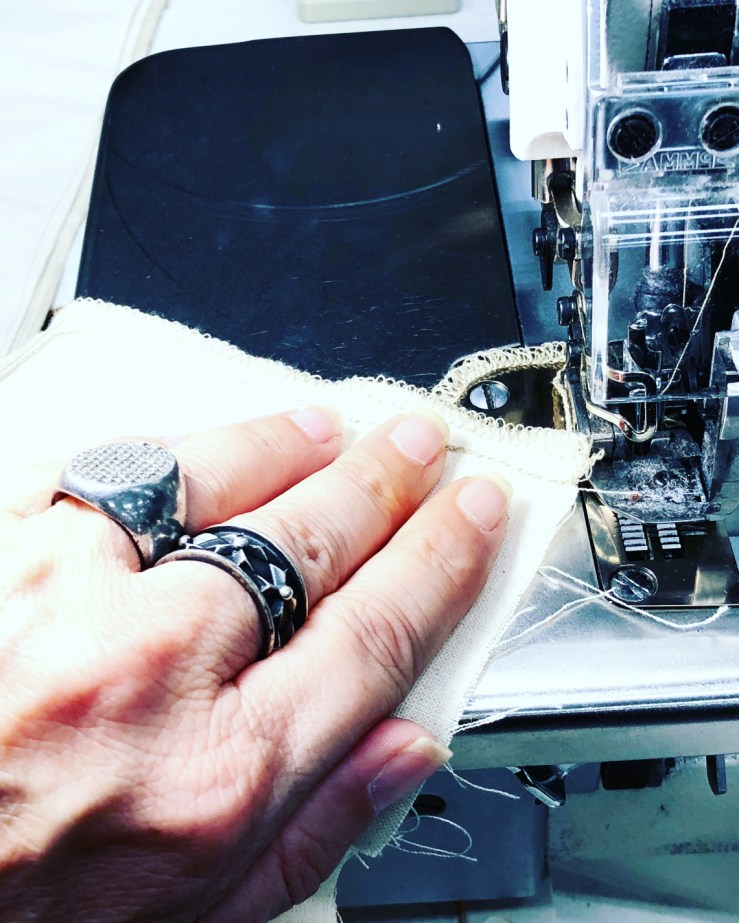
Sewing is hard: I’ve had some experience learning to sew. Sewing is not too difficult if you know what you’re doing, but it is time consuming and fiddly. Most people who wear clothes have no idea what it takes to actually make them; whether to the costs to the environment or the costs to lives and livelihoods, just buying a t-shirt could become an ethical dilemma. Image: Niki Bruce
The general clothes-buying public, however, have probably no idea that their $5 t-shirts are harming not only the environment but that we might just end up eating the microfibres are clothes are made of (Bauck 2017).
Sustainability …
In a pointed post entitled ‘How many gallons of water does it take to make a single pair of jeans?’, influential fashion website The Fashion Law points out that just about everything we wear is somehow damaging our planet and therefore, the future of the fashion system (The Fashion Law 2018).
Until very recently I didn’t give much thought to the environmental impact of my love of shopping. I did rail against the rise of blogshops and fast fashion outlets, but that was more in support of independent designers being ripped off by multinational brands, than concern over the environment, or the sustainability of the fashion system as it now operates.
Quality …
Quality, I believe, is something that’s worth paying more for; you’re paying for the art and skills of a young designer who has put everything into creating something special for you to wear. Quality also equals unique or luxurious materials, handcrafted work, and a sense that the item will last forever. And, more often than not, quality fashion costs more.
Quality versus sustainability …
Are quality and sustainability the same thing? If we only buy quality items, are we being more sustainable? Or are quality items affecting sustainability? Should we just not buy anything? But then who will employ the millions of women in developing nations who currently work in the industry?
No clear conclusion … Personally I find that I cannot come to a clear conclusion on this issue at this time. It is complicated, ongoing and there are more questions than answers.
I have decided, however, to give shopping a break and join the #shopyourwardrobe movement until I can come to a conclusion.
Note: As the issue of sustainability and ethics in fashion continues to be discussed, major fashion designers and emerging brands are offering a variety of thoughts and options that take the issues of quality and sustainability into account, and which are being picked up by mass media.
For a long time I’ve had an issue with Singapore media describing certain companies that make clothes as ‘fashion brands’ but which are actually ‘retail’ labels. These brands – Love, Bonito is one of them – are not really ‘fashion brands’; they are companies that make nice clothes, at reasonable prices, with a bit of personal style, for people to wear on a daily basis. These brands are more similar to Topshop and Uniqlo than they are to Dior or Chanel, or even Vetements.
In Singapore there are number of quite successful retail brands that have been making their way into popular shopping memories, but which are not fashion brands per se. Brands like Love, Bonito, By Invite Only, Beyond the Vines and Benjamin Barker, were recently featured at the Singapore Fashion Awards 2017, as part of the ‘marketing’ section, not as part of the design awards. And having been a founding judge for the awards, I know that the reason these brands are featured is because they are popular and much more retail-friendly than many less wearable or conceptual designer brands. Designer brands that are more appropriate to be considered as ‘fashion’ labels.
Now, don’t get me wrong. I’m not saying that more retail-friendly brands are worse than the more fashion-forward labels. What I’m trying to highlight is that these types of clothing companies are not ‘oranges and apples’, they’re more ‘oranges and coffee-smoked buffalo tongue’. The first is something that doesn’t scare the shopper, the second is only for the very adventurous.
I have a great deal of respect for Love, Bonito’s founders. They have created a very lucrative business in a fashion retail environment that’s been under a great deal of pressure for the last 2-3 years. The brand knows exactly who their customer is; they know what she wants; and they know how to give it to her in a seamless online-to-offline experience. The brand has a variety of price points, but retains its core directive from its launch, expanding only as much, and as directionally, as is needed to grow the business. Love, Bonito is not a fashion brand swinging on the weird wind of trends and concepts; it’s sailing along smoothly along in a clear direction. And this is not a bad thing.
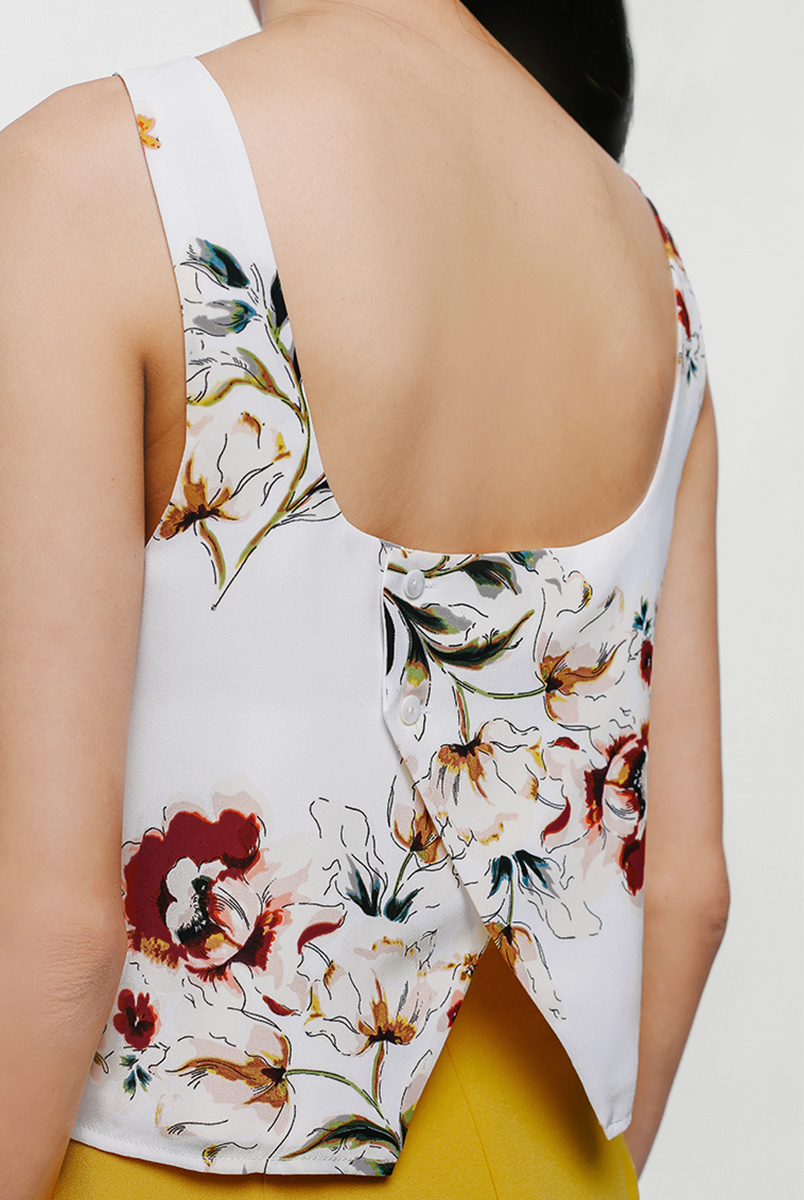
Image from Love, Bonito Chinese New Year 2018 capsule collection. Model: Jasmine Sim
While I may not consider Love, Bonito to be a hardcore fashion brand – you can read about the Singapore brands I do consider more ‘fashion’ – the founders have never claimed it is one. They are purposefully creating a business that has long term prospects in the retail market.
There are a few other Singapore brands that are also not exactly pristine when it comes to plagiarism. Whole9Yards has been cited for knocking off first, Self Portrait – the classic coloured lace dresses of its earliest collections – and now Malaysian designer, Jonathan Liang. Pleatation is obviously a copy of Issey Miyake’s Pleats Please label.
For Pleatation, the concept arose at the same time as micro pleated skirts started flooding Zara and Topshop; the brand cleverly linked up with this trend.
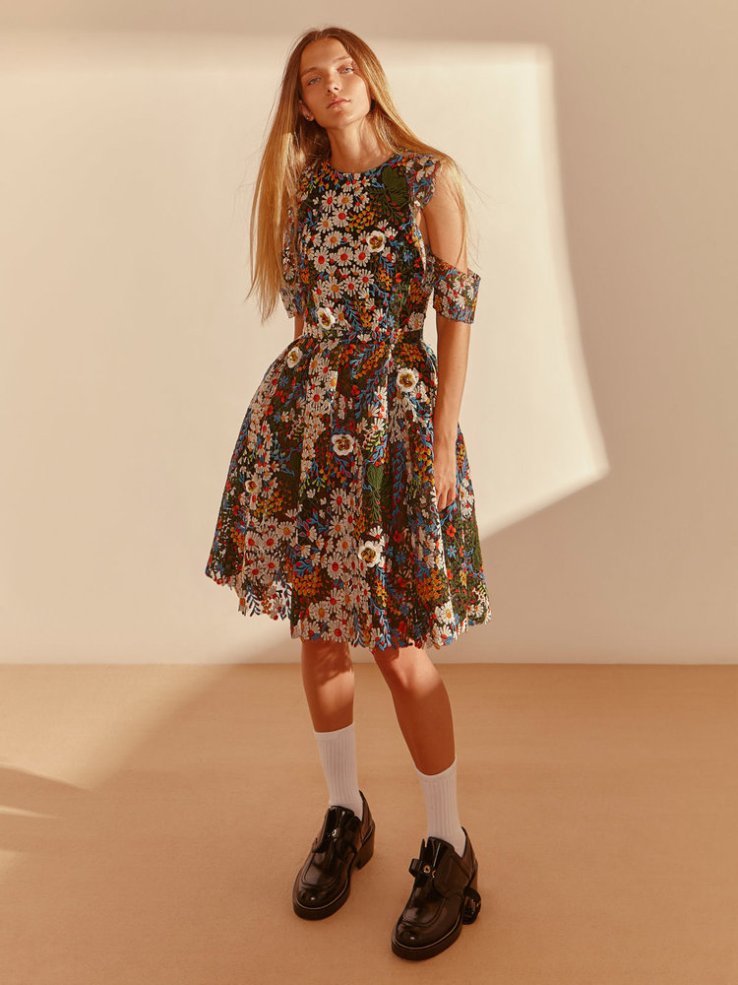
Image from Jonathan Liang SS17
When Whole9Yards first launched there was not a whole lot to talk about. The design concept was very ‘office lady’. However, after Self Portrait’s iconic lace dresses took off in 2013, Whole9Yards began to specialise in lace dresses the average OL could afford. The lace dress became a staple of its output. And very successful it was too. Although I’ve noticed that the brand has massively increased their prices now that they’re doing items that look like those of Jonathan Liang.
Image from Whole9Yards AW17
Again, I’m not saying that affordable retail options are an entirely bad thing. What I am saying is that making items that so closely echo the creative work of other designers is not fashion; it is copying. It is the lack of original design coupled with riding a wave of commercial popularity that makes it ‘retail’ and NOT fashion. At least as far as I’m concerned.
As I was quoted in this very flattering story by Adele Chan, the Editor-in-Chief of Nylon Singapore … “As always, I want to remind readers that this is my personal opinion, and as with anything, you can always have your own.”
Have been looking at some of the photography I’ve done lately and realised that I’ve been getting a lot better at it; at least I think so. Here are some backstage snaps I took at the Finland’s Fashion Frontier runway show featuring a couple of Singapore’s top models – male and female, including the amazing Jean Yong in the main image above – and some other lovely faces … It’s all in the eyes. I might need to invest in a proper camera.
There is a tendency in small communities to rave about any local brand or designer simply because they ARE local.
While it is important to support local talent, it is just as important to give praise where due, and to not simply celebrate the ‘localness’ for its own sake.
This is what has happened over the last 6 years in the Singapore fashion industry. Local brands with little to no true originality have been patted on the back and given media coverage simply because they exist. It’s like giving all the kids in a race a certificate and no medals for first, second or third.
When you don’t appear to get anything more for standing out from the crowd and being better than others, what’s the point of trying?
Conversely, just because you have a lot of friends in the local media, it shouldn’t mean that your work is placed higher on the tent pole of adulation.
In Singapore there has been a general creep towards admiration for retail brands that have successful social media accounts, rather than support for labels that do their own thing and focus on creating original work.
Yes, we should be proud of the brands that have continued to be economically viable in the current difficult retail environment – and indeed, they deserve praise simply for surviving. However, retail-successful brands are not going to be cutting edge fashion design in a trend-focused, shopping-driven country like Singapore.
Over the last 9 years in Singapore I have seen so many fashion brands come and go. Some deserved to disappear from our fashion radar, but others succumbed due to the lack of media attention, the lack of fashion education for shoppers – also media-led – and a general oversupply of any, and every, fashion brand in the world. Not to mention, of course, the increasing rise of online shopping.
Out of this complicated mess of being ignored in favour of someone’s friend’s new blogshop sourced from Dongdaemun Market; fighting for sales against global retail giants; and forever being forgotten by the fashion media except for the annual ‘Singapore issue’, there have risen a few fashion and accessories brands worth talking about.
These are my personal picks for Singapore fashion brands that actually work from a creative base of originality; no, they’re not all perfect (no brand is) but they have worked to ensure that they have a brand identity that doesn’t depend on ripping off other brands.
DEPRESSION
Image: Depression
Yes, I admit that I am personal friends with the designers behind Singapore streetwear unisex brand Depression. However, this doesn’t mean I can’t objectively appreciate what Kenny Lim and Andrew Loh have done over the last 10 years. Yes, Depression is 10 years old.
A brand that began as t-shirts for the impoverished junior industry creatives and hairstylists of Singapore, has grown into a brand that has a distinct DNA, is stocked globally and has shown at Berlin Fashion Week.
Depression is not a brand for everyone. It’s mostly black, drapey, oversized, punk-influenced streetwear for guys who work in the creative industries and girls who don’t like wearing pink lace dresses. But this doesn’t mean it’s not good.
Depression has a particular point-of-view and a targeted customer. And these are the reasons why it has survived Singapore’s ‘retail apocalypse’.
Image: Depression
Depression does have some issues. Over the years the brand has had hiccups in fabrication and fitting, but the team of designers tend not to make the same mistakes twice. As the brand owners have branched out into a multilabel store – Sects Shop – and a number of in-house brands, their ‘learnings’ have been incorporated into improving the Depression label.
Despite, or in fact, because of this, Depression is a Singapore fashion brand worth celebrating, whether or not you love an all black wardrobe.
Depression is available from Sects Shop located at Orchard Gateway #04-14, Singapore, and online at www.depression.com.sg.
IN GOOD COMPANY
Image: In Good Company
Designed and owned by the creative team behind now-defunct original Singapore brand Alldressedup, In Good Company is a tight collaboration between two designers who have their own specialties, and who know exactly who they are designing for. I’ve always said that the team, who worked together for about 10 years, made all their mistakes with someone else’s label, which is why they have grown from strength to strength since the brand launched in 2015.
Image: In Good Company
Jaclyn Teo, Sven Tan, Kane Tan – no relation – and Juliene Aw, are the co-founders of In Good Company, which started out with contemporary womenswear designed specifically for Singapore and the Southeast Asian region’s hot weather in a series of capsule collection ‘drops’, and has now expanded into matching ‘mini me’ collections for kids, and menswear. The brand is stocked in a number of stores in Singapore and the surrounding region, including in Jakarta, and has its own ‘tropical minimalist’ flagship store in ION Orchard on Orchard Road.
Image: In Good Company
The reason I describe the brand as being ‘tropical minimalist’ is that its aesthetic is a mix of Scandinavian minimalist design (yes, there’s a fair bit of COS in the shapes of the clothes) combined with a love of strong colours, ease of wear and machine-washability; perfect for tropical weather.
Image: In Good Company
Cuts tend to be on the smaller, Asian side, however the brand launched first as an online store and has a wide range of global customers. The signature very-fine shoulder and back strap details, and unique fabrics like machine-washable silk and cotton ‘neoprene’ means In Good Company remains modern without being trend-driven. Pieces from early collections can just as easily be worn with the latest launches and also fit nicely into ‘arty’ wardrobes that feature a lot of Comme Des Garçons. Yes, there are a few ‘basics’ that have a tendency to look like COS summer collections, but overall, In Good Company retains its own voice.
Image: In Good Company
The co-founders knew exactly who they were selling to before they launched the brand, and continue to stick to that very defined demographic despite the brand’s increasing profile as original Singapore design. They’ve been offered opportunities internationally – in countries that are definitely NOT tropical – but have stuck to their guns when it comes to designing for the region, not being beholden to global weather and not sticking to arbitrary fashion seasons.
It’s the combination of sticking to their preferred business model, knowing their customers and always exploring technology to create new, more comfortable fabrics, that has seen In Good Company continue to grow and establish itself as a strong independent Singapore fashion brand. This is not a brand that wants to become a global behemoth, the founders are all about staying true to their personal aesthetic and likewise living a life that allows for family and friends.
In Good Company is located at ION Orchard, 2 Orchard Turn, #B1-06, Singapore. Open daily: 10am – 9:30pm, Tel: +65 6509 4786. You can shop the brand online at www.ingoodcompany.asia, and the store is also home to a cool cafe, Plain Vanilla Bakery.
CARRIE K. ARTISAN JEWELLERY
Image: Carrie K. Artisan Jewellery
Once again I have to own up to being personal friends with the team behind Carrie K. Artisan Jewellery, but hey, Singapore is a small place.
Carolyn Kan, the founder and designer of the brand is the perfect example of a Singapore creative just doing her thing, being excellent at what she does, and ignoring the shallow, wider world of globally focused trends and social media ra-ra.
Image: Carrie K. Artisan Jewellery
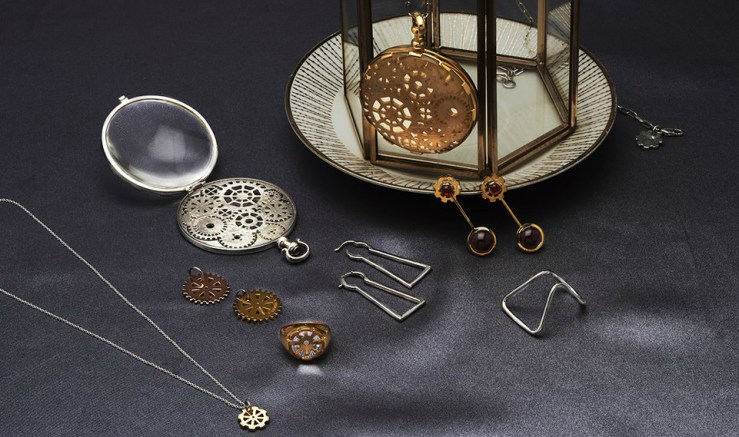
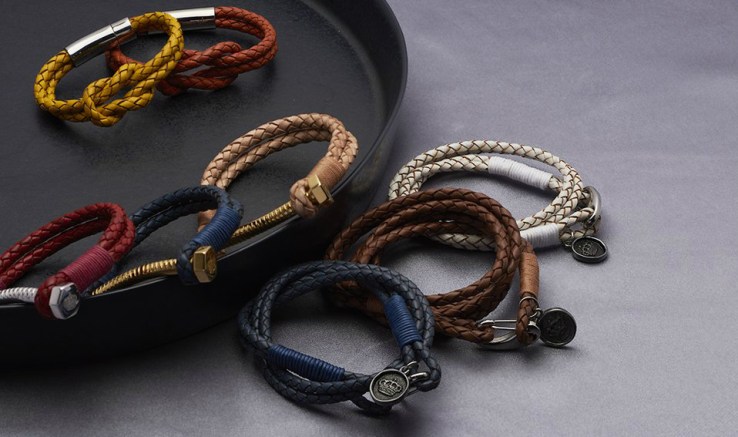
Carolyn launched the label way back in 2009 as a way to ‘tell stories’ after changing her career. Almost immediately the brand took off as an international jewellery exporter; her quirky designs based on everything from nuts & bolts to paint splatters and morse code, struck a cord with people looking for ‘wearable art’ that was not only affordable but also unique and told a personal story. Carolyn has always done commission work, creating very personal pieces for customers who want something that tells their own story.
Image: Carrie K. Artisan Jewellery
The retail side of the business has grown over the years to encompass pieces in silver for less than a $100, to fine jewellery versions that can go for thousands. Every collection starts from Carolyn’s odd-but-interesting brain and continue to tell fun and unique tales about her world and the fans who have bought into it.
Image: Carrie K. Artisan Jewellery
On top of all this, Carolyn has been the backbone of the creative design scene in Singapore. Her creation of the Keepers Studio concept from pop-up weekends and stores, to a permanent retail space at Singapore’s National Design Centre, has seen her become the most important person in the national design scene. Without her, there would not be successful Singapore brands – a bold claim but one I’m ready to defend.
The Carrie K. Artisan Jewellery atelier is located at National Design Centre, 111 Middle Road. #02-03 (Annex building along Queen Street), Singapore. Open: Monday to Saturday, 12:00 – 7pm, Tel: +65 6352 2559. You can also shop the brand online at www.carriekrocks.com, and at the Keepers store. For a full list of stockists including international, go to www.carriekrocks.com/stores.
These are my current best Singapore designer fashion and accessories brands. I’ll continue to update and add to the list.
Everyone seems to agree that Singapore has some of the best shopping in the world. You really can buy everything in the shopping city, especially when it comes to fashion, shoes and accessories … There are all the European, American and Asian international brands, as well as some unique Singapore-centric labels as well. For my money, the best places to shop are some of the more eclectic multi-label stores … Sects Shop, Keepers and Biro Shouten.
SECTS SHOP
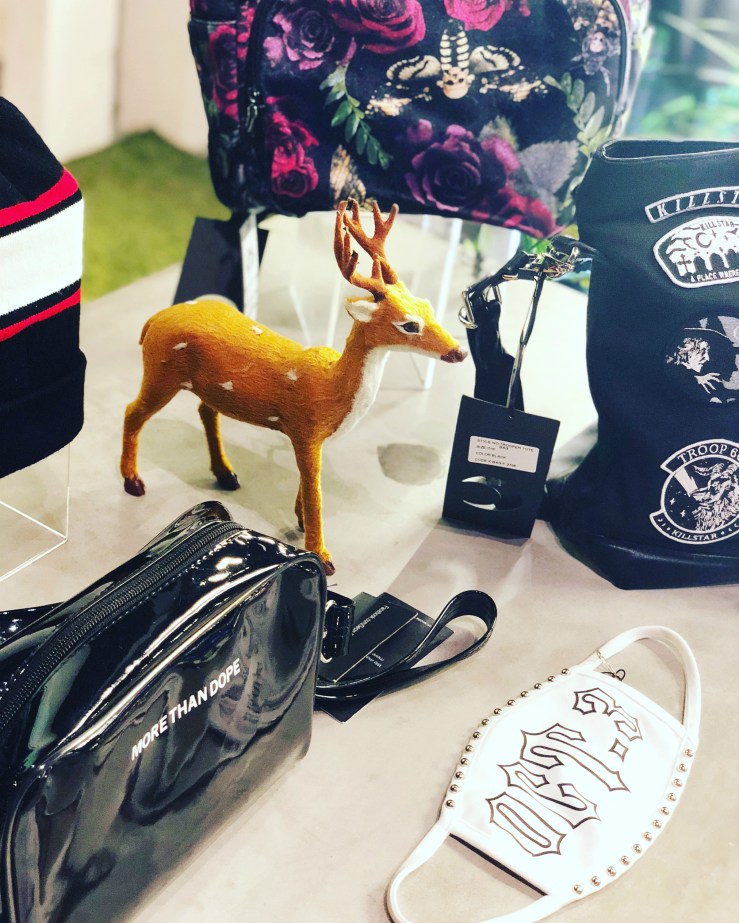
All images by Niki Bruce, shot on iPhoneX
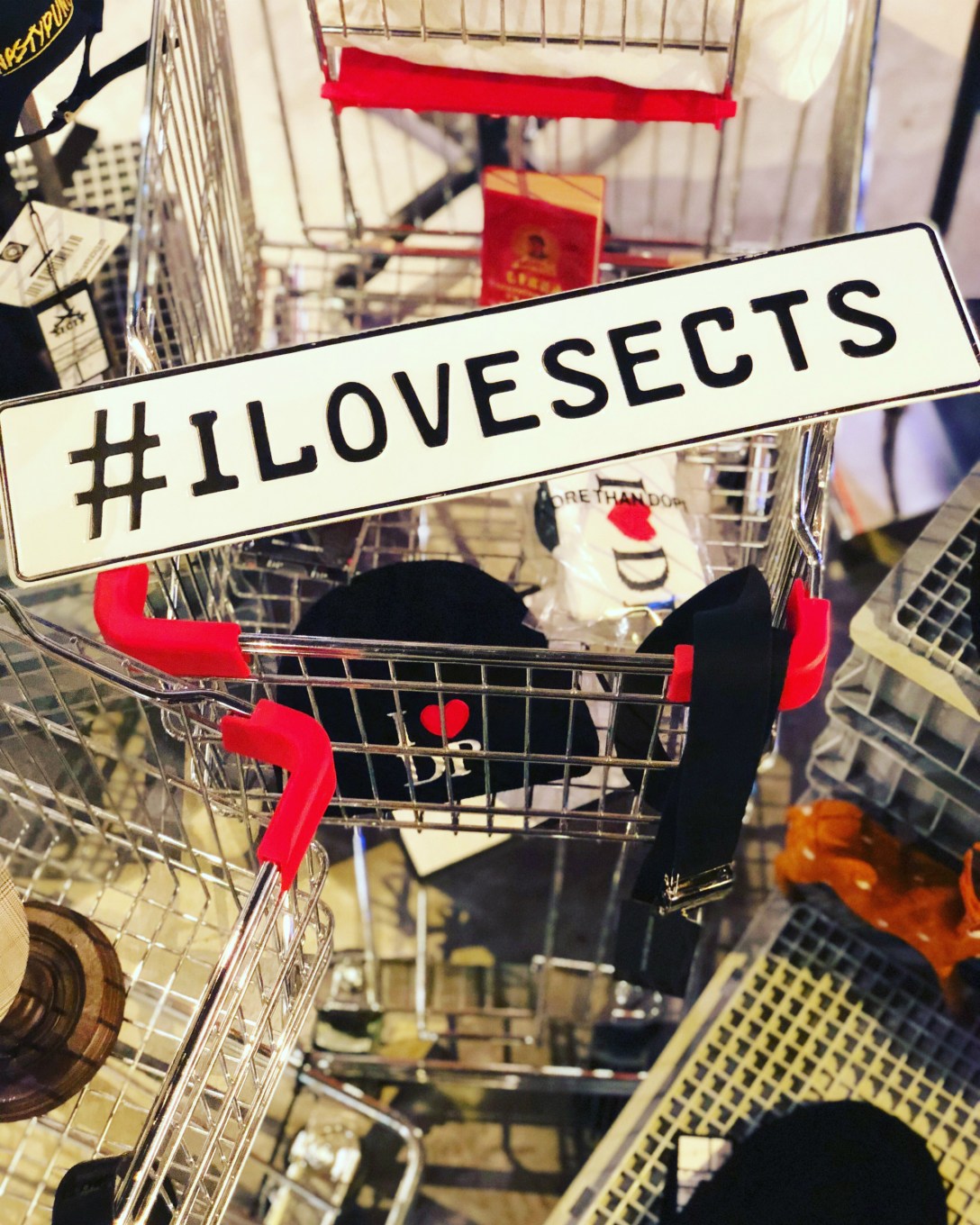
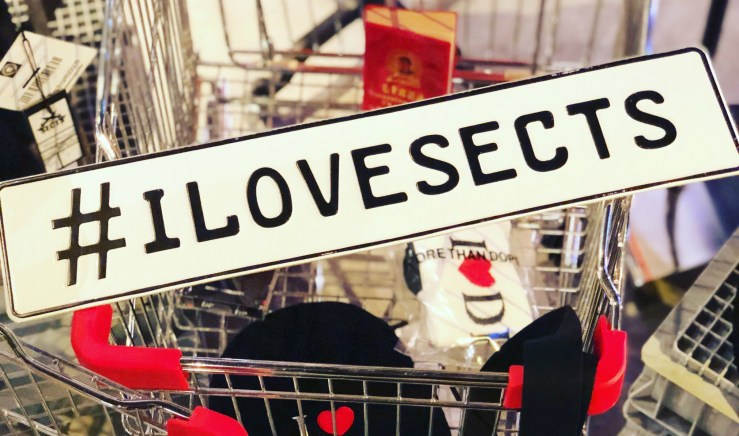
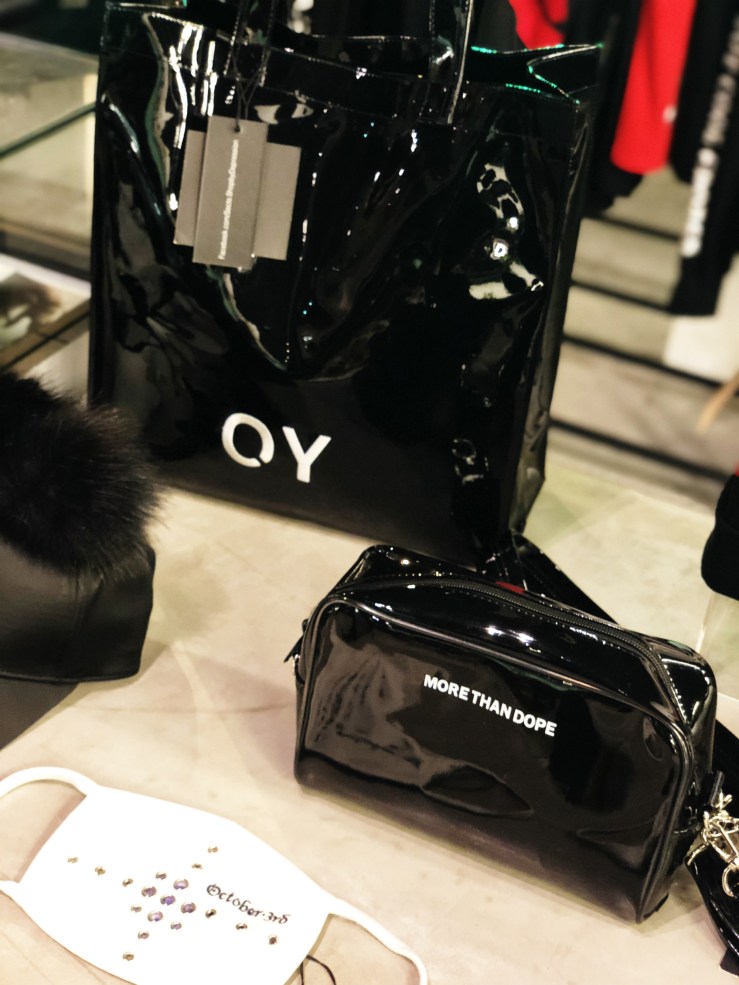
Sects Shop is the store for people who love streetwear, alternative fashion and anything a bit spooky and goth. Founded in 2014 but the two creative minds behind Singapore fashion brand Depression – Kenny Lim and Andrew Loh – this multilabel store located in Orchard Gateway is always at the forefront of the next big trend. Although it’s mainly a menswear store, there’s a strong unisex component to the buy that neatly covers the new Korean streetwear trends of oversize, unisex ‘skirts for boys’ trends as well as generously-cut ‘drapey black goth’ pieces that are definitely female-friendly. Shoes are available in smaller sizes for women, and there are always accessories like bags and jewellery that can be adopted by both sexes.
All images by Niki Bruce, shot on iPhoneX
What I love most about Sects Shop is that it’s always got something new – a new label, a new fashion-forward trend – and the staff are extremely knowledgeable about not only the labels in-store, but also about the current trends for styling.
All images by Niki Bruce, shot on iPhoneX
The interior consists of various ‘shop-in-shop’ spaces that curate the various looks and trends into different spaces. The furniture pieces have been specially created to match the store’s concrete-industrial-tropical-trash feel and are used to create different spaces. Sects Shop is also home to semi-regular pop-up party events that basically include a runway show of the store’s hardcore fans in their best Sects Shop looks.
I have to admit to being a bit biased about the beauties of Sects Shop. I am a longtime friend of the co-owners 🙂 and also a big-spending customer; I do LOVE Korean fashion brands.
I was also the creative director for the shop’s recent Spring Summer campaign shoot … READ MORE HERE
Sects Shop not only has a great Instagram account that lets you know what’s new in-store, the owners have recently also launched an account called sects.education that’s designed to show Singaporean’s how to be a bit more cutting edge when it comes to their street style looks, and features images from some of the city’s more interesting fashionistas. Well worth following for some interesting Asian fashion inspiration.
Sects Shop is located at Orchard Gateway #04-14, Singapore.
KEEPERS
All images by Niki Bruce, shot on iPhoneX
If you are looking for genuine Singapore design then you need to check out Keepers in the National Design Centre, which is worth checking out in its own right if you like any sort of design.
Created by one of Singapore’s most prolific and genuine artisans, Carolyn Kan of Carrie K. Artisan Jewellery which also has its studio in the same group of buildings, Keepers has had a number of incarnations, starting as a pop-up store on Orchard Road and ending up with its permanent spot in the Design Centre.
Carolyn is Singapore’s number one style and design collaborators – Singapore’s godmother of design. She has created numerous opportunities for all sorts of emerging artists and designers to come together to create unique capsule collections, but has also spearheaded the development of space for these artisans to actually SELL their creations. As a multilabel store, Keepers offers everything from jewellery, fashion, furniture and homewares, to unique flavoured teas and chocolates. Keepers is also behind the annual Singapasar fleamarket that features only Singaporean creations.
Thomas Wee capsule collection at Keepers. All images by Niki Bruce, shot on iPhoneX
So, back to the store. Situated in the front of the ground floor, the store is a free-form space that morphs into different design concepts based on individual brand concepts.
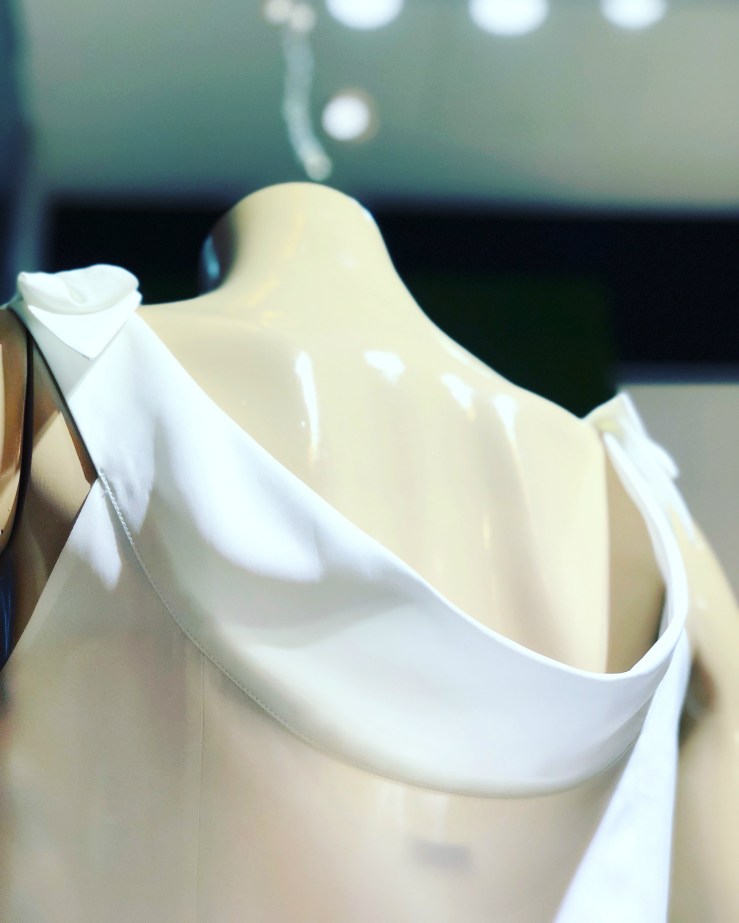
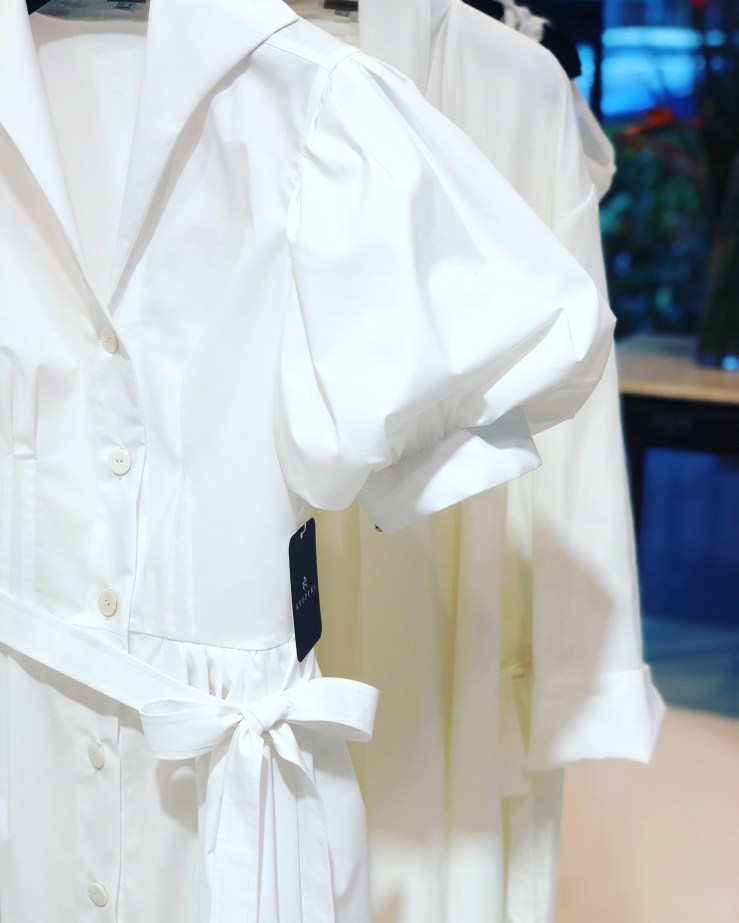
Currently Keepers is holding is a pop-up capsule collection from Singapore’s ‘Dowager Empress’ of fashion, Thomas Wee. This all-white range of beautifully hand-finished, couture-cut fashion pieces are based on Thomas’ all-time best-sellers. The designer himself was there opening night, taking measurements and informing customers that he would tailor various bits and pieces to better suit their body shapes.
Thomas Wee capsule collection at Keepers. All images by Niki Bruce, shot on iPhoneX
This is the type of personal service that adds to the joy of visiting Keepers. Carolyn and her creative husband/partner Chong can often be found hanging out in the store making useful suggestions to customers over which pieces of jewellery to buy, or which Ling Wu exotic skin bag looks best. Hands down, Keepers is the best place to buy stylish souvenirs from Singapore; and it’s the best place to snap up artistic presents as well.
Thomas Wee capsule collection at Keepers. All images by Niki Bruce, shot on iPhoneX
Keepers is located at National Design Centre, 111 Middle Road, #01-01, Singapore. Open 12pm to 8pm daily. The National Design Centre is also home to Carrie K. Atelier and super hot dining & cafe spot Tanuki Raw plus another cool multi-brand store Kapok.
BIRO SHOUTEN
All images by Niki Bruce, shot on iPhoneX
For shoppers who are more into the extreme hardcore minimalism of very select hand-curate objects and fashion items; or stylistas who are obsessed with the normcore purity of Japanese design, Biro Shouten is the tiny, perfect store for you.
This is where the brothers bring together their concise curration of the very best versions of micro-targeted accessories, homewares, organic home scents, jewellery and clothing, including Mastery handmade small leather goods and Takashi Endo Ceramics.
All images by Niki Bruce, shot on iPhoneX
The store itself is small, but perfect in layout and design – very Japanese in concept and feel. Although it’s located in a somewhat odd area (a very Singapore heartland shopping mall), it’s directly next to the Lavender MRT stop and well worth making the effort to visit.
Biro Shouten is located at Kitchener Complex, Level 3, 809 French Road, Singapore.
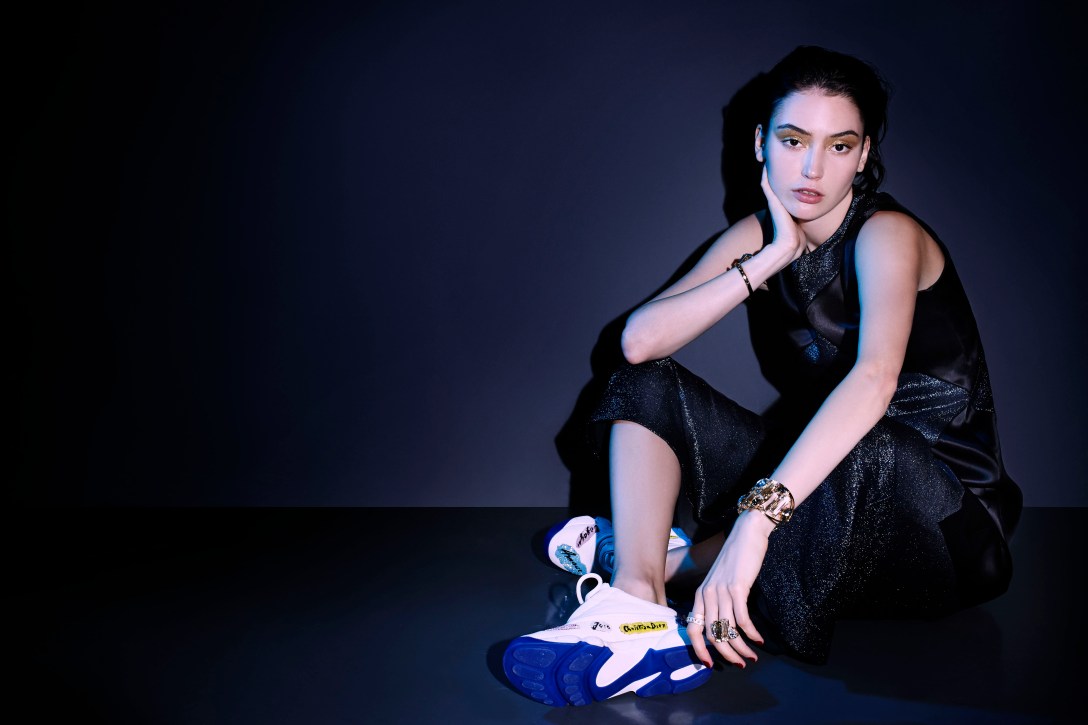
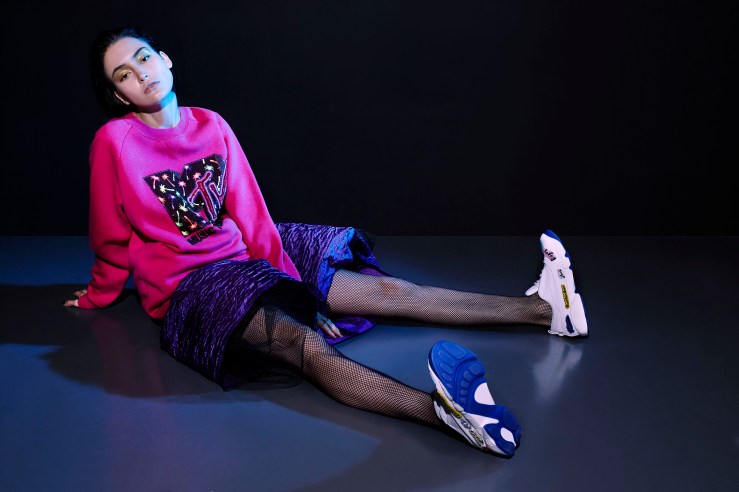
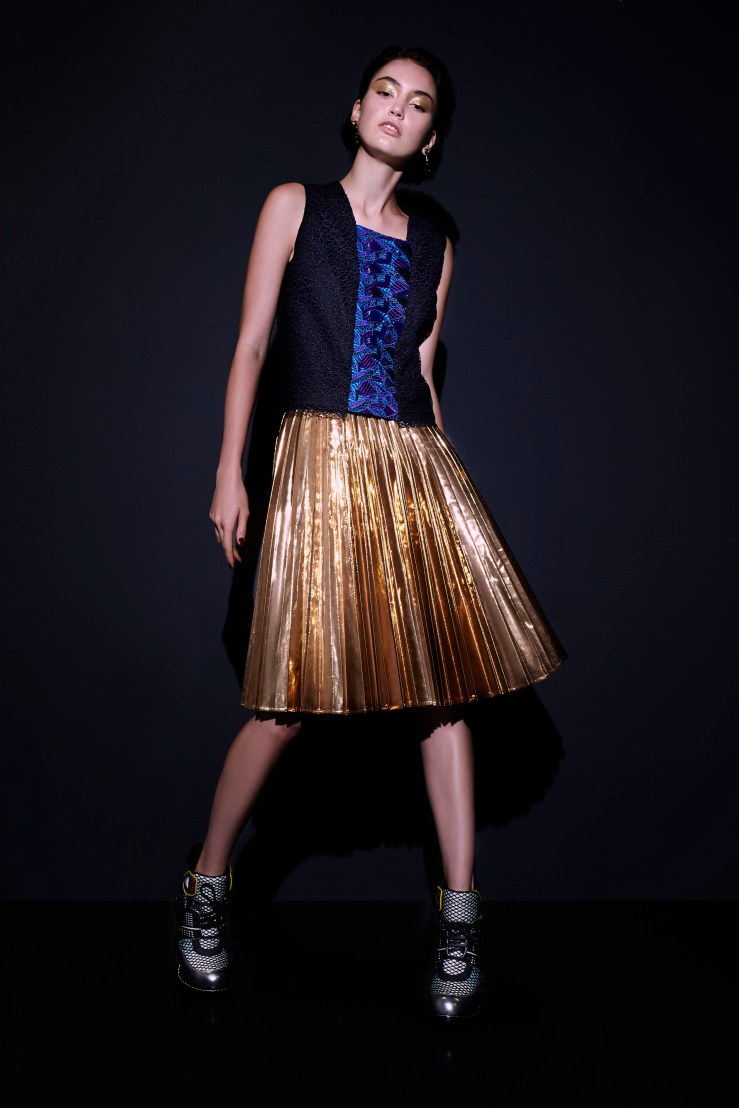
I’ve just discovered another fashion shoot I did while I was at http://www.herworldplus.com … You know you’ve been in the industry a long time when you forget a great shoot you did only a year ago!
Creative Direction: Niki Bruce
Photographer: Vee Chin
Styling: Randolph Tan and Ong Jollin
Hair and Makeup: Sha Shamsi using Mac Cosmetics and Sebastian Professional
Model: Saida @ Mannequin
I suspect that few fashion people have ever considered Finland as a source of more than nice interior decor prints from Marimekko. Perhaps a few people interested in architecture and industrial design may have heard of Alvar Aalto. Finland, despite it being home to some of the founding designers of what’s now described as ‘Scandi’ style – white, minimalism, blonde wood, hand-crafted ceramics, pops of primary colours – is generally lost in the recitation of other Scandinavian countries when it comes to descriptions of style and design capitals of the world.
Detail of the embroidery by Sini-Pilvi Kiilunen. Image: Niki Bruce, #shotoniphonex
This lack of awareness is rather unfortunate. Helsinki, the capital of Finland, is home to a number of excellent designers from fabric and fashion to interiors and architecture. It is also home to a rather good design school based at Aalto University, the country’s premier education institution.
In November 2017, at an elegantly intimate event in the new Andaz Hotel, a select group of Singapore’s fashion literati were finally introduced to some of the talent that’s currently coming out of the land of forests and lakes.
Finland’s Fashion Frontier was the first time Finnish designers were showcased in Singapore. Organised by Helsinki New (a really innovative company that promotes Finnish design and fashion), Helsinki Marketing (owned by the Finnish government) and in collaboration with Aalto University, five young designers’ capsule collections were shown on a runway.
All in all it was an interesting snapshot of a country’s design aesthetic, and quite an eye-opener for many a jaded fashionista’s palate.
Full disclosure … I have to explain that I once spent an enormously fun, cold, fascinating year in a small town in Finland – with lots of trips to Helsinki, of course. A town that was described by visiting Finnish makeup artist Miika Kemppainen as ‘hard core’. So I have a bit of a soft spot for the land of forests and lakes. 🙂
FINLAND’S FASHION FRONTIER … THE REVIEW
Backstage at Finland’s Fashion Frontier show. Image: Franz Navarrete
Overall, I have to say that I was mostly impressed by the quality, and design sensibility of the five young Finnish designers – Rolf Ekroth, Anna Isoniemi, Sini-Pilvi Kiilunen, Janette Friis and Ida-Sofia Tuomisto. The menswear from Rolf Ekroth and Sini-Pilvi Kiilunen was particularly strong, and the disco-ball party outfits from Anna Isoniemi stood out as being very on-trend.
ROLF EKROTH, menswear
Rolf Ekroth creates the Finnish version of oversized on-trend streetwear. He will be one of eight invited Finnish designers at Pitti Uomo in January, and has already collaborated with Paris’ Galeries Lafayette on a Spring Summer 2017 capsule collection. His grasp of the current trend of ‘futuristic sportswear’ is obviously the reason behind his rise to popularity, since it’s so ‘hot right now’.
A look from Rolf Ekroth backstage. Image: Franz Navarrete
What makes Ekroth stand out from the general pack doing similar things is his use of materials. This is, in fact, the true strength of these young Finnish designers. Ekroth uses a material similar to foil warming blankets to create voluminous garments that are as light as air, but totally insulating (rather hot in Singapore according to the model); he also used a quilted waxed paper-like fabric, again lightweight but super insulated.
Up-and-coming Singapore model Gabe Yap wearing a look from Rolf Ekroth. Image: Franz Navarrete
His colour choices and layering of prints is also solid and interesting; a jacquard camo print particularly stood out.
A look from Rolf Ekroth. Image: Franz Navarrete
However, some of the pieces were just a touch too close to what’s happening in Seoul and around the world; the ‘coat as backpack’ and the connected jackets and coats zipped into each other, are reminiscent of Yohji Yamamoto’s latest collection and of course, Rei Kawakubo’s designs for Comme des Garçons. ‘Homage’ as they say is not entirely a bad thing, but with more exposure and growth the influences will become less obvious. Rolf Ekroth has a strong future; one to watch.
ANNA ISONIEMI, womenswear
If you believe you can never have too many sequins, Anna Isoniemi is the designer for you. The collection on the runway was inspired by racing cars and 1960s futurism – the second influence was clearly obvious in the graphic checked pants and polo-neck top, the linear stripes and the use of primary colours. The racing car influences were more hidden as textiles that imitated brand names and the simplistic use of numbers.
Looks from Anna Isoniemi. Image: Franz Navarrete
The stubborn choice to use sequins en masse was a fortuitous decision; the ‘shine’ became a texture, adding a robotic fluidity to garments that really were very basic in cut and concept. Without the sequins, the collection would have been quite humdrum, with no quirks of cut or silhouette to make the clothes any more than current high-street items of pleated skirts, polos, wide-legged pants and oversized boxy jackets.
Anna Isoniemi is also a textile designer, which is why the colour choices were well thought through, but unfortunately we didn’t get to see her best work in this area, the sunset ombre sequin patterns that are also in her collection are lovely. It would be interesting to know what her clothes would sell for; too expensive and price herself out of the market for shiny party clothes.
SINI-PILVI KIILUNEN, menswear (or womenswear)
The feminisation of menswear is also a current fashion trend – JW Anderson, Blindness – and was covered by the work of Sini-Pilvi Kiilunen at the Finland’s Fashion Frontier show. His sumptuous velvets and indulgent embellishments of floral embroideries and ruffles layered over boxy military style coats could easily be worn by men or women. The fact that the fabrics and embroideries were also recycled added to the very ‘now’ feel of Kiilunen’s collection.
Detail look at piece from Sini-Pilvi Kiilunen. Image: Franz Navarrete
While the concept could have become overwhelmingly sweet, the addition of fabric worked with hundreds of metal rings on pants and jackets, kept the sugar way with a dash of punk. Rich deep colours of vermillion, navy and aqua also helped add a more masculine aspect. Again, it was the use of colour and texture that made this collection less ordinary; the cuts of pants, shirts, jackets and coats were more classic than fashion-forward, though the proportions were interesting.
Detail look at metal ring fabrications from Sini-Pilvi Kiilunen. Image: Niki Bruce, #shotoniphonex
Kiilunen was inspired by 19th century oil portraits of young boys, a fitting reflection on the current pop culture movement towards less gender definition in the world of fashion. Depending on how expensive these piece would be, the designer is sure to find a following. Very K-Pop; you could easily see a boy group music video coming down the runway.
JANETTE FRIIS, womenswear
Unfortunately I couldn’t really remember Janette Friis’ work until I got to the knitwear. Which, not surprisingly, is apparently her specialty. The languid, chiffon pieces in her collection were not particularly strong, too reminiscent of other designers and too obviously taken from her 1930s and 1940s inspiration. They all looked like boudoir pieces from old movies.
Dress by Janette Friis. Image: Franz Navarrete
The knitwear, on the other hand, stood out. The cozy, slightly oversized iterations of pussy-bow blouses and pencil skirts looked fresher. Although to make the concept stronger, Friis would have done well to exaggerate the proportions even more than she did.
Singapore supermodel Jean wearing Janette Friis. Image: Franz Navarrete
At this stage her work still seems to lack a strong point of difference, the more interesting items are a bit too ‘fashion’ for easy retail, and not quite ‘fashion’ enough for the high-end style market. There’s lots of potential here but it needs refining.
IDA-SOFIA TUOMISTO, womenswear
Ida-Sofia Tuomisto’s collection is apparently focused on the materials, the ‘breaking down and reconstructing [of] garments to create a final result that is both new and fresh’. Unfortunately the finished result did not seem all that new or refreshing. The mix of hard and soft textures is not new, the painting of fabrics is not new, the cuts were entirely too reminiscent of recent collections from Loewe and even Dior.
Singapore model Jean wearing a look from Ida-Sofia Tuomisto. Image: Franz Navarrete
Overall, Tuomisto’s collection was perhaps the weakest of the five shown at Finland’s Fashion Frontier. However, again, the work was saved by the use of colour – one oversized t-shirt dress showed a nice use of autumnal colour and looked much more comfortable to wear. This would be a more interesting direction to take for future work.
Look from Ida-Sofia Tuomisto final collection runway show in Finland. Image: Helsinki Now
The use of hard-textured materials combined with hand-manipulation would make it difficult to translate Tuomisto’s work into a retail range at a reasonable price; but something could be done with the dress mentioned above.
OVERALL THOUGHTS & MUSINGS …
One of the things I love about Finland as a country and culture is that it is on the border of West and East, despite not many people being aware of it. I always refer to Finland as being the ‘Tokyo of Europe’ in that it has its own slightly quirky perspective on the world; it celebrates the creation of things, not just the final product; it has an educated, polite but just-a-bit odd population that is as happy dealing with issues at a global level as it is sitting in a wooden hut in a forest next to a lake.
Miia Koski, the managing director of Juni, the company behind Helsinki Now, told me that Finnish design is a mix of Scandinavian minimalism and love of natural textures, with the celebration of bright colours more reminiscent of Asia. And she’s exactly right.
Finnish fashion is a mix of the bright and crazy colours and textures we in Asia are so fond of, with the clean lines that are not only the hallmarks of Scandinavia, but likewise of traditional Japanese design. Finland is the Japan of Europe, but it’s also very much its own world.
Helsinki New is a series of fashion projects organised by Juni Communication & Production. Go to www.helsinkinew.com and check out its instagram account @helsinki_new
Finland’s Fashion Frontier Show Venue: Andaz Hotel Singapore Production: Saara Sihvonen Hair and makeup team lead: Miika Kemppainen
Singapore, while being a geographically small country that punches above its weight in any number of industries, has had some difficulty in producing fashion brands and designers that have been able to go on to worldwide success. It’s not been impossible; accessories label Charles & Keith is a prime example and brands like In Good Company – which won the inaugural Designer of the Year – is currently making waves with its affordable fashion with a ‘designer’ sensibility. However, there have been a number of Singaporean brands that have recently downsized or closed – not just ‘designer’, in fact, previously solid contemporary and high-street brands have disappeared too.
Thankfully, however, there’s been some new blood to fill in the blanks and some brands who have been plugging away for years, have finally been recognised.
THE SINGAPORE DESIGNERS OF THE YEAR …
Image: Dzojchen
I was particularly excited that Chelsea Scott-Blackhall of contemporary luxury brand, Dzojchen, won Designer of the Year. Chelsea has been growing her label since 2013 and over the years has shown on runways in Paris, New York and Seoul. It’s also being stocked in major multi-label stores and showrooms. I actually sat front row at Seoul Fashion Week for Chelsea’s first show there, and I’ve been supporting her strong, personal take on luxury mixed with a sense of ease and nostalgia ever since I saw her first collection. A well deserved winner. Yay Chelsea!
Image: Marilyn Tan
Another well-deserved winner was jewellery designer Marilyn Tan. Marilyn has been creating artisan jewellery pieces for 20 years; the brand shows in Paris twice a year, and is stocked at the Museum of Contemporary Art Store in Chicago, plus at designer stores in New York, Miami, Toronto, and London. Marilyn is one of the loveliest people I’ve ever met; she’s always stayed true to her unique design sense that mixes precious metals and stones with a Singapore aesthetic and the organic shapes of nature.
The winner of the Emerging Designer of the Year, Elizabeth Soon of Ametsubi, may be a relative newcomer to the Singapore fashion world, but her win was loudly applauded by the fashionista crowd at the awards.
Ametsubi is an interesting mix of Japanese aesthetics and contemporary womenswear. These are clothes made for women who love fashion but aren’t necessarily into following trends. Although based and produced in Japan, the brand does have a more practical bent that shows its Singaporean roots. This is definitely a brand to watch. You will eventually be able to shop Ametsubi on its website (although it seems to be still under construction), but you can check out the new collection and then stalk the site. That’s what I plan to do – I really want this whole outfit.
Image: Ametsubi
The Emerging Accessories Designer of the Year award went to the team of Afzal Imram and Lin Ruiyin behind fine jewellery label State Property. The brand has a very modern aesthetic, quite geometrical and minimal, mixed with a Singaporean’s love of colour; it’s very easy to see that this is a label that can become international. There is also an artistic quality to the pieces; an interesting sense of balance between the materials, the skin of the wearer and the spaces between. The earrings are particularly clever – they look both current and timeless, something that’s very difficult to do. I personally like the Coda earrings.
Image: State Property
THE CHAMPION OF THEM ALL … CAROLYN KAN
Image: Carrie K.
First up I have to declare that I’m great friends with this individual who I feel has done more for the Singapore fashion and design industry in the last 10 years than anyone else.
The designer and founder of artisan jewellery label Carrie K., Carolyn Kan, is someone who has been a tireless worker for Singapore’s design scene. Her jewellery brand is international, but what’s more important is that Carolyn has created numerous environments for Singapore designers to come together and make money; all on her own initiative.
Her positive personality, energy and genuine care for creatives in Singapore led to the Singapore Fashion Awards committee creating a special award just for her; the Champion for Creatives and Designers Award. Carolyn was behind the Multiply: A Majestic Playground event by Keepers Singapore and The Straits Clan – featuring over 50 Singaporean artists, designers, makers and craftspeople – and more than 6,000 visitors. Carolyn was also the driving force behind Keepers, a platform for Singapore’s creative businesses that has gone from pop-up weekends in the Carrie K studio, to a pop-up store on Orchard Road and now has a permanent space at the National Design Centre.
Carrie K. also won the inaugural Bespoke Award for a unique ring designed for a wedding anniversary that managed to combine not only the client’s many personal requests, but still held onto the Carrie K. design aesthetic. And, she won the Best Collaboration of the Year Award for the Carrie K. and Disney Beauty and the Beast Collection (another personal favourite – I’ve got two of the rings).
We all love and adore Carolyn.
THE SINGAPORE FASHION AWARDS EVENT …
I have to say something about the actual event for 2017. This year it was held at W Singapore and the organisers went all out on creating an environment that was an eclectic mix of Singapore, luxury and dare-I-say, fun. The was a real sense of occasion created by Singapore’s ‘Godfather of Fashion’ and author, Daniel Boey … towering flowers, fabric, Singaporean models, crazy lighting, an actual triumphal arch on the stage and lots, and lots of Singapore fashionistas in their best Singapore designer threads. Congrats darling! It was definitely ‘fashion’.
Yep, more images from my recent trip to Taipei for Taipei in Style with my boys Andrew and Kenny. This time it’s the (in)famous #oodt with a bit very bad model posing included. Enjoy!
*note: again, if I’m in the image it was taken by Andrew or Kenny, and all images shot on iPhoneX 🙂



































 niki bruce