Su: Slow fashion with Scandinavian style

Finnish brand Su is a fashion and homewares brand that is part of the Slow Fashion movement. The brand creates limited pieces in sustainable fabrics like linen, organic cotton and merino wool. 

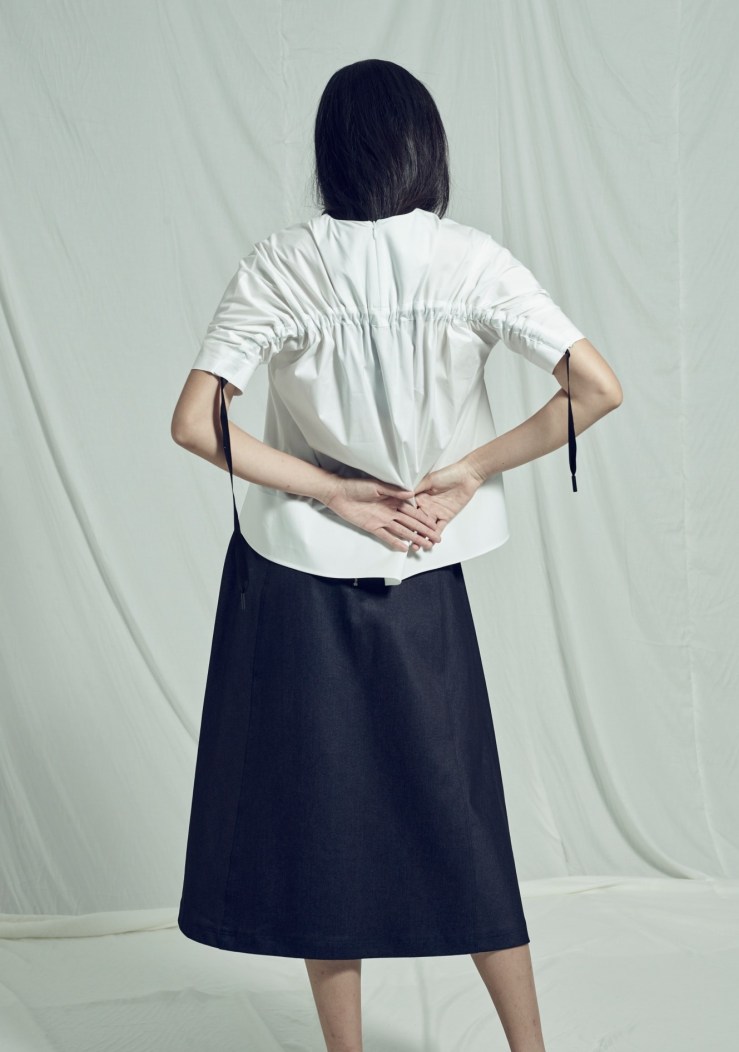
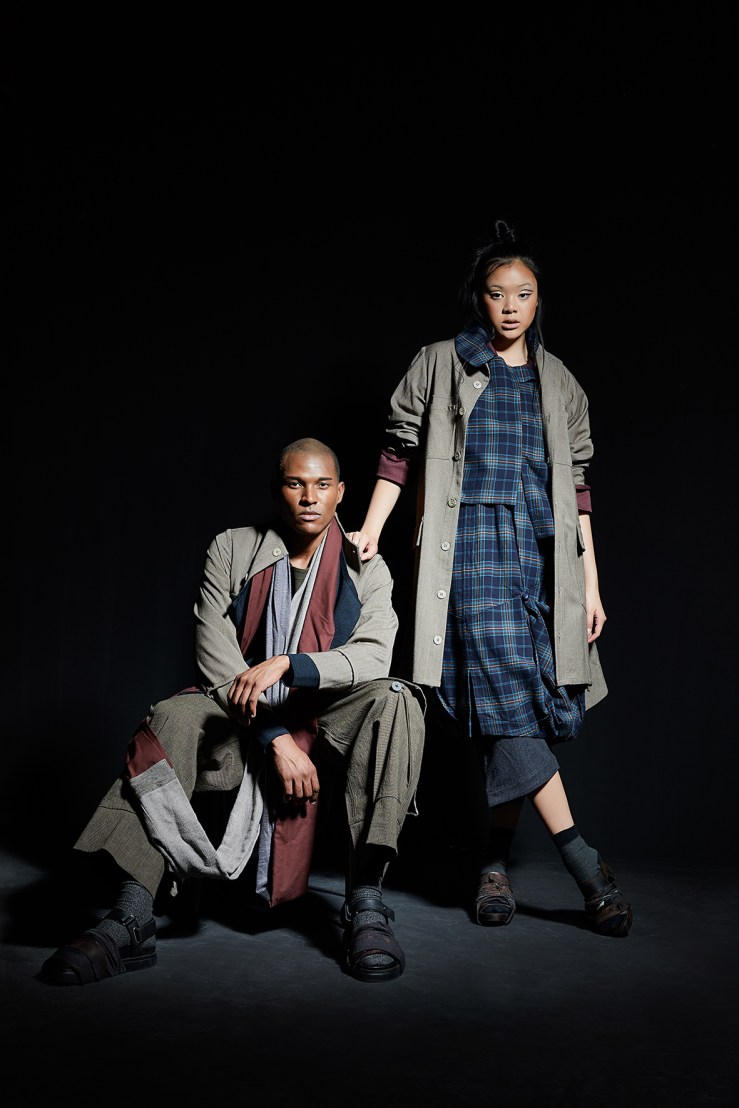
The style is very ‘Finnish’; shapes are oversized and non-gendered in many ways, the colours are muted and natural, and the styling is simple and again, natural. 

There is something very Japanese about much Finnish design – there are correspondences in concepts like wabi-sabi, minimal-natural, and muted palettes between the two countries’ aesthetics. The Japanese like Finnish design, and the Finns like Japanese design. 

Su’s design philosophy is “to make modern, custom-made clothes in small batches”, with an ethos that is “restrained, relaxed and respectful of materials”. Again, all things that resonate with lovers of Japanese design.

Everything is designed and handmade in Finland – from interior textiles to the clothing collections. The latest collection – Summer 2020 – is about loose fits, large pockets, dropped sleeves, shades of gray and blue, with white and black. There are also pieces in an undyed linen. 

There is a ‘slowness’ about the collection that’s not only down to how it is sourced and made – 100% certified natural materials, produced in an ethical way – but also in the feel. It’s about long, lazy summers in the woods and fields of Finland surrounded by some of the country’s 100,000 lakes.

Su Slow fashion with Scandinavian style 10

“We use Öko-Tex 100 certified natural materials from Finnish fabric wholesalers. Flax is produced in the EU or the Baltic countries. Merino wool is knitted in Finland. The cotton we use is organically grown and produced in the EU in southern Europe,” states the Su website.

Su also produces homewares. Made of linen, there are cushion covers, bath towels, hand towels, aprons, eco bags, and napkins. Again, the fabric is all natural, the colours are muted, and there is a practicality about the designs like tea towels with buttons so you can hook them easily. 

Although you can’t currently buy Su online unless you live in Europe, you can try your luck by contacting the brand’s stockist Somia Living by emailing miia@somialiving.fi. If you really want something from the online store, try emailing info@sunnuntaipuoti.com and organising your own shipping.

Read more about Finnish fashion: Review: A focus on fashion from Finland … the next big thing?

Read more about Slow Fashion: Small but mighty: 6 emerging sustainable Australian fashion brands.

6 sustainable Australian swimwear brands to discover

Yes. Australia is the home of budgie smugglers, togs and swimmers. Just about everyone, no matter their age or size, has a pair of bathers in the cupboard. Some of us have entire swimwear wardrobes of up to hundreds of pairs. 

But, swimwear – particularly the fabrics they’re made from – are not particularly environmentally friendly. Most swimmers are basically made of plastic. 

With most of us now becoming aware of the issues surrounding sustainable clothing production, the need for sustainable swimwear has become a bit of a hot topic. 

There are a number of smaller Australian brands that have focused on creating swimwear in a more sustainable, or eco-friendly way – they use recycled nylon, or nylon made from recycled sea plastic, or reuse fabric waste. In their different ways, with their different styles, these brands are filling a gap in the market.

Camp Cove Swim

If you love colours and prints, Camp Cove Swim is a brand you’ll get excited about. The cuts are forgiving with high-waist bottoms and supportive tops in pretty graphic patterns and a range of colours from muted neutrals to bright primary shades. 

sustainable Australian swimwear brands CAMP COVE SWIM 1

The lining of the swimsuits are made of Econyl – a regenerated nylon made from fishing nets and landfill waste – and the prints are done using the sublimation printing process that uses no water at all to dye fabric. 

The brand also manufactures all their garments in a small town on the coast of New South Wales, and uses in-house scraps for their samples, and they on-sell their excess fabrics to local fabric stores. 

Check out the brand at www.campcoveswim.com

Salt Gypsy

This is a swimwear brand that’s all about surfing. The style and designs are functional – think rash tops, surf leggings, high-waisted bottoms, supportive tops and waterproof pouches – they also produce surfboards. 

The garments are made from Econyl, they use biodegradable packaging and produce the pieces in Australia using responsible manufacturing practices. 

Salt Gypsy started out in 2012 with the aim to develop the surf leggings for women surfing; and continues to be focused on creating a closed loop production system using ‘repolymerised’ waste materials and supporting the slow fashion movement.

Check out the brand at www.saltgypsy.com

Shade Swim

If you’re as scared of the harmful rays of the sun as I am, you need to check out Shadeswim. The brand was created by a young mother who suffered from skin cancer, and who wanted to create swimwear for adult women that is more covered up, and with a high level of sun protection. 

In Australia it is basically a law that children now have to wear full-coverage swimwear ie. rash tops etc, and full-coverage hats with neck protection at schools and public swimming events.

Shade Swim’s designs are not trendy, but they are comfortable and flattering for women of all ages and body types, they protect your skin and are made from a type of sustainable Lycra that is UPF 50+.

Check out the brand at www.shadeswim.com.au

Re-Swim Club

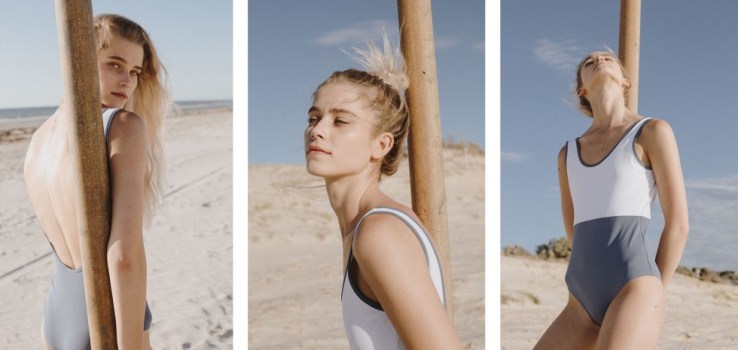
Yes, you can upcycle and reuse swimwear fabric according to Re-Swim Club, a swimwear brand that creates its garments out of what would otherwise be considered waste fabric. 
sustainable Australian swimwear brands RESWIM 1

The brand sources designer surplus, recycled materials, remnants and off-cuts to create limited run swimwear. All the pieces are hand cut and hand sewn to make the most of every little scrap of fabric. 

The swimsuit cuts come in classic styles like tank two-pieces and simple one-piece malliots, and since the fabrics change all the time, there are limited numbers of each piece. Interestingly the brand categorises its products by size – so you shop your size first and then see what is available. This makes sense considering the irregular amounts of each particular fabric. 

Check out the brand at www.reswimclub.com.au

Le Buns

Yes, this swimwear is designed to make your bum look good. If you’re looking for something a little sexy and love solid colour swimwear, check out Le Buns. 

These swimwear designs are a bit more on trend than some of the others, but there is a classic feel that makes sure you will have longevity from your swimsuit. The cuts of the bottoms are also a bit more revealing than more covered-up brands, for those who want to show off a bit more. 

The brand pays attention to its supply chain, using suppliers with sustainability and transparency credentials for ethical production. Le Buns also uses biodegradable packaging or home compost grade mailer bags for its online shipping, and even gives you a free wash bag so you take care of your swimwear in the washing machine so it lasts longer and you don’t need to replace it. 

Check out the brand at lebuns.com.au

Shapes in the Sand

This eco conscious swimwear brand is all about Australian nature, from the prints to the styles. Using sustainable and recycled fabrics, Shapes in the Sand produces limited runs – two or so prints per season – in a range of cuts that have been designed to suit all ages and body types. 

Like many Australian swimwear brands, every collection comes with a rash top – the cover-up of the Aussie beach – and different styles of bottoms depending on how much, or how little you want to show. The prints are based on the natural environment, and the brand’s models are more natural than fake. 

All manufacturing is done in Australia, with the aim of supporting a circular economy; the fabrications come from bio-based (plant) materials and recycled nylon from fishing nets and even carpet fluff! All their packaging is plastic free, and Shapes in the Sand also collaborates with a variety of non-profit environmental and cultural organisations.

Check out the brand at www.shapesinthesand.com.au

If you’re interested in supporting Australian fashion, follow @fashion_revival_runway to discover more cool, independent Aussie brands.
 

Discover new Singapore-based Fair Trade jewellery brand Atelier Agape

A long time ago I met Vera Mao as part of a Singapore Streetstyle contest; she was elegant, interested and interesting, calm and had a hidden passion for creating her own path. With the recent launch of Atelier Agape, Vera has manifested her potential. 

Atelier Agape Founder Vera Mao-1

Atelier Agape is a fair trade jewellery brand. All the pieces are handcrafted in an ethical manner by marginalised artisans in Jaipur. All the artisans are paid a fair wage and given training in enterprise building skills in conjunction with SETU, a fair trade organisation based in Jaipur. “During the pandemic, SETU has also used a part of its profits from jewellery production to prepare and distribute meals for the poor and destitute,” says Vera.

All of the Atelier Agape jewellery pieces are handcrafted from 925 sterling silver, gilded with white rhodium or 14K gold vermeil and do not contain any lead, cadmium or nickel, making it hypoallergenic and safe for sensitive skin.

Just in time for Mother’s Day, the brand is launching with a collection dedicated to mothers and their children.

Atelier Agape Fair Trade personalized jewelry lowres-5

“I am always moved by the emotional and undeniable connection of the maternal bond between a woman and her child. With several of my friends becoming new mothers, and having attended numerous baby showers, I was tired of the typical gift gifting traditions,” explains Vera. 

“I found myself seeking something different, something that would honour the start of this relationship that is so deeply meaningful. There are several mother-child matching fashion [options] but not in jewellery, which is a highly personal category.”

“Each piece is thoughtfully designed to allow both mother and child to latch meaning unto and cherish with time, through intricate details and free personalisation to tell each mother’s unique story,” explains Vera.

Atelier Agape Fair Trade personalized jewelry lowres-39

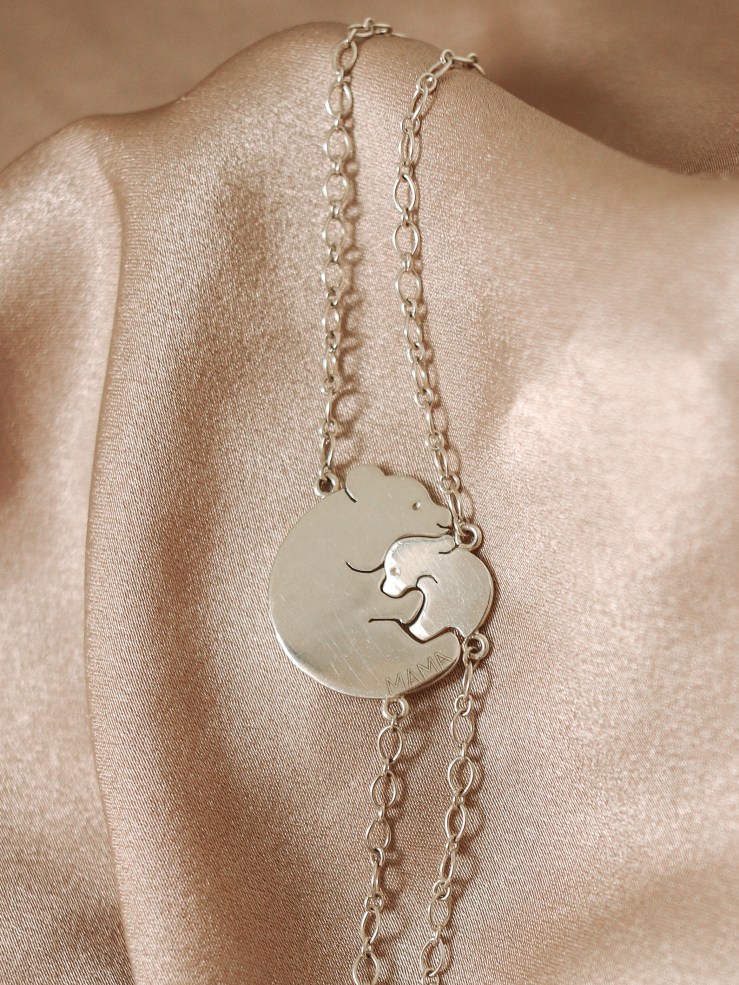
Tous Les Jours, which translates to ‘everyday’ in French, is the first Atelier Agape collection and is inspired by “everyday superheroes – real, modern, selfless mothers” says Vera. There are different styles to match different tastes, and the central concept is based on the idea of separating one into two – mother and child pendants that can be worn together, or separated to be worn by both.

Atelier Agape Personalized Jewelry-30

“Drawing inspiration from the idea that mothers always wish to carry their little one with them to keep them safe, the matching bracelet set features a Mama Bear and Baby Bear pendant that fits perfectly into each other in a perpetual hug, while the 2-in-1 Nesting Locket Necklace features a locket that opens to reveal an inner pendant,” says Vera.

Atelier Agape jewelry is available exclusively on www.atelieragape.com. All orders from first-time customers receive 10% off. Prices quoted in SGD. For Mother’s Day only, all orders made before 10 May will receive free gift-wrapping.  

3 eco-friendly Indonesian fashion brands to discover

I have always loved discovering new fashion brands, particularly those from Asian countries. I feel that there is a wealth of cultural and creative nuances that Asian designers bring to the global fashion market. 

In the current age of global lockdown, it is worth taking your time to reach out and discover new brands and new ways of wearing fashion from around the world. After all, online shopping is still going strong, even if it may take a little longer to get your hands on the goods.

Toton

Toton Januar was born in Makassar and raised by his seamstress mother, developing a taste for the more artisanal aspect of fashion construction. After moving to Jakarta, the designer worked as a model, and a designer, and eventually studied fashion at Parsons New School of Design in New York.

The brand was launched in 2012 in collaboration with another top Indonesian designer Haryo Balitar. Toton’s concept is about “a retelling of Indonesia’s inherent stories”, and focuses on traditional textile practices mixed with an avant garde sensibility, think deconstructed fabrications and non-gendered cuts and shapes. 

Toton, the designer, uses ceremonial and folk cultural clothing shapes mixed with more menswear-inspired cuts and patterns to create a ready-to-wear collection that is an inspired mix of wabi-sabi, and boho chic.

This season the collection has a deep, earthy feel to it, with feature embroidery echoing leaf litter on a jungle floor. The more deconstructed concepts are kept to a minimum with many more wearable separates than in previous collections. Tones of khaki, dirt green, and soft brown is leavened with lots of white making this a very wearable outing from the designer.

Shop Toton online at www.masarishop.com/brands/toton

Soe Jakarta

Designer Monique Soeriaatmadja is a powerhouse of a designer with a number of labels and a growing family. Soe Jakarta was created to celebrate Indonesia’s traditional handwoven textiles by combining them into sharp, modern womenswear. The textiles are a collaboration between the designer and traditional artisans located all over the archipelago.

While Soe Jakarta is a ready-to-wear label, there is a component of bespoke production, which makes this a label designed more for unique clothing that you may have to pre-order, rather than trend based fast fashion. Soe Jakarta is a great example of celebrating traditional textile practices while also being more sustainable, and definitely offering something for the ethical consumer.

Soe Jakarta produces small collections and in small quantities. The current collection is rather abstract with simple shapes embellished with drapery or bodices of the handmade fabrics. There is a mix of menswear inspired jackets, but the overall feel is that of the ‘Mori Girl’ – country, comfortable, natural.

Shop Soe Jakarta online at www.soejakarta.com/shop

Purana

Founded in 2008, Purana is the OG of independent Indonesian fashion brands. Designer Nonita grew up in a traditional Javanese family that owned a traditional batik workshop, which eventually led her to first working in fashion media, before launching her brand. 

The name means ‘old scripture’ in Sanskrit, and has always had an ethical and cultural component. The designer worked with traditional artisans from the launch of the brand with the aim of creating fabrics that fuse batik, hand-weaving, and tie-dying with geometric patterns and more wearable modern cuts and designs.

The bulk of the garments are designed to be ‘free size’, which is not really one-size-fits-all, but more about loose-cut, relaxed clothing. Multi-function, and multi-styleable designs have been used to ensure a wider range of body types can be fitted.

Purana is a brand for lovers of colour, print and comfort. This is the perfect label for summer, with its loose fits and cool fabrics. The current collection features lucious batik prints in soft blues and greens on eco-friendly fabrics. 

Shop Purana online at puranaindonesia.com/collections

So, those are three Indonesian fashion brands I’ve been watching for a while. Which one is your favourite? 


New non-profit online eco marketplace for everyone

Despite the ongoing drama surrounding not only the impact of coronavirus on the fashion and creative industries, but also the general malaise of the industry as a whole, there are some bright spots to celebrate. 

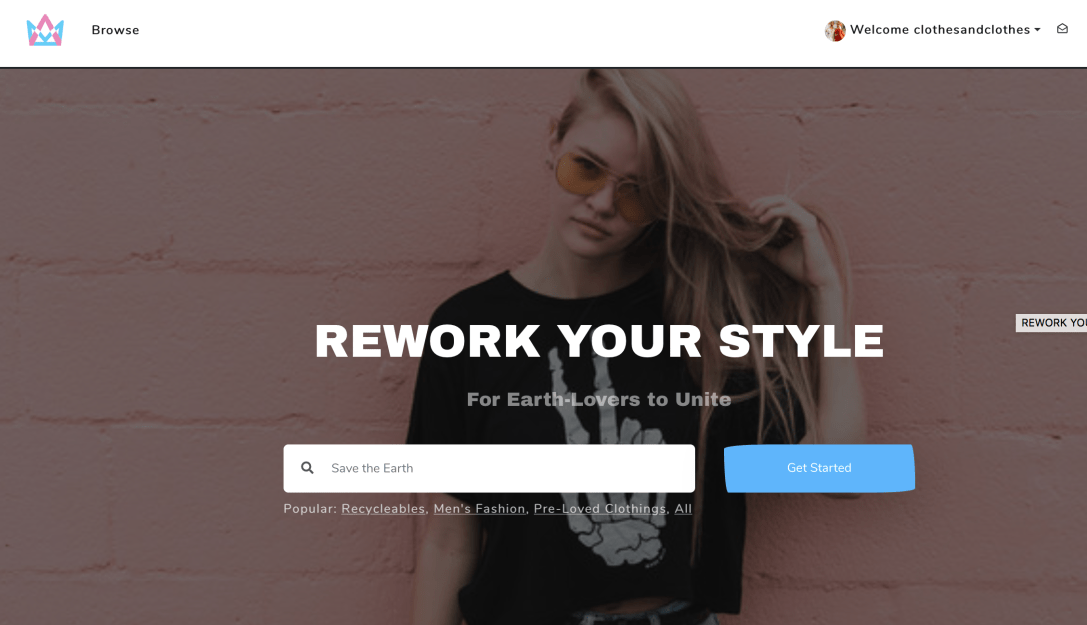
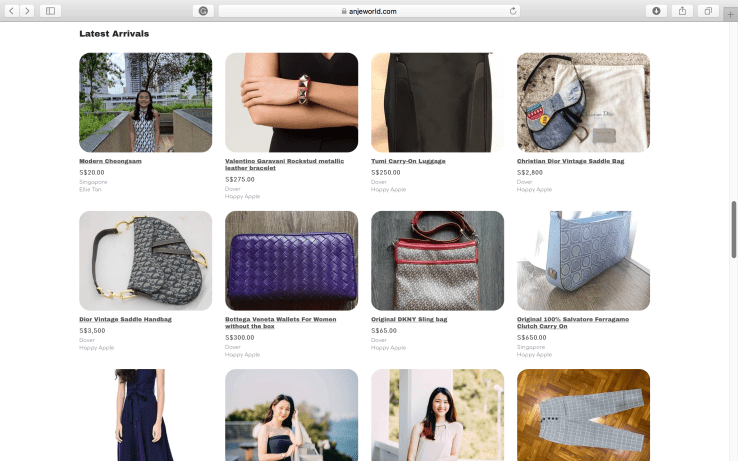
Anje World is an online marketplace for swapping and selling preloved and vintage clothing plus new eco-friendly products like scrunchies made from recycled clothes. The marketplace is also a non-profit.

Screen Shot 2020-04-13 at 2.40.08 PM

“Unlike other online marketplaces, we earn zero profit. We started this website to encourage and raise awareness of sustainable fashion. As you know, the fast fashion industry is the second largest polluter in the world,” explains Min Hui from Anje World.

As we all know there is already too much stuff, too many clothes, bags and shoes already in our environment. This Singapore-based concept makes it easy for you to shop more consciously and ethically.

“Anje World’s mission is always about bringing hope and love to people. Not just fostering strong bonds, but also encouraging one another to be sustainable for our earth’s good,” says Min Hui.

Screen Shot 2020-04-13 at 2.40.12 PM

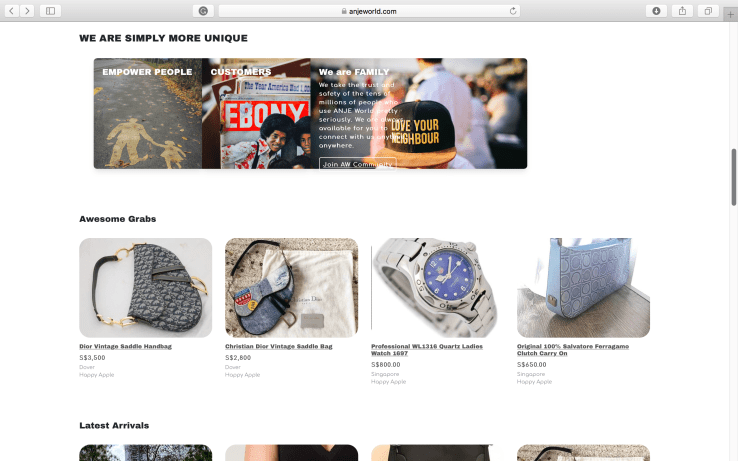
The site offers a range of clothing and fashion items, from brand new Timberland boots still in the box for $230, to a Gucci Tote Bag for $500, or a cute fashion romper for only $8. There are items for women, men and children. The Anje World platform allows anyone to join up – for free – and to share their items. 

“We hope with the launch of Anje World, we can build a community of eco-warriors. We strongly believe that everyone has a part to play,” says Min Hui. 

To try out the new Anje World marketplace platform, go to www.anjeworld.com.

Creative uniformity from new Singapore fashion brand Vetyver

Launched in May 2019, Vetyver is a relatively new addition to the round up of Singapore designed fashion brands. Founded by designer Firdaus Aris, better known as Pit, the label offers both womenswear and menswear in a monochrome palette of black and white with a distinctive cut that echoes some of Singapore’s more creative fashion brands. 

When you look at these pieces you will see echoes of Pit’s foundation and training at two of Singapore’s more creative and successful fashion brands – alldressedup and In Good Company – where he trained. Vetyver was conceived while Pit was working as a fashion lecturer at Lasalle College of the Arts – the source of a number of Singapore’s best designers.

“I had the chance to work with friends and colleagues across different design disciplines and hoped to bring a new perspective forward through the label,” explains Pit.

“At the same time I was also  liaising with a uniform factory that was going to close down and they were letting go of a lot of these ‘uniform’ fabrics. I started to develop a fascination in the idea of a uniform system. 

“Uniforms have played a vital role in my memories of growing up where I had attended public school, to seeing my father who was an engineer leave for work wearing overalls. 

Pit felt that uniforms were often overlooked as a design object; they are items that combine function and quality, and something that also “served as a visual representation of the identity of an organisation.”

These thoughts and ideas led him to look into creating a fashion brand based on the original uniform materials he discovered, creating a mini project, which turned into Vetyver. The brand launched with the capsule collection ‘Un-form’ at Grafunkt’s design district in Funan Mall in December 2019.

Sustainability in longevity

When asked about the brand’s position on sustainability, Pit noted that being sustainable and operating an ethical business “is a natural part of our process, which should already be for any existing fashion brands”.

vetyver images male

“I love using durable materials that will last, that will wear and improve or give more character after each wash,” Pit explains, pointing out that longevity is as much a part of the sustainable movement as recycling.

“Upcycling of materials is in the plans for a future project. I believe that good design and good quality will last in the wardrobe, and I work very closely with our manufacturers. I am also opposed to the wear-and-throw culture.” 


What’s the future for fashion?

Considering the current state of the retail sector with the coronavirus phenomenon, starting a new fashion brand could be considered a risk. Pit was asked about this prior to the current situation, and his answer appears almost prescient. 

“I think more consumers are becoming much more aware of sustainability now as compared to 5 years ago. Curated designer thrift stores and resale garments are gaining more popularity. It can be seen as both over-saturated or also an exciting time for change. I remain optimistic.” 

vetyver images female


Pit is also optimistic about the future of Vetyver: “I love collaborative efforts within the creative industry. I’m planning for more exciting cross-disciplinary projects ahead.”

This is good news for fashion lovers, particular those who want to not only invest in well-made, well designed, long-lasting clothes, but also those who are looking to #supportlocal during this time of economic upheaval. 

Shop local, support local designers

Vetyver is available online at www.studiovetyver.com. There are two collections available for men and women – one is currently available, the second is available for pre-order (another great way to reduce waste). 

The looks are a mix of simple lines, and functional cuts with details like adaptable necklines – you use a drawstring to choose the size – and everything is designed to work together. 

The menswear is particularly interesting with touches of Yohji Yamamoto in the uber-normcore cuts of jackets, pants and overalls. However there are plenty of interesting, more gender neutral shapes in shirts and tops. The womenswear pieces are equally a mix of simple and interesting – with looser cuts and luxe finishes like silk binding. 

Vetyver pieces are also somewhat interchangeable for guys and girls; not unisex exactly, but definitely more flexible than traditional brands.

“The brand does have a lot of unisex styles. While I love the idea of unisex, I am not worried if the brand is seen as unisex or not,” says Pit. “I am more excited to see how people play with our garments, regardless of gender.”

Shop Vetyver online at www.studiovetyver.com.


Thoughtful, wearable clothes for every body by Jude Ng

Melbourne designer Jude Ng has been creating clothes that are stylish, environmentally responsible, comfortable and for all genders for the last four years in tiny atelier-cum-store in one of the city’s hippest suburbs. 

JUDE AW20 ARTISAN 2
The Artisan AW2020 Collection. Designer: Jude Ng @designbyjude; Photography: Daniel Mallia @mallia___; Talent: Victoria Haslam; Stylist: Tamara Leacock @reciclagem

The idea to combine a store and an atelier in the same space was due mostly to practicalities like cost, and Jude’s desire to be close to his customers. Customer feedback is an important part of how he creates his designs, says Jude. His small team has a design assistant, a pattern-maker, and an intern. 

Jude’s style is a cross between Yohji Yamamoto, Jean Paul Gaultier and Vivienne Westwood, his two original sources of inspiration, translated through his Singaporean heritage and Melbourne home. 

JUDE AW19 3
Designer: Jude Ng @designbyjude; Photography: Danielle Chau @danielleciaochau; Female Talent: Ailene Wu @ailenewu; Male Talent: Jeff Kissubi @jeffsterkiss_; Head Stylist: Tamara Leacock @reciclagem; MUA: Nicole Giardossi @nicolegiardossimakeup

Focusing on using materials that have an inbuilt soft and comfortable texture, using deadstock and eco-friendly fabrics, the pieces of his collections come in non-gendered designs that are flattering to all sexes. 

Some of the designs have been so popular, that they are recreated every season in new fabrics; customers become fans returning every collection to add to their Jude wardrobe. 

JUDE AW19 2
Designer: Jude Ng @designbyjude; Photography: Danielle Chau @danielleciaochau; Female Talent: Ailene Wu @ailenewu; Male Talent: Jeff Kissubi @jeffsterkiss_; Head Stylist: Tamara Leacock @reciclagem; MUA: Nicole Giardossi @nicolegiardossimakeup

“I am super anti fast fashion, my ethos is very focused on bringing back local production and local industry. There are so many talented makers in Australia so I want to give them work and keep the skills here,” says Jude.

“And in terms of sustainability, in my practice I use a lot of deadstock fabrics sourced locally in Melbourne like Wall that does a lot of deadstock natural fibres. Natural fibres is also a focus for the brand; I find that it wears so much better, breathes so much better.

“Also, in my studio space I do a lot of upcycling. The store decor is all recycled and made using found materials … sustainability is such a part of our aesthetic.”

JUDE AW19 4
Designer: Jude Ng @designbyjude; Photography: Danielle Chau @danielleciaochau; Female Talent: Ailene Wu @ailenewu; Male Talent: Jeff Kissubi @jeffsterkiss_; Head Stylist: Tamara Leacock @reciclagem; MUA: Nicole Giardossi @nicolegiardossimakeup

Originally a painter, Jude gradually found his work transforming via the addition of fabric to his work; three-dimensional soft sculptures morphed into wearable art, and eventually the art turned into fashion.

Additional training in cutting and pattern-making has seen the label grow into a mix of sharply tailored coats and jackets, combined with more voluminous draping and shaping. Recent collections have also seen a move towards multifunctional garments that can be adapted – skirts with scarves attached, long coats that can be shortened.

JUDE AW19 1
Designer: Jude Ng @designbyjude; Photography: Danielle Chau @danielleciaochau; Female Talent: Ailene Wu @ailenewu; Male Talent: Jeff Kissubi @jeffsterkiss_; Head Stylist: Tamara Leacock @reciclagem; MUA: Nicole Giardossi @nicolegiardossimakeup

Layering is a core part of Jude’s design practice, influenced not only by Melbourne’s notoriously fickle weather, but also inspired by his connection to Asian traditional clothing. 

That same influence is also behind Jude’s concept of non-gendered clothing, looking towards historical Asian costume for example of men in skirts, and women in trousers, as well as the influence of three older sisters who were tomboys in the ‘90s.

JUDE AW20 ARTISAN 5
The Artisan AW2020 Collection. Designer: Jude Ng @designbyjude; Photography: Daniel Mallia @mallia___; Talent: Victoria Haslam; Stylist: Tamara Leacock @reciclagem

“I wanted to cater to as many people as I could,” explains Jude, “When I started [designing] a lot of my clothes were free size, and I found that both women and men responded to it equally. And from there I realised that a lot of my shapes could become unisex.” 

This focus on more loose-cut fittings, oversized shapes, few patterns and non-gendered colour choices became a part of Jude’s overall ‘clothes for everybody’ agenda.

The idea of anti-fast fashion also runs through Jude’s central design aesthetic. With every collection being able to be worn back with pieces from previous seasons. 

“Our customers can find pieces in the current collection that can be worn with pieces from collections four years ago. I want our customers to just keep on wearing their pieces until they wear out,” says Jude.

JUDE AW20 ARTISAN 7
The Artisan AW2020 Collection. Designer: Jude Ng @designbyjude; Photography: Daniel Mallia @mallia___; Talent: Victoria Haslam; Stylist: Tamara Leacock @reciclagem

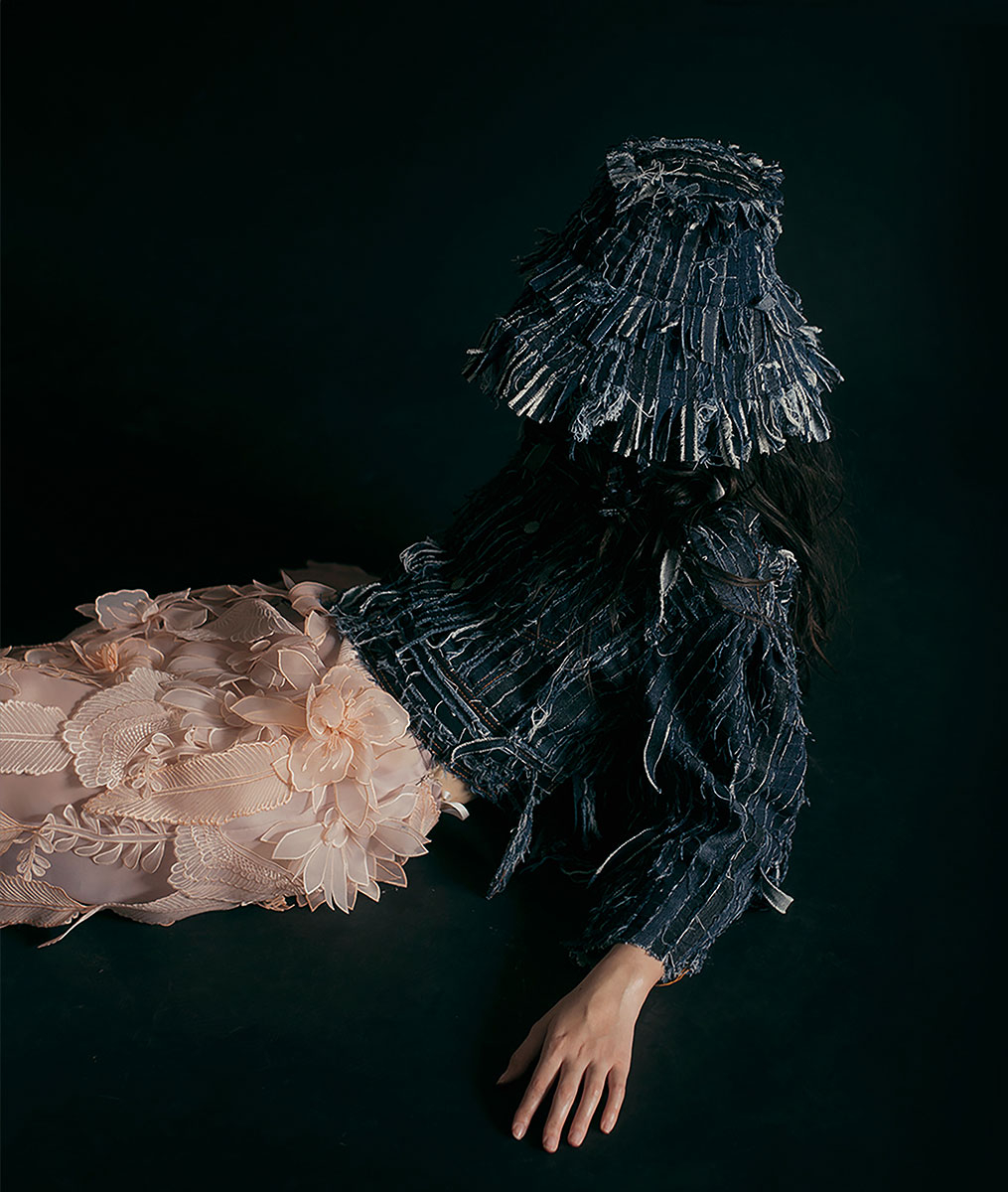
For his AW2020 collection entitled The Artisan, Jude is highlighting the importance of the maker and handcrafting our garments. With a mix of traditional construction techniques and new cutting styles, the collection features coats, jackets, jumpers and tunics worn in a series of layers. 

A genuine love of high quality fabrics with a soft hand-feel can be seen in Jude’s choice of fabrics for the AW2020 collection. Italian wools, Australian merino wools, lush viscose ponti double knits, raw Italian linen and denims, are all part of the collection. Colours echo the tones of nature with deep emerald, petrol blue, burnt umber and rose ochre mixed with classic slate, charcoal and black.

Jude is launching The Artisan AW2020 collection at an intimate runway show held in his atelier on March 12, 2020. The show will not only have a traditional runway, but will also show off the creative activity behind the making of the garments with the designer on stage sewing. Attendees will be able to touch and try on the clothes while there with pieces from the runway being available to buy on the night. 

JUDE The Artisan AW20 Runway event will be held on 12 March 2020, at JUDE Flagship Store. 252 Johnston St, Fitzroy, from 6pm – 9.30pm. There will be two shows. For tickets, go to https://vamff.com.au/event/jude-the-artisan-aw20-collection/.


AW19 Collection
Designer: Jude Ng @designbyjude; Photography: Danielle Chau @danielleciaochau; Female Talent: Ailene Wu @ailenewu; Male Talent: Jeff Kissubi @jeffsterkiss_; Head Stylist: Tamara Leacock @reciclagem; MUA: Nicole Giardossi @nicolegiardossimakeup

The Artisan AW2020 Collection. Designer: Jude Ng @designbyjude; Photography: Daniel Mallia @mallia___; Talent: Victoria Haslam; Stylist: Tamara Leacock @reciclagem


Why you need to shop consciously, and where to do it

Gone are the days when the only things you cared about when shopping were either the price or how on-trend something was. Now, with changes not only to the environment, but also towards how we want to be perceived in the world, people are thinking more consciously about how, and on what, they spend their money.

For many of us, buying a fun new dress or tee for under $30 is a no-brainer; we see, we like, we buy. However, for a lot of other Singaporeans it has now become more important to know exactly what it is they’re adding to their wardrobes, their homes or using on their skin.

“I like to shop consciously because I feel like I have more of an emotional connection with my purchases,” says Susannah Jaffer, the owner of Zerrin, a Singapore based curated online store that features brands with “meaningful stories” and great design. “I think as women, caring more about the things we buy and valuing them in a new way is the first step towards shopping more sustainably – and ultimately buying less but better.”

For Tim O’Hanlon, a writer who previously worked for Lonely Planet, shopping consciously is about choosing the right brands. “My version of shopping consciously is picking brands I know have a reputation for quality and are long-lasting over fast fashion,” he says.

“This is because – I at least have the impression that – they treat their manufacturing staff better and are more conscious of their impact, plus as they pander less to quick trends they produce less and don’t encourage a throw-away lifestyle in their customers. Finally, as the items are of vastly better quality I can wear/use them for a long time so it lowers my own impact.”

This article was first published on Yahoo Lifestyle Singapore. Read the full story HERE.

Opinion: Is fashion dead? And should we care?

Every year pundits around the world make pronouncements about the end of something – television, radio, newspapers etc. In the world of people who like clothes, it is now the turn of the fashion industry.

Is fashion, the influential social phenomenon of telling you what to wear, when and why, finally dead? And if it is, does it really matter?

On February 19, just days before the Chanel Autumn Winter 2019 runway show, Karl Lagerfeld, the outspoken doyenne of 20th century fashion and the mastermind behind the rise of Chanel, died after a short illness.

Fashion fans and industry stalwarts around the world bemoaned his passing, his praises rang to the skies and littered the internet for days. For non fashion fans, it was often the first time they had even heard of the man.

And that is the crux of the current situation of fashion as a global industry. It’s not so much the brands that fashionistas name drop, it’s the rest of the world who buy basic clothes to wear.

Gone are the days of people making their own clothes at home, now it’s all about getting what you want from your phone, delivered to your doorstep, and with little to no thought about how it was made or where it came from.

I recently came across a fantastic quote from William McDonough, an expert in the realm of architecture, community design and consulting based on the Cradle to Cradle philosophy – where products need to be considered from the day they are built, to the day they are recycled into something else.

The quote pointed out that ‘fashion’ is actually a verb; a doing word. We ‘fashion’ something, we make something. Fashion as a noun, as it is used today, is a mutation of the concept of creating clothes (or anything else for that matter).

If you think about modern fashion, when everything is manufactured by machines and shipped around the world in hours or days, we are not ‘fashioning’ anything. We are simply consuming clothes.

Which is where the idea of the ‘death of fashion’ arrives. The massive Fashion Industry that will be worth about US$325.8 billion in 2022, is certainly not dying. But the concept of the glamorous, unique and interesting world of Fashion as a craft-based business, as a set of ‘rules’ to dress by, does seem to be declining.

This article was first published on Yahoo Lifestyle Singapore. Read the rest of the story HERE.

Microfactories, digital printing, downloadable patterns … Our dystopian future?

When I was recently sent links to the newly launched Pattern Room – an online, downloadable pattern provider – and the new Microfactory from Gerber – a set-up that can design, print the fabric, cut and sew a garment all at once in a small space – I have to say I wasn’t sure I should be excited or dismayed.

Having just spent the last couple of months working on a sustainability project with RMIT and Inditex (Zara) to try to find a way to make their shoe production less wasteful, and also having been struck by a recent story asking the question as to whether or not we actually NEED more sustainable fashion brands, I can’t decide if this new technological development is a boon or bane for the fashion industry. 

Yes, these new technologies make it easier for small brands to produce products locally without the issues of carbon footprint, large factory ethical or environmental issues, but do we really NEED more products? 

There are so many clothes already in the world, most of them ending up in landfill after having been produced in an environmentally damaging way. 

Even if the clothes HAVE been produced in a somewhat more sustainable fashion, we just don’t need more of them. 

This is really the core issue of what needs to be thought about regarding fashion and sustainability; we already have too many clothes, so do we need the ability to make millions more, more quickly, and less considered than is already the case?

Less volume, more quality …
From a more personal perspective, what concerns me about the production from the Microfactory and the use of Pattern Room, is the lack of quality in design. 

Yes, the digital printing they use is dry – no water – and apparently the inks are non toxic – but this is digital printing. It is single surface and will eventually fade. This produces fabrics that do not have the beauty and long-lasting nature of traditional wovens like brocade etc. 

The use of a pattern bank and a machine to laser-cut flats removes the possibility of creative new designs and the traditional talent of the pattern-cutter; it creates a see of same-same clothing. 

I see a future of people wearing ugly-ass same-same silhouette tees and leggings in increasingly nastily coloured disposable synthetic fabric. The world will look like an EDM concert. 

The rich will wear increasingly expensive couture made by hand with ‘real’ fabrics, and the poor will wear nasty digitally printed disposables. A nightmare come true. 

Convince me …
I would prefer to see fewer clothes of better quality being made. If these technological breakthroughs can be directed to allow people to produce fewer, but better made and more sustainable items at home, or in a community microfactory for example, then I can see the advantages. 

However, did Inditex’s streamlined production system produce better clothes for everyone? No. Human nature ie. greed, saw it produce too many crap clothes for everyone. 

I would prefer to just teach everyone to sew.

This article was first published for the iFab newsletter.